

I know that look in your eye. It’s a mix of fierce determination and a quiet whisper of doubt. You’ve decided it’s time to feel strong, energized, and truly yourself again. But the gap between that decision and your first step can feel like a canyon.
Maybe your old running shoes are gathering dust. Perhaps your favorite yoga mat is tucked far under the bed. That’s okay. This moment isn’t about the past. It’s a powerful choice to nurture who you are right now.
This guide is your compassionate companion. We’re not here for a punishing sprint. We’re here for a sustainable, joyful return to movement. We’ll talk about shifting your mindset, crafting a doable plan, and building habits that stick.
Think of this as rediscovering a friendship with your body. It’s about progress, not perfection. Let’s replace intimidation with excitement and build genuine confidence for the road ahead, one smart, sustainable step at a time.
Key Takeaways
- Begin by acknowledging your feelings without judgment; excitement and nervousness are both normal.
- Frame your return as an act of self-care and nurturing, not punishment for time away.
- Success hinges on a holistic approach that blends mindset, practical planning, and sustainable habits.
- Set small, realistic goals to build momentum and celebrate every victory, no matter how small.
- Your fitness comeback strategies should focus on consistency and enjoyment over intensity.
- Listen to your body’s signals and be prepared to adjust your plan with kindness.
- View this journey as rekindling a positive relationship with movement and your own strength.
Your Journey Back to Movement Starts Here
Let’s start by changing how you see things. Movement is a gift you give to your future self. This change is key to keeping a fitness routine.
First, acknowledge the pause. Time away from the gym was not a failure. It was a part of your life’s story. It might have been about caring for others or listening to your body.
Now, you’re planting a new seed of intention. We’re not trying to revive an old, wilted plant. We’re starting fresh with self-kindness. This guide will help you grow.
The way we start today sets the tone. We’re moving from guilt to curiosity. We’re choosing to say “I get to” instead of “I have to.”
This is not about forcing yourself. It’s about permission to start where you are. It’s a gentle rediscovery of your body’s joy in motion.
Let’s look at the difference between old and new mindsets.
| Aspect | Old Fitness Mindset | New Movement Philosophy |
|---|---|---|
| View of a Break | A sign of failure or lost progress. | A necessary season of rest or different priorities. |
| Primary Driver | Guilt, obligation, or comparison. | Curiosity, self-kindness, and future well-being. |
| Measure of Success | Numbers: weight, size, speed, distance. | Feelings: energy, strength, joy, consistency. |
| Relationship with the Body | It’s a project to be fixed or controlled. | It’s a partner to be listened to and nurtured. |
| Long-Term Goal | Achieving a specific “before” body image. | Building a resilient, capable, and joyful body for life. |
This foundation is your starting line. When you start with compassion, every step feels like a win. It turns exercise into a meaningful part of self-care.
Your journey back to movement is yours alone. It starts with a breath, not a burpee. You are here, and that’s everything.
Shifting Your Mindset: From Pressure to Permission
Forget everything you think you ‘should’ be doing; your successful comeback begins with granting yourself radical permission. The journey back to movement is paved with mental blocks before physical ones. This section is your guide to dismantling those blocks. We’ll move from a place of rigid rules and self-critique to one of flexibility and self-compassion.
This mental reset is the most powerful tool in your arsenal. It turns exercise from a chore into a choice, from a punishment into a gift.
Letting Go of the “Before” and Embracing the “Now”
It’s tempting to measure your current self against a past version. Maybe you could run faster, lift heavier, or workout longer ‘back then.’ Holding onto that memory is like trying to start a car in fifth gear. It creates immediate strain and a sense of failure.
Your body today is different, and that’s perfectly okay. It has carried you through life, stress, and change. The goal isn’t to rewind time. It’s to build a new, sustainable relationship with movement that honors who you are now.
Try this: write down three things your body can do today that you appreciate. Can you take a deep breath? Can you walk to your mailbox? Start there. Your “now” body is your only true starting point for getting back into a routine.

Redefining What Exercise Means for You Today
Forget the old, narrow definition. Exercise is no longer just an hour at the gym or a grueling run. It’s any activity that gets you moving with intention and joy. This expansion is a game-changer for returning to fitness.
Your new definition might include dancing in your kitchen, taking a mindful walk in nature, or doing five minutes of gentle stretching before bed. Functional strength—like carrying groceries or playing with kids—counts. Consistency, not intensity, is your new gold standard.
This table contrasts the old, pressure-filled mindset with your new, permission-based approach:
| Old Mindset (Pressure) | New Mindset (Permission) |
|---|---|
| Exercise must be 60 minutes of high intensity. | Movement can be 10 minutes of joyful, gentle activity. |
| It only counts if you’re at the gym or in workout clothes. | It counts if you’re moving your body with purpose, anywhere, in any clothes. |
| The goal is to burn calories or “get ripped.” | The goal is to feel energized, strong, and connected to your body. |
| Missing a day is a failure. | Listening to your body’s need for rest is a success. |
| You compare your pace or ability to others. | You focus on your personal progress and how movement makes you feel. |
Embracing this broader view removes the all-or-nothing pressure. It makes fitting activity into your real life not just possible, but pleasurable.
Celebrating the Decision, Not Just the Action
The biggest victory in your exercise comeback happens before you even break a sweat. It’s the moment you decide, “I’m doing this for me.” That mental commitment is everything.
We often only celebrate the finished workout. But what about celebrating putting your workout clothes by the bed? Or blocking time in your calendar? Honor the decision as the foundational win. It means you’ve prioritized your well-being.
Here are simple ways to celebrate the decision:
- Acknowledge it mentally: “I’m proud of myself for choosing to start.”
- Share your intention with a supportive friend.
- Write it down in a journal as a promise to yourself.
When you value the choice as much as the action, you build resilience. If a planned walk gets rained out, you still succeeded in making the plan. This is a crucial psychological tip for getting back into fitness. It keeps you moving forward, even when life interrupts.
This mindset shift transforms your entire journey. You move from a place of obligation to one of opportunity. From pressure to a powerful, personal permission slip.
The First Step: A Compassionate Self-Assessment
The most powerful step isn’t a lunge or jog—it’s a pause. Before starting any plan, we must understand ourselves. This isn’t about judging where you “should” be. It’s about accepting where you are now, with kindness and curiosity.
Think of this as creating a personal map. You wouldn’t start a road trip without checking your fuel and tire pressure. Your body and mind need the same care before starting a workout regimen after time off. Let’s explore together.
How to Listen to Your Body’s True Signals
Your body speaks softly, not loudly. The first task is to learn its language again. Start by sitting quietly. Notice what you feel without judging it.
Is that ache in your shoulder sharp or dull? Sharp pain means “stop.” Dull stiffness or feeling tired means “move gently.” Listen to the difference.
I learned to ask myself: “Is this pain an injury, or is my body waking up?” Listening means respecting “stop” signals and welcoming “go slow” ones. This builds trust, crucial when returning to movement.
Conducting an Honest Energy and Mobility Check
This is a no-pressure, no-judgment check-in. Its goal is to gather information, not to achieve.
For Energy: How do you feel after walking up a flight of stairs? Are you out of breath? Do you recover quickly? This isn’t a fitness test; it’s a baseline for your stamina. Notice your energy levels throughout the day. When do you feel most alert?
For Mobility: Try these gentle movements:
- Slowly turn your head side to side.
- Reach your arms overhead.
- Gently try to touch your toes, bending your knees as much as you need.
The goal is to feel your current range of motion, not to force a stretch. Note any tight or restricted areas. This honest snapshot is your starting point for starting a workout regimen after time off safely and effectively.
Identifying Your Current “Why” for Returning
This might be the most important part. Your “Why” is your anchor on tough days. It’s not just “to get fit.” We need to find what truly matters to you now.
Ask yourself: What do I want this movement to give me in my life? Is it:
More energy to play with my kids without getting tired?
Mental clarity to handle a stressful job?
Physical strength to carry groceries or go on a dream hike?
A sense of calm and control in a busy world?
Your “Why” is personal and powerful. Write it down. Say it out loud. This is your compass, guiding you back to movement for all the right reasons. When motivation fades, this deep-seated purpose will pull you forward.
Completing this compassionate self-assessment turns anxiety into clarity. You now have a true starting point and a powerful reason to begin. You are ready to move forward, not from a place of lack, but from a foundation of self-knowledge and care.
How to Start Exercising Again After a Long Break: The Action Plan
I’m excited to share a four-step framework to get you back into fitness. This is your workout plan for returning to exercise. It helps turn your “why” into a “how” with clear steps.
This is like a blueprint for you. We’ll go from planning to celebrating your progress.
Step 1: Schedule Your Movement Like a Sacred Appointment
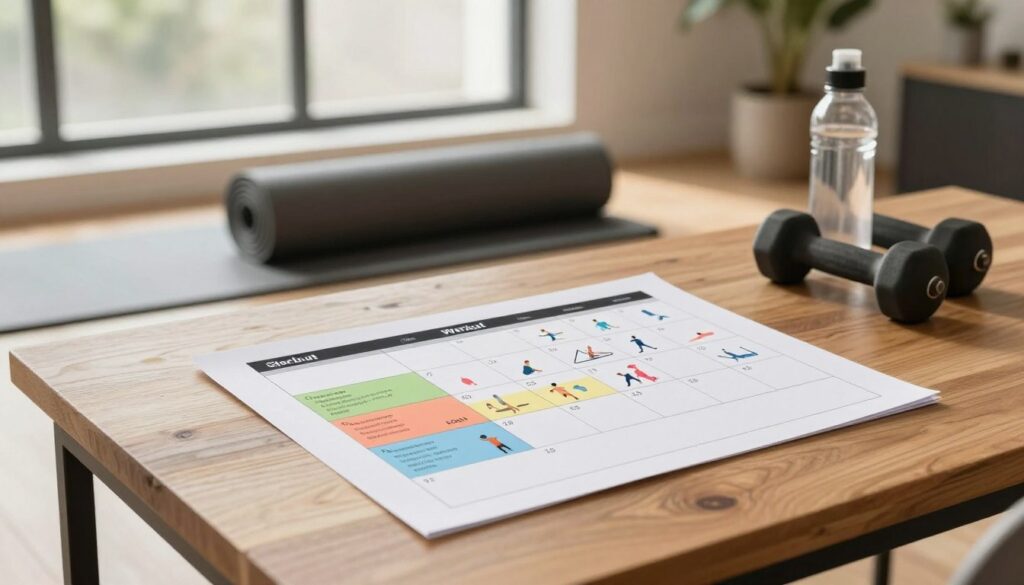
Start by opening your calendar. Treat your exercise time as you would a doctor’s visit. This makes it real.
Choose two or three times for the week. Write “Movement Appointment” in pen or set a reminder. This turns exercise into a real commitment.
Keep this time safe. If something urgent comes up, move it, just like any other important meeting. Treating your time with respect is key.
Step 2: Choose Activities That Spark Joy, Not Dread
Now, pick what you’ll do during those times. Aim for activities that feel good, not hard.
Think about what you enjoyed as a kid or what sounds fun now. Your list might include:
- A brisk walk while listening to a favorite podcast
- A gentle yoga flow with a calming instructor online
- Dancing to three songs in your living room
- A leisurely bike ride around your neighborhood
The key is choice. Having options prevents boredom and gives you power. If walking feels hard on Tuesday, dance instead.
Step 3: Start Embarrassingly Small (The 10-Minute Rule)
The 10-Minute Rule is a powerful tool in your workout plan for returning to exercise. Your goal is to move for just ten minutes.
Commit to ten minutes. You can do anything for that long. Often, you’ll want to keep going after starting.
But if ten minutes is all you can do, that’s a complete success. This rule helps you start without feeling overwhelmed. It builds consistency, which is your main goal.
Step 4: Track Your Feelings, Not Just Your Metrics
Forget about the scale, reps, and miles for now. Focus on how you feel. After each session, write down your feelings for 30 seconds.
Did you feel more energetic? Did your mood improve? Did you sleep better? Tracking these feelings changes everything.
This practice shows you the real benefits of your action plan. You’re not just getting fit; you’re improving your mood and energy. This evidence motivates you more than anything else.
Designing Your First Two Weeks: A Gentle On-Ramp
Think of your first two weeks as a gentle start to a lifelong journey of movement. It’s not about how fast or far you go. It’s about learning to fit in smoothly.
I aim to guide you gently. We’re moving from planning to action without any pressure. This phase is all about building the habit of moving before focusing on fitness.
We’ll break this foundational phase into two simple plans. Remember, being flexible is key. Always listen to your body and adjust as needed.
Week 1 Blueprint: Reacquaintance
Your first week is all about reconnecting peacefully. Your body and mind need to get back into movement. This week is like a friendly hello.
Forget about reps, miles, or calories. Success is just about showing up with kindness.
Focus: Daily, Low-Intensity Movement
Your focus is on daily, low-key movement. Aim for 10-15 minutes of movement every day. It’s about being consistent, not how long you do it.
This daily habit changes your brain to enjoy movement. It becomes a daily routine, like brushing your teeth.
“Something is everything. A five-minute stretch is a victory. A walk around the block is a triumph.”
Example Activities: Walking, Gentle Yoga, Stretching
Choose activities that feel like a gift, not a chore. Here are perfect examples for this reacquaintance phase:
- Walking: Around your neighborhood, in a park, or even pacing your living room while on a call.
- Gentle Yoga: Follow a beginner “restorative” or “chair yoga” video on YouTube. Focus on breath, not depth of stretch.
- Stretching: Simple neck rolls, shoulder shrugs, and seated hamstring stretches. Do this while watching TV.
These exercise routines for beginners are about reminding your muscles they exist. There’s no wrong way to do this week.
Week 2 Blueprint: Building Consistency
With Week 1’s gentle start, Week 2 introduces a bit of structure. The goal shifts from just showing up to showing up with a bit more purpose.
You’re not increasing the intensity. You’re just giving one or two of your daily sessions a defined shape.
Focus: Introducing Short, Structured Sessions
This week, keep your daily movement habit. Then, choose 2-3 days for a short, pre-planned session. Think of it as a 15-20 minute appointment with a specific goal.
The structure helps your mind and body learn new patterns. It builds confidence by completing a defined task.
Example Activities: Bodyweight Circuits, Longer Walks
Here are structured ideas that follow your first week’s gentle start:
- Bodyweight Circuits: Do 3 rounds of: 5 squats (to a chair), 5 kneeling push-ups, a 30-second plank (on knees), and 5 standing crunches. Rest 60 seconds between rounds.
- Longer Walks: Extend one or two of your walks to 20-25 minutes. Try adding an interval: walk at a normal pace for 4 minutes, then a slightly brisker pace for 1 minute, and repeat.
| Aspect | Week 1: Reacquaintance | Week 2: Building Consistency |
|---|---|---|
| Primary Goal | Reconnect with movement; build a daily habit. | Introduce gentle structure; reinforce consistency. |
| Mindset | “Something is everything.” No pressure. | “I can follow a simple plan.” Building confidence. |
| Session Length | 10-15 minutes daily. | 15-20 minutes for structured sessions. |
| Intensity Level | Very low; purely comfortable. | Low; comfortable with mild intention. |
| Perfect for Beginner Routines | Walking, stretching, gentle yoga. | Bodyweight circuits, longer interval walks. |
This two-week plan is your launchpad. It shows you can do this. You’re not just following exercise routines for beginners; you’re building a sustainable practice. Celebrate every day you move. You’re on the ramp, and you belong here.
Essential Safety and Injury Prevention Strategies
Think of safety strategies as tools that let you move freely. Protecting your body means you can enjoy moving more. It’s about using smart, caring practices.
Learning the Difference Between Good Pain and Bad Pain
Your body talks to you when you start moving again. It’s important to understand its signals. Good pain means you’re pushing yourself. Bad pain is a warning to stop.

| Good Pain (Muscular Fatigue) | Bad Pain (Injury Warning) |
|---|---|
| A general, dull ache in the muscle belly. | A sharp, stabbing, or pinching sensation. |
| Feels like a “burn” during the activity, then fades. | Is localized in a joint, ligament, or bone. |
| Is symmetrical (e.g., both legs feel tired). | Causes swelling, redness, or warmth in one spot. |
| Improves with light movement and rest. | Radiates down a limb or gets worse with movement. |
| Leaves you feeling pleasantly fatigued, not broken. | Persists or intensifies 24-48 hours after exercise. |
My rule is simple. Muscle burn is a conversation; joint pain is a shout. Listen for the shout.
The Non-Negotiable Warm-Up and Cool-Down Routine
Skipping these routines is risky. They prepare your body for exercise and help it recover. These routines take just five minutes.
Your 5-Minute Dynamic Warm-Up (Do before any activity):
- March in Place (1 minute): Get the blood flowing gently.
- Arm Circles (30 seconds forward, 30 seconds back): Loosen shoulders.
- Leg Swings (30 seconds per leg): Gently open up the hips.
- Torso Twists (1 minute): Engage your core and spine.
- Bodyweight Squats (10-15 reps): Activate major leg muscles.
Your 5-Minute Cool-Down (Do after every session):
- Slow Walking (2 minutes): Gradually lower your heart rate.
- Calf Stretch (30 seconds per leg): Against a wall.
- Hamstring Stretch (30 seconds per leg): Seated or standing.
- Chest Opener Stretch (1 minute): Clasp hands behind your back.
- Deep Breathing (1 minute): Inhale for 4, hold for 4, exhale for 6.
When to Consult a Doctor or Physical Therapist
Seeking help is a sign of strength, not weakness. It shows you care about your health. Here are times to get professional advice:
- If you have a pre-existing condition like heart issues, diabetes, or osteoporosis. Getting clearance first is wise.
- If you experience any “Bad Pain” from our table that doesn’t improve with 2-3 days of complete rest.
- If you feel pain during movement that causes you to limp or change your natural gait.
- If you have persistent instability, like a knee that gives way or an ankle that repeatedly rolls.
- If you simply want a personalized plan. A physical therapist can design a perfect, safe program for your unique body.
Professional guidance turns uncertainty into a roadmap. It’s the fastest path to confident movement.
By following these strategies, you build trust with your body. This trust makes it safe and sustainable to start moving again.
Building Your Foundational Workout Toolkit
Think of your body as a house. To rebuild its strength after time away, you need a reliable toolkit of movements. This isn’t about fancy equipment or punishing routines. It’s about gathering simple, effective exercises that work together to restore your stamina, power, and grace.
A balanced toolkit makes reintroducing exercise after a break sustainable and even joyful.

Cardio for Stamina: Walking, Cycling, and Swimming
Cardiovascular exercise rebuilds your engine. It’s the steady work that improves your heart health and gives you energy for daily life. The best choices for returning are low-impact and accessible.
Walking is your most powerful ally. Start with a 10-minute stroll and focus on your posture and breath. Cycling, whether on a stationary bike or a gentle path, is easy on the joints. Swimming or water aerobics offer incredible resistance with zero impact.
The goal is steady, comfortable movement where you can still hold a conversation.
Progress by adding just two to five minutes to your session each week. Listen to your body’s signals. This gentle approach is key to successfully returning to exercise without overwhelm.
Strength Training for a Resilient Body
Strength work builds the framework that supports everything you do. It prevents injury, boosts metabolism, and makes you feel capable. You can start with just the weight of your own body.
Key Bodyweight Movements to Master
Master these foundational patterns first. Quality always beats quantity.
- Squats: Sit back into an imaginary chair, keeping your knees behind your toes. This builds leg and glute strength for standing up, climbing stairs, and lifting.
- Modified Push-Ups: Start against a wall or with your hands on a sturdy table. This strengthens your chest, shoulders, and core.
- Bird-Dogs: On all fours, slowly extend one arm and the opposite leg. This is a superstar for core stability and balance.
- Glute Bridges: Lying on your back with knees bent, lift your hips toward the ceiling. This activates often-sleepy glute and hamstring muscles.
Introducing Light Weights Safely
When bodyweight feels manageable, you can safely introduce external resistance. This is a big step in reintroducing exercise after a break.
Begin with light dumbbells (3-5 lbs) or resistance bands. Your focus must remain on perfect form. Perform the same movements—like squats holding a weight at your chest—but with even slower, more controlled motions.
A golden rule: If you can’t do 15 reps with perfect control, the weight is too heavy. The goal is to challenge your muscles, not to strain your joints. This careful progression builds a truly resilient body.
Flexibility and Balance Practices
This pillar is non-negotiable for longevity. Flexibility work keeps your muscles supple and your joints mobile. Balance practice prevents falls and builds confident movement.
Incorporate gentle stretching after every workout, holding each stretch for 20-30 seconds without bouncing. Practices like yoga or Tai Chi are perfect because they blend flexibility, balance, and mindful breathing into one session.
Think of this not as an add-on, but as the oil that keeps your machine running smoothly. Dedicate just 10 minutes a few times a week to this practice, and you’ll feel a profound difference in how you move through your day.
Creating a Supportive Environment for Success
Success in getting back to exercise isn’t just about willpower. It’s about creating a supportive space and community. The world around you can either drain your energy or fuel your progress. Smart fitness comeback strategies always include designing a supportive ecosystem.
This means looking at your home, your social circle, and your digital life. You can turn each one into a pillar of strength. Let’s build that foundation together.

Curating Your Motivational Space at Home
Your physical space sets the tone. You don’t need a full home gym. A dedicated corner signals to your brain that movement matters.
Start by claiming your spot. It could be the area by a sunny window or a clear space in your living room. Lay down a yoga mat. That simple act makes it official.
Next, add elements that spark joy and focus. I recommend these quick upgrades:
- Lighting: Open blinds or use a bright lamp. Natural light boosts mood and energy.
- Inspiration Board: Pin a quote, a picture of a scenic trail, or your personal “why” statement where you can see it.
- Organization: Keep a basket with your gear—resistance bands, a water bottle, workout shoes. Reduce friction so starting is easy.
- Sound: Have a speaker or headphones ready for your favorite playlist or a guided meditation.
This space becomes your personal sanctuary for movement. It reminds you of your commitment every time you walk by.
Finding Your Tribe: Virtual and Local Communities
Connection is a powerful motivator. Finding your people creates accountability and makes the journey fun. The right community offers encouragement, shares tips, and celebrates your wins.
You have two fantastic options: virtual groups and local meet-ups. Each has unique benefits. The table below helps you decide which might fit your current life.
| Type | Best For | Key Features | How to Find |
|---|---|---|---|
| Virtual Communities | Flexible schedules, introverts, or those in remote areas. | 24/7 access, diverse global members, specific focus groups (e.g., postnatal fitness, beginners over 40). | Facebook Groups, fitness apps like Strava, subreddits (r/xxfitness), and Instagram hashtags. |
| Local Communities | Those craving in-person connection and local resources. | Face-to-face accountability, shared local knowledge, potential for walking buddies or class friends. | Community center boards, local running clubs, Meetup.com, small group classes at gyms. |
| Hybrid Approach | Most people! A mix provides maximum support. | Online support daily, with occasional local meet-ups for a real-world boost. | Join one virtual group and one local activity that meets weekly or bi-weekly. |
Look for groups with a positive, inclusive vibe. Avoid spaces focused solely on comparison or extreme transformation. A good community feels like a cheer squad, not a critic’s panel.
Communicating Your Goals to Loved Ones
Your family or roommates can be your biggest supporters. But they need to understand your goals to help. A simple conversation turns potential schedule conflicts into teamwork.
Frame the talk around your feelings and needs, not just your schedule. Here’s a script you can adapt:
“I’m starting to bring more movement into my life because it makes me feel more energized and happy. It’s important to me. I might need 30 quiet minutes in the living room on Tuesdays and Thursdays, and I’d love your support. How can we make this work together?”
This approach invites collaboration. It also manages expectations about your time and energy.
Be specific about the kind of support you want. Do you need a reminder? Help with a chore? Just a high-five? Tell them.
When loved ones understand your why, they often become your most loyal cheerleaders. They’ll protect your time and celebrate your consistency, making your entire environment work for your success.
Navigating Common Setbacks and Staying Motivated
Life can throw curveballs, even when you’re trying to get back into fitness. A missed workout, a busy week, or feeling tired doesn’t mean you’ve failed. How you bounce back is key to your success. This section will help you turn setbacks into stepping stones.
What to Do When You Miss a Day (or a Week)
First, forget the word “failure.” Missing a workout is normal. The goal is to keep going, not to be perfect. Be kind to yourself.
Ask yourself, “What is the next best step I can take for my body today?” It might be a short stretch, a quick walk, or making a healthy meal.
Here’s a gentle way to start again:
- Skip the Guilt Trip: Acknowledge the miss without drama and immediately shift your focus forward.
- Return at 50%: For your first session back, cut the planned duration or intensity in half. This rebuilds confidence without strain.
- Celebrate the Return: The act of showing up again is the victory. Honor that.
Managing Fatigue and Life’s Unexpected Demands
When you’re tired, pushing through isn’t the best plan. It’s time to change your mindset. Think of it as “something is everything.”
On tough days, your workout can be tiny. A 7-minute bodyweight routine, a 10-minute yoga flow, or three minutes of deep breathing counts.
Plan with priorities in mind. At the start of a busy week, list your must-do’s and short movement “appointments.” Treat them like important meetings. This is a great way to stay fit without feeling overwhelmed.
Reigniting Your Motivation When It Fades
Motivation ebbs and flows. When it’s gone, don’t wait for it to come back. Take action to spark it again.
Revisit Your “Why”: Look at your original reasons for starting. Has your “why” changed? Update it if needed.
Inject Novelty: Boredom kills motivation. Try something new, like a dance workout video or a nature hike. Novelty keeps you engaged.
Schedule a True Rest Day: Sometimes, the best way to get motivated is to take a day off. Use it for activities that nourish you. You’ll return feeling refreshed.
Remember, your journey is long-term. Each time you choose to start again, you grow stronger.
Conclusion
I see you here, at the end of this guide, ready to start your journey. Deciding to exercise again after a long break shows your courage and care for yourself.
We started with permission and changed our mindset. We also made a simple plan. Remember, it’s about progress, not being perfect. Small steps lead to big changes.
Your inner wisdom is the best guide. Listen to your body and celebrate your strength, not just numbers.
You have all you need to make exercise a happy part of your life again. This is your path. Every step counts. Move forward with confidence.