

I once stared at my bank statement, feeling anxious. It was more than just numbers; it was about freedom and security. If you’ve felt this way, you’re not alone.
But 2026 is different. It’s a year when taking control of one’s money is essential. It’s about gaining real independence.
The right app can change everything. It can turn worry into a clear plan and a sense of empowerment. That’s why I tested the top options myself.
In this guide, I’ll compare 15 standout platforms. We’ll look at both free and paid services. They’re designed for the diverse financial lives and goals we manage daily.
Table of Contents
Key Takeaways
- 2026 presents unique financial opportunities and challenges, making organized money management crucial.
- The correct app acts as a powerful tool, turning financial stress into clarity and control.
- This comparison is based on hands-on testing, not just theory or reviews.
- Options exist for every situation, including robust free services and feature-rich paid plans.
- The right choice depends heavily on your individual lifestyle, goals, and financial flow.
- Empowerment comes from understanding your options and making an informed decision.
- Taking the first step towards a budget is the most important part of the journey.
Why Your Financial Journey Deserves a Female-Friendly Tool
Most budgeting apps are made for everyone, but they don’t fit women’s financial needs. I’ve tried many and found they don’t account for our unique situations. They assume a steady income and a straightforward career path, which isn’t true for many women.
Women face unique financial challenges. We earn less due to the gender pay gap, starting with less to budget. Career breaks for family care can disrupt our income. And, we live longer, so our money needs to last longer.
Generic apps can let you down when you need them most. They might criticize you for spending on unexpected bills. They might not support career breaks or changes. That’s where female-friendly budget trackers come in.
These tools are made for our lives. They offer features that generic apps miss. Flexible goal-setting is key. You might need to save for a house, summer camp, or professional training. A good app lets you manage these goals without feeling guilty.
Tracking irregular income is essential. If you’re a freelancer or have variable earnings, you need an app that understands. It should help you manage your income and build a safety net.
The best budgeting apps with women in mind focus on long-term wealth. They connect your daily spending to your future financial freedom. It’s about empowerment, not just paying bills.
Choosing a female-friendly app is a smart move. It’s about finding a tool that gets your financial life. It sees your worth beyond your salary, valuing your ability to adapt and thrive.
Looking for a female-friendly tool is not a luxury. It’s a necessary step to take control of your finances. It recognizes that your financial story is unique and deserves a system that supports it, not forces it into a mold.
How I Put These 15 Budgeting Apps to the Test in 2026
In 2026, I dove deep into budgeting apps, testing them in real-life scenarios women often face. I aimed to go beyond what apps claim and find out which ones truly work. This hands-on method is the core of my recommendations.
I began by opening a new account for each app. I linked various real accounts, including checking, savings, and credit cards. I also set up fake accounts for student loans, side jobs, and investments. This helped me see how each app handles different financial situations.

I used each app as my main financial tool for at least two weeks. I tried out different scenarios, like tracking freelance income and saving for a home. I even tested features for managing expenses with a partner.
I didn’t just look at one feature. I had strict criteria to find the top financial management tools for females. Here’s what I looked for in every app:
- Beginner-Friendly Experience: Is the app easy to use for beginners? How quickly can you get a handle on your money?
- Clarity of Insights: Does the app explain why you’re overspending, or just that you are? Are the spending reports useful?
- Ironclad Security: I checked privacy policies, encryption, and multi-factor authentication. Your data’s safety is crucial.
- Responsive Support: I tested customer service with common questions to see how fast and helpful they were.
- Feature Execution: How well do special tools like goal tracking and investment monitoring work? Are the features for couples useful?
This detailed testing process means my reviews are based on real experience, not guesses. I’ve faced the challenges and successes myself. You won’t find any second-hand opinions here.
Seeing how an app handles tough months or big life goals shows its true worth. This thorough analysis helps find the best apps that can really change your financial outlook.
What Truly Makes a Budgeting App Great for Women?
A top-notch budgeting app for women combines smart tech with real understanding. It’s more than just tracking money. It’s like having a financial friend, not just a spreadsheet.
At its heart, a great app offers personalized financial coaching. It’s not just about generic advice. It gives you articles, tools, and insights that match your life and goals. Whether you’re saving for a home, planning a family, or building an emergency fund, the advice is spot-on and helpful.
Designing with empathy is crucial. The app should talk to you in a kind, not critical way. A message that says, “We noticed your grocery spending was higher this month—here’s why that might be,” is much better than a harsh alert about overspending. This approach builds trust and keeps you interested.
Another important feature is seamless integration. The best personalized money management app links to all your accounts in one place. We’re talking about checking, savings, credit cards, student loans, mortgages, and investments. You get a full picture of your finances without having to enter everything manually. This saves time and reduces stress.
Lastly, the app should offer powerful reporting. It should show you how your spending changes with life events. Maybe you spend more on self-care when work is tough. Or maybe family expenses go up during the holidays. Seeing these patterns helps you plan better, not just cut back without reason.
When you have coaching, empathy, integration, and insightful reporting all together, you get more than an app. You get a budgeting partner that fits your unique financial path. That’s what makes a great app for women.
The Definitive List: 15 Best Budgeting Apps for Women 2026
Finding the right personal finance tools can be tough. That’s why I’ve put together this list of the top 15 budgeting apps for women. Each app was chosen for its unique benefits, whether you’re managing variable income, saving for a big goal, or investing for the first time.
I focused on how these tools help women manage their finances. Let’s take a look at your options.

1. YNAB (You Need A Budget)
Overview
YNAB is more than just an app; it’s a way of managing your money. It teaches you to give every dollar a job. This approach is great for women who want to take control of their finances.
Key Features
YNAB follows four rules: Give Every Dollar a Job, Embrace Your True Expenses, Roll With the Punches, and Age Your Money. It offers detailed reports and goal tracking. You can sync accounts for real-time updates.
Pros
Exceptional educational resources help you understand budgeting deeply. The method is brilliant for managing irregular income. Its robust goal-setting features are perfect for saving for vacations or a down payment.
Cons
The subscription cost is higher than many competitors. There’s a steeper learning curve initially. Some users find the manual transaction categorization a bit tedious.
2. Mint
Overview
Mint is a free option that automatically aggregates all your financial accounts in one place. It’s a top choice for millennial women starting their financial journey. It offers a high-level, automated snapshot of your cash flow.
Key Features
Automatic transaction categorization and bill tracking are central. You get credit score monitoring for free. The budgeting tools allow for custom categories, and it sends alerts for bills and fees.
Pros
It’s completely free to use. The interface is clean and very user-friendly. Seeing your net worth update automatically is incredibly motivating.
Cons
Ads within the free platform can be distracting. Customer support is not its strong suit. The budgeting features are more reactive than proactive.
3. PocketGuard
Overview
PocketGuard answers one simple question: “How much can I spend right now?” It focuses on your “In My Pocket” number after accounting for bills, goals, and necessities. This is great for preventing overspending.
Key Features
The app automatically finds recurring bills and negotiates better rates on your behalf. It has a robust cash flow analysis tool. You can also set spending limits for specific categories.
Pros
Extremely simple and visual interface makes it easy to use daily. The bill negotiation service can save real money. It effectively prevents impulse purchases.
Cons
The free version is quite limited. The savings goals feature isn’t as advanced as in other apps. Investment tracking is not a primary focus.
4. Goodbudget
Overview
Goodbudget digitizes the classic envelope budgeting system. You allocate money to virtual envelopes for spending categories. It’s excellent for couples or families who want to budget together without sharing bank logins.
Key Features
Sync budgets across multiple devices for shared household management. It uses manual transaction entry, which increases spending awareness. Provides reports on envelope history and trends.
Pros
Fantastic for collaborative budgeting with a partner. The manual entry creates powerful mindfulness around spending. The free version is quite generous.
Cons
Manual entry is too hands-on for some users. No bank account syncing in the free plan. Less ideal for complex investment tracking.
5. EveryDollar
Overview
EveryDollar promotes zero-based budgeting. It’s designed for followers of the “Baby Steps” method but works for anyone. The app encourages intentional, planned spending.
Key Features
Drag-and-drop budgeting makes it easy to move money between categories. The premium version offers bank connectivity. It integrates with Ramsey’s financial peace educational content.
Pros
The budgeting process is very intuitive and visual. It strongly promotes living on a planned, written budget. Great for debt-averse individuals following a specific plan.
Cons
The free version requires full manual entry. The philosophy is quite rigid and may not suit all money mindsets. Limited investment tracking features.
6. Empower Personal Dashboard
Overview
Empower is a powerhouse for women who want to blend budgeting with wealth management. It shines for tracking net worth, investments, and retirement planning alongside daily spending.
Key Features
The dashboard provides a unified view of cash flow, investments, and net worth. Its retirement planner tool is top-tier. You get analysis on investment fees and portfolio allocation.
Pros
Unmatched for tracking investments and net worth growth. The retirement planning tools are comprehensive and free. Excellent for seeing the big financial picture.
Cons
Budgeting features are less detailed than dedicated apps. You will likely get calls from their financial advisors. Can feel overwhelming for someone just starting out.
7. Oportun
Overview
Oportun (formerly Digit) is an automated saver and budget helper. It uses algorithms to analyze your spending and move small, safe amounts to savings automatically. It’s a “set it and forget it” tool for building a cushion.
Key Features
Automatic savings based on your unique spending habits. Goal-specific savings accounts for things like vacations or emergencies. Offers a basic automated investing account as well.
Pros
Makes saving completely effortless and painless. The algorithm is smart and avoids overdrafts. Great for building an emergency fund without thinking about it.
Cons
It’s primarily a savings tool, not a full-featured budget app. The monthly fee can eat into smaller savings amounts. Limited control over when and how much it saves.
8. Stash
Overview
Stash combines budgeting guidance with micro-investing. It’s built for beginners who want to start investing with small amounts. The app educates you as you grow your portfolio, making it a great choice for new investors.
Key Features
Offers a banking account with stock-back rewards on purchases. The “Stock-Back” card turns spending into fractional share investments. Provides educational content on investing topics.
Pros
Makes investing accessible and demystified. The Stock-Back card is a clever way to build a portfolio passively. Good educational resources for financial newbies.
Cons
Monthly fees can be high relative to small account balances. The investment selection is curated, not unlimited. Budgeting tools are secondary to the investing focus.
9. Acorns
Overview
Acorns is famous for its “round-up” investing model. It rounds up your everyday purchases to the nearest dollar and invests the spare change. This is one of the most innovative money-saving apps for women who find traditional saving difficult.
Key Features
Round-ups, recurring investments, and “Found Money” partnerships with retailers. Later, and Earn are newer products for retirement and learning. Offers a checking account with similar round-up features.
Pros
Builds an investment habit without feeling the pinch. Extremely easy and automatic to start. The family plan allows you to invest for children easily.
Cons
The monthly fee can be a high percentage for small accounts. You have limited control over individual stock picks. It’s an investing-first app, not a detailed budget tracker.
10. Qapital
Overview
Qapital uses behavioral psychology and rule-based saving to help you reach goals. You create rules like “Round-Up Rule” or “Guilty Pleasure Rule” to trigger automatic savings. It makes saving feel like a game.
Key Features
Fully customizable savings rules based on your spending habits. Offers goal-specific savings accounts. Includes basic spending analytics and budgeting visuals.
Pros
Turns saving into a fun, engaging activity. The rules are highly creative and personalized. Effective for hitting specific short-term goals.
Cons
The full feature set requires a premium membership. Not a comprehensive budgeting solution. Some users report occasional connectivity issues with banks.
11. Honeydue
Overview
Honeydue is built specifically for couples. It allows partners to see shared and individual finances in one place while maintaining privacy. It’s the best app for managing money as a team without friction.
Key Features
You can see all joint and personal accounts together. Set monthly limits for categories and get alerts when you’re near them. Chat about transactions directly within the app.
Pros
Reduces money-related tension in relationships dramatically. The privacy controls are excellent. The in-app chat keeps all money conversations organized.
Cons
Obviously, it’s only useful for couples. Budgeting features are somewhat basic. Investment tracking is not its focus.
12. Simplifi by Quicken
Overview
Simplifi offers a clean, modern take on budgeting from a trusted name. It provides a unified view of your subscriptions, spending plans, and watch lists. It’s excellent for someone who wants powerful features without complexity.
Key Features
The “Spending Plan” shows what’s left after bills and goals. It automatically identifies recurring payments and subscriptions. Robust custom reporting helps you understand your cash flow.
Pros
The interface is intuitive and not cluttered. Subscription tracking is a standout feature for cutting costs. It offers a comprehensive view without being overwhelming.
Cons
It’s a paid-only service, no free tier. Some users desire more advanced investment tracking. Customer support channels can be slow.
13. Monarch Money
Overview
Monarch Money is a newer, premium contender focused on being a complete financial command center. It’s built for clarity and long-term planning, with excellent tools for setting and tracking goals over years.
Key Features
Beautiful, customizable dashboards. Advanced transaction rules for fine-tuned categorization. Best-in-class cash flow and net worth tracking. It allows for collaboration with a partner or financial advisor.
Pros
Extremely powerful and flexible for detailed planners. The roadmap and goals features are exceptional. No ads and a strong focus on user privacy.
Cons
It is one of the more expensive subscriptions. It might be overkill for someone with simple finances. Still adding integrations with smaller banks and credit unions.
14. Rocket Money
Overview
Rocket Money (formerly Truebill) is a champion at finding and canceling unwanted subscriptions and lowering your bills. Its budgeting features are built around this core strength of reducing your fixed expenses.
Key Features
Automatically finds your subscriptions and helps you cancel them. Negotiates lower rates on bills like cable and internet. Provides budgeting, net worth tracking, and credit reporting.
Pros
Can save you hundreds of dollars annually on bills you already pay. The subscription cancellation service is incredibly convenient. The free version is quite useful.
Cons
They take a percentage of your annual savings as a fee for successful bill negotiations. Budgeting is not as detailed as in other apps. Features feel secondary to the subscription focus.
15. Zeta
Overview
Zeta is a money app designed specifically for modern couples and families. It goes beyond budgeting to include tools for managing shared bills, splitting costs, and planning for joint goals like buying a home.
Key Features
Joint and individual account tracking with clear labels. Tools to split one-time or recurring bills easily. Integrated money messaging and task assignments for financial to-dos.
Pros
Built from the ground up for shared financial lives. The bill-splitting tools are seamless. It feels like a dedicated project manager for your household finances.
Cons
Again, it’s for couples/families, not individuals. Still growing its bank connection list. Some advanced investing features are not present.
| App Name | Best For | Standout Feature | Price Model |
|---|---|---|---|
| YNAB | Proactive, zero-based budgeting | Four Rules Philosophy & Education | Paid Subscription |
| Mint | Free, automated financial snapshot | Automatic Categorization & Credit Score | Free |
| PocketGuard | Preventing overspending | “In My Pocket” Spending Number | Freemium |
| Goodbudget | Couples using envelope budgeting | Shared Digital Envelopes | Freemium |
| EveryDollar | Intentional, planned spending | Drag-and-Drop Zero-Based Budget | Freemium |
| Empower | Wealth & net worth tracking | Investment & Retirement Planner | Free |
| Oportun | Automated, painless saving | Algorithmic Savings Transfers | Paid Subscription |
| Stash | Beginner investing | Stock-Back Rewards Card | Paid Subscription |
| Acorns | Micro-investing beginners | Round-Up Spare Change Investing | Paid Subscription |
| Qapital | Goal-based, behavioral saving | Customizable Savings Rules | Freemium |
| Honeydue | Couples managing money together | In-App Money Chat & Alerts | Free |
| Simplifi | Clean, subscription-aware budgeting | Recurring Payment & Subscription Tracker | Paid Subscription |
| Monarch Money | Comprehensive financial planning | Custom Dashboards & Long-Term Goals | Paid Subscription |
| Rocket Money | Cutting bills & subscriptions | Bill Negotiation & Cancellation Service | Freemium |
| Zeta | Modern couples & families | Integrated Bill Splitting & Tasks | Free |
Free vs. Premium: Getting Real About Value for Money
In the world of personal finance apps, ‘free’ can be tempting. But, it’s important to know what you’re missing. This knowledge helps you make a smart choice for your future.
I’ve tried many free apps. They’re great for starting. But, they often have hidden costs that slow you down.
Ads are a big problem. They’re always there, promoting things like credit cards or loans. This can distract you from your financial goals. Your dashboard should be a place of focus, not a billboard.
Then, there are limits on how many accounts you can connect. If you have multiple bank accounts, credit cards, and investments, you’re out of luck. You won’t have a complete picture of your finances.
Free versions also lack detailed reports. They only offer basic charts. You need deeper analytics to understand your spending over time. Without this, you can’t plan for the future.

Premium subscriptions offer more. They give you a detailed view of your finances, like a GPS.
Advanced investment tracking changes everything. It lets you see all your accounts together. This helps you understand your net worth better.
Custom categories give you control. You can tag your spending in meaningful ways. This is especially helpful for women with complex finances.
Priority support is also valuable. Quick help with questions saves you time and stress. It makes the app a true partner in your financial journey.
“You don’t buy features; you buy time, clarity, and peace of mind. That’s the real ROI of a premium financial tool.”
Think of the monthly or annual fee as an investment in your financial clarity. How much is less stress worth? How much is reaching your savings goal sooner worth?
To figure out the value, ask yourself a few questions:
- Could better reports help me cut one unnecessary subscription?
- Would automatic tracking save me 2 hours a month?
- Could investment insights improve my portfolio’s growth?
If the app’s cost is less than what it saves you, you’re winning. The right premium app can speed up your financial progress. It offers the detailed guidance free versions lack.
Your choice depends on your goals. Free apps are good for starting. But, when you want to optimize and grow, a premium tool is essential. Choose the features that match your ambitions.
Security and Privacy: Non-Negotiable Features for Your Peace of Mind
Let’s get straight to it: no budgeting app is worth risking your financial safety. When you link your accounts to an app, you’re giving it control over your money. This is a serious matter.
Any app that makes my list must have top-notch security. These standards are not optional; they’re essential for trust.

First, look for bank-level 256-bit encryption. This tech is used by big banks to protect your data. It makes your info unreadable to anyone who tries to get it.
Next, make sure the app only has read-only access to your accounts. A good app can only see your transactions and balances. It can’t move money or change settings. This keeps your money safe from unauthorized access.
A clear data privacy policy is your right. You should know how your data is used and shared. I avoid apps with unclear or complex policies. The best ones promise not to sell your data for marketing.
Finally, robust multi-factor authentication (MFA) is a must. It adds an extra step to verify who you are. This could be a code sent to your phone or an app. It blocks most unauthorized logins.
Watch out for these warning signs:
- An app that wants your online banking details but doesn’t use secure connectors like Plaid or MX.
- Unclear or missing security info on the company’s website.
- No way to turn on multi-factor authentication in your settings.
- Poor reviews that mention security issues or unexpected charges.
Your peace of mind is worth more than anything. Choosing a secure app lets you focus on your financial goals. Never trade off security for a cool interface or a cheaper price. The risks are too high.
Top Apps for Women Entrepreneurs and Side Hustlers
For women entrepreneurs with multiple income streams, the right budgeting app is key. It’s not just about personal finance anymore. It’s about client payments, business costs, and personal expenses all mixed together. You need a tool that understands the whole picture.
Mixing personal and business receipts can lead to tax-time stress. The best budgeting apps for women entrepreneurs help by tracking both in one place or separately. They turn confusing cash flow into clear profit insights.

When testing apps, I looked for features that matter most to entrepreneurs. You’re the CEO, CFO, and marketing all in one.
Here’s what you should look for:
- Profit and Loss Tracking: Can you see your net business income after expenses instantly?
- Invoice Integration: Does it connect to tools like PayPal or Stripe to track unpaid invoices?
- Tax Categorization: Can you tag transactions as “tax-deductible” throughout the year?
- Handling Irregular Cash Flow: Does it help you plan for lean months and save for quarterly taxes?
Not every app on our list is perfect. But some stand out as great allies for freelancers, solopreneurs, and small business owners.
YNAB (You Need A Budget) is my top pick for managing irregular income. Its zero-based budgeting method ensures every dollar has a job. This is great for allocating client payments to business costs, taxes, and your salary. It doesn’t have built-in invoicing, but its categorization makes tax prep easy.
Simplifi by Quicken is great for custom tags and watchlists. You can tag all your side hustle income and spending in one view. Its cash flow forecasts help you see when money might be tight, a big worry for entrepreneurs.
Monarch Money offers unmatched customization. You can have separate budget accounts for business and personal life, then see them together in a net worth view. This separation is perfect for keeping your finances clear.
PocketGuard is good if you spend too much on business supplies. Its “In My Pocket” feature shows how much you can spend after bills and goals. It helps you avoid using tax savings for unnecessary expenses.
To see how these options compare, look at this direct comparison.
| App | Business/Personal Separation | Profit/Loss Tracking | Invoicing Integration | Tax Categories | Best For |
|---|---|---|---|---|---|
| YNAB | Via categories | Manual reports | No | Custom tags | Freelancers with variable income |
| Simplifi | Custom tags & watchlists | Real-time spending reports | No | Custom tags | Side hustlers tracking multiple gigs |
| Monarch Money | Separate budget accounts | Custom cash flow charts | No | Custom categories | Solopreneurs wanting clear division |
| PocketGuard | Via categories & goals | Income vs. spending snapshots | No | Limited | Preventing business overspend |
| Goodbudget | Separate envelope sets | Envelope balance reports | No | Custom envelopes | Visual budgeters with fixed costs |
Notice that direct invoicing integration is missing. For that, you might need a dedicated tool like QuickBooks. But for overall budgeting and cash flow management, these apps are strong.
Choosing one of these budgeting apps for women entrepreneurs is an investment in your sanity. It automates tracking, saves you hours a week, and lets you focus on growing your business. Your side hustle needs a financial partner that understands it.
Best Budgeting Apps for Couples Managing Money Together
When two people live together, the right app can change how they manage money. It turns it into a team effort. The wrong app can cause misunderstandings, but the right one builds trust and shared goals.
For modern women in partnerships, a basic budgeting app won’t do. You need something that helps you work together, not just track money. The best apps have a shared dashboard where both partners can see everything.
Three key features are essential for any app for couples:
- Shared Budgets with Individual Allowances: A plan for bills and goals, plus personal spending categories.
- Transparent Transaction Feeds with Comments: See every charge in real-time and add notes to avoid confusion.
- Bill Reminders and Responsibility Tracking: Clearly assign who pays what, so nothing is forgotten.

Honeydue and Zeta are two standout apps for couples. Honeydue syncs accounts, color-codes spending, and sets limits together. Zeta offers Joint Accounts for unmarried couples and tools for planning big goals, like buying a home.
“Using an app built for two turned our monthly ‘budget meeting’ from a dreaded chore into a quick check-in. We’re finally on the same page.”
These apps do more than track money. They help avoid arguments by making everything open for discussion. This builds teamwork and shared responsibility.
For women who value financial transparency and are building a life with someone, these tools are key. They support open communication and working together towards goals. Choosing an app designed for couples is a smart investment in your relationship’s financial health.
My Personal Recommendations Based on Your Money Goals
Your money goals are unique, so your budgeting app should match. After trying 15 apps, I found that the “best” one varies by goal. Let me guide you to the right app for your needs.
This table helps match your financial goals with my top app picks. It’s a good starting point to find your ideal app.
| Financial Goal | My Top Pick | Why It Works |
|---|---|---|
| Getting Out of Debt Fast | YNAB (You Need A Budget) | Its zero-based budgeting method forces you to assign every dollar, creating a clear plan to attack debt. |
| Learning to Invest as a Beginner | Stash | It combines simple budgeting with fractional share investing and educational content, all in one place. |
| Simple, Stress-Free Cash Flow Management | PocketGuard | Its “In My Pocket” number tells you exactly what’s safe to spend today, removing all the guesswork. |
| Tracking Detailed Net Worth | Empower Personal Dashboard | It connects to investment and retirement accounts for a true big-picture view of your assets and liabilities. |
| Saving for a Major Purchase (Like a Home) | Qapital | Its fun, rules-based saving mechanisms make building a down payment fund feel automatic and rewarding. |
| Planning for Long-Term Financial Independence | Monarch Money | Offers robust forecasting and scenario planning tools to model your financial future over decades. |
If your primary mission is escaping debt, I strongly recommend YNAB. It’s not just about tracking; it’s about giving your dollars jobs. This mindset shift is powerful. You’ll stop wondering where your money went and start telling it exactly where to go, with debt payoff as a non-negotiable category.
For the investing newbie, start with Stash. Many efficient money management apps for women focus only on spending. Stash understands that building wealth is the next step. It lets you start investing with tiny amounts, which removes the intimidation factor. You can manage your daily budget and grow your future in the same app.
If you just want to know “Can I afford this coffee?” without a complex system, PocketGuard is your champion. It’s the ultimate app for preventing overdrafts and controlling impulse spending. The interface is brilliantly simple, showing you one core number. This is perfect for anyone who feels overwhelmed by traditional budgeting.
When tracking your complete net worth is the goal, look at Empower Personal Dashboard. It excels at aggregating all accounts—checking, savings, credit cards, mortgages, 401(k)s, and IRAs. You get a single, updated dashboard showing your total financial health. This is invaluable for making informed decisions about your money.
Saving for a home or another big dream? Qapital turns saving into a game. You can set rules like rounding up spare change or saving a little every time you avoid a latte. These small, automated actions add up surprisingly fast. The psychological boost of watching your dedicated fund grow is incredible.
For long-term financial independence planning, Monarch Money is a standout. It allows for deep-dive forecasting. You can ask, “What if I max out my IRA contribution?” or “How does a career break affect my timeline?” and see the long-term impact. This forward-looking capability is rare and essential for serious planners.
Remember, the best personalized money management apps feel like a partner, not a taskmaster. Choose the tool that aligns with your current ambition. You can always switch as your goals evolve. The most important step is starting with one that makes sense for you right now.
The Quick Comparison Chart: See All 15 Apps Side-by-Side
I’ve put together a side-by-side comparison for you. Think of it as your financial command center. It combines the key points from our detailed reviews into one easy-to-read chart.
Scanning it quickly shows you which top financial management tools for females fit your needs. It’s not meant to replace the detailed reviews. Instead, it helps you confirm your choice and feel confident about it.
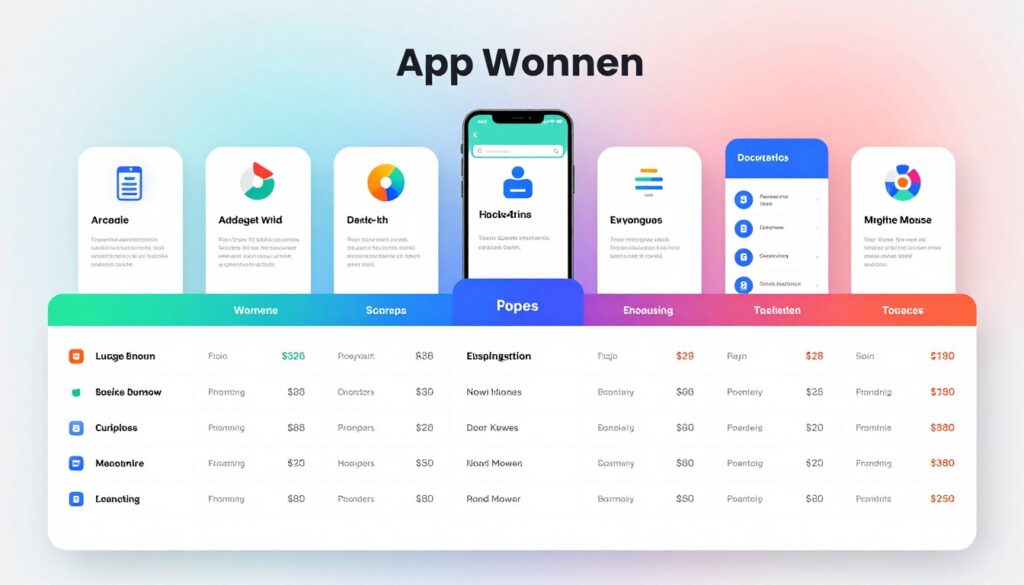
Here’s how to use this chart effectively. First, check if the “Best For” column matches you. Then, see if the price fits your budget. Lastly, look at the standout feature. Does it meet your current needs? My personal rating is based on my hands-on testing.
| App Name | Price Model | Standout Feature for Women | Best For | My Rating |
|---|---|---|---|---|
| YNAB (You Need A Budget) | Paid Subscription | Proactive, zero-based budgeting philosophy | Detail-oriented planners | 5/5 |
| Mint | Free (Ad-supported) | Comprehensive free credit score tracking | Beginners & overview seekers | 4/5 |
| PocketGuard | Freemium | “In My Pocket” spending safety net | Overspenders & simple budgeters | 4/5 |
| Goodbudget | Freemium | Digital envelope system for couples/families | Shared household budgeting | 4/5 |
| EveryDollar | Freemium | Zero-based budgeting made simple | Fans of the Ramsey method | 3.5/5 |
| Empower Personal Dashboard | Free | Wealth tracking & retirement planning tools | Investors & net worth trackers | 4.5/5 |
| Oportun | Free | Automatic micro-savings based on spending | Passive savers | 4/5 |
| Stash | Paid Subscription | Integrated investing with educational content | Beginner investors | 3.5/5 |
| Acorns | Paid Subscription | Round-up investments & family accounts | Hands-off investors & parents | 4/5 |
| Qapital | Paid Subscription | Behavioral rule-based savings goals | Goal-oriented savers | 4/5 |
| Honeydue | Free | Designed specifically for couple’s finance | Couples managing money together | 5/5 |
| Simplifi by Quicken | Paid Subscription | Custom watchlists & spending plans | Project-based budgeters | 4.5/5 |
| Monarch Money | Paid Subscription | Customizable categories & financial advisor-style tools | Financial deep-divers & planners | 5/5 |
| Rocket Money | Freemium | Powerful subscription cancellation service | Anyone with recurring bills | 4.5/5 |
| Zeta | Free | Built for modern couples & joint account management | Couples merging finances | 4/5 |
Use this chart to narrow your list to two or three top contenders. Circle them or make a note. Then, jump back to the detailed reviews for those specific apps. This combination of the quick snapshot and the deep analysis is how you find your perfect financial partner.
This comparison shows that the best financial management tools offer unique strengths. Your job is to match those strengths to your personal money story. The right app is waiting for you in this chart.
Your Next Steps to Finding the Perfect Budgeting App
Finding the right tool isn’t about more analysis; it’s about taking a focused, personal test drive. You have the list and the comparisons. Now, you need a plan to move from research to results. I’ve guided you this far, and I promise the final stretch is the most rewarding.
Follow this simple, four-step action plan. It turns overwhelm into clear action.
- Pinpoint Your Primary Financial Pain Point
Ask yourself one question: What is the single biggest frustration in my money life right now? Is it feeling blindsided by bills? Wanting to save for a dream but never seeing progress? Managing spending with a partner?
Your answer is your compass. It directs you to the female-friendly budget trackers built for that specific challenge. An app perfect for debt payoff might overwhelm someone who just wants simple cash flow clarity.
- Choose Two or Three Contenders for a Test Drive
Return to my personal recommendations in Section 10. Match your pain point to the apps I highlighted for similar goals. Do not try all fifteen. That leads to paralysis.
Pick two, maybe three, that resonate most. The beauty of today’s market is the free trial. Every quality app offers one. Use this period not as a casual browse, but as a deliberate audition.
The best financial system isn’t the one with the most features; it’s the one you actually use consistently.
- Run a Strategic Free Trial
This is your hands-on evaluation phase. Download your chosen apps. Give yourself a week. During this test, look beyond the marketing and assess three critical, practical areas:

| Evaluation Criteria | What to Look For | Why It Matters for You |
|---|---|---|
| Ease of Setup | How long does it take to link accounts and categorize your first transactions? Is the onboarding intuitive or confusing? | A complicated setup often leads to abandonment. You need a tool that gets you started quickly. |
| Connection Reliability | Do your bank and credit card connections stay synced? How often do you need to re-enter passwords or fix errors? | Unreliable data means you can’t trust your numbers. Consistent sync is non-negotiable for accurate tracking. |
| Usefulness of Reports | Can you easily see where your money went last month? Does it project future cash flow? Are the visuals clear? | Insights drive change. Useful reports turn raw data into actionable plans for your goals. |
| Trial Limitations | What features are locked behind the paywall? Can you fully test the budgeting method during the free period? | You must experience the core value before paying. Know exactly what you’re buying. |
- Trust Your Gut on Interface and Tone
Logic checks the features, but your intuition checks the fit. Open the app. How does it make you feel? Anxious or empowered? Judged or supported?
The language, colors, and overall vibe of an app significantly impact your willingness to engage with it daily. The perfect female-friendly budget trackers should feel like a supportive coach, not a stern accountant.
Your next step is clear. Identify your pain point, select your top apps, and commit to a real trial using the criteria above. Within a week, one will stand out as the natural choice. The perfect app is the one that seamlessly integrates into your life, making financial confidence not just a goal, but a daily reality. Start your test drive today.
Conclusion
Controlling your money is a strong statement of self-determination. The right budgeting app is your key ally in this journey.
We looked at features that help women manage their finances better. You now have a list of top budgeting apps for 2026. Apps like Mint and Rocket Money guide you to financial clarity.
It’s time for you to act. Pick one app from our guide today. Use it every day for the next 90 days.
This habit will last. It turns dreams into real steps forward. The perfect tool for your 2026 goals is ready. Begin building your strong financial future today.