

I remember the sinking feeling when I got a loan application denied. The dream apartment slipped away because of a number on a page. That number felt like a permanent label, a verdict on my financial past. If you’ve ever felt that frustration, you’re not alone.
I learned that your financial story isn’t finished. You can take control with the right knowledge and a clear plan. This guide is the actionable roadmap I wish I had.
We’re cutting through the complexity. Forget the confusing jargon and slow, vague advice. I’m here to give you a direct path forward, built on steps that deliver real, measurable results. Let’s turn that frustration into momentum.
Key Takeaways
- Your current credit score is a starting point, not a life sentence.
- Fast improvement is possible by focusing on specific, high-impact actions.
- Understanding your credit report is the essential first step to any effective strategy.
- Small changes in payment history and debt levels can lead to significant score increases.
- This guide provides a clear, step-by-step plan to improve credit fast.
- Avoiding common mistakes is just as important as taking positive steps.
- Empowering yourself with the right credit score tips builds lasting financial health.
Understanding Your Credit Score: The Foundation for Improvement
Many people see a three-digit number on a statement, but a credit score is more than that. It’s a story of your financial decisions. It’s a number that shows lenders if you’re trustworthy with money.
Two main companies calculate these scores: FICO and VantageScore. Your FICO score is the oldest and most widely used, especially for mortgage loans. VantageScore is a newer model created by the three major credit bureaus. While the numbers look similar, the formulas behind them differ slightly.
Why does this matter to you? This score doesn’t just sit in a file. It actively shapes your financial life. A high score unlocks lower interest rates on loans and credit cards, saving you thousands. Landlords check it to approve your rental application. Even insurance companies use it to set your premiums.
Here’s a quick look at how these two major scoring models generally work:
| Feature | FICO Score | VantageScore |
|---|---|---|
| Primary Use | Mortgage lending | Consumer credit cards |
| Score Range | 300-850 | 300-850 |
| Credit History Needed | 6 months minimum | 1 month minimum |
| Key Focus | Payment history, amounts owed | Recent credit behavior, utilization |
You can’t effectively boost credit score if you don’t know what you’re boosting. Trying to improve it without this knowledge is like trying to fix a car engine blindfolded. You might get lucky, but you’ll likely waste time and effort.
Every financial move you make—paying a bill, using a credit card, applying for a loan—feeds into this story. Understanding that story is the first, non-negotiable step. It turns a mysterious number into a manageable tool.
This foundation is crucial because it shifts your mindset. You stop seeing your score as a static grade and start seeing it as a dynamic project. With the right knowledge, you can make strategic choices that directly and positively boost your credit score over time.
Now that you know what a credit score is and why it’s so powerful, you’re ready to learn what specifically makes it go up or down. Let’s break down the five key factors next.
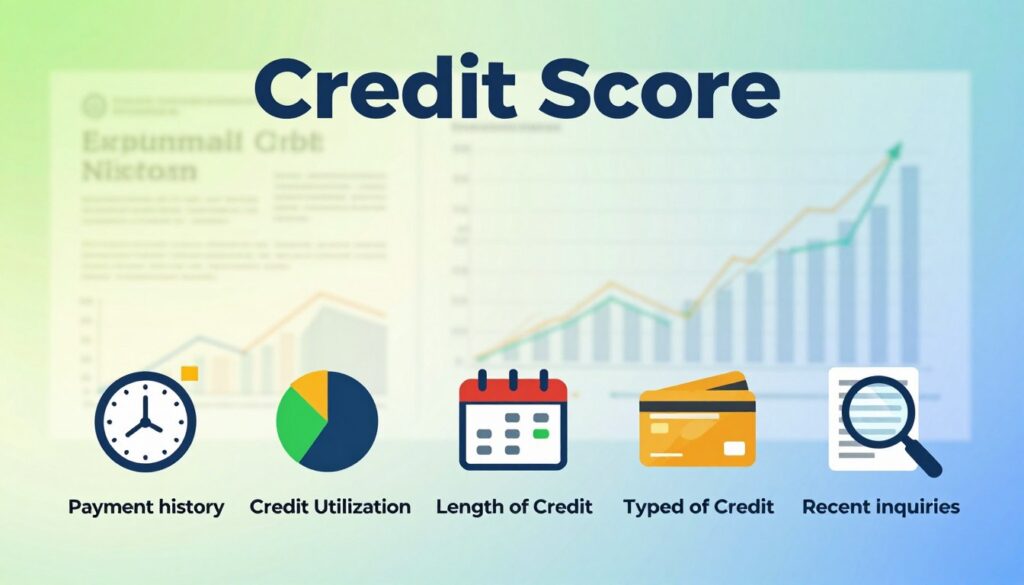
The 5 Factors That Make Up Your Credit Score
To improve your credit rating, you need to know the five key areas. Your FICO or VantageScore isn’t magic. It’s based on how well you handle money.
Understanding what the bureaus look at can help you plan better. Let’s explore each factor, its importance, and how to improve it.
1. Payment History: Your Financial Track Record
This factor is crucial, making up about 35% of your score. Lenders check if you pay bills on time. A late payment can hurt your score for seven years.
A single late payment can drop your score by over 100 points. I make sure to set up autopay to avoid this. It’s a simple way to protect your credit.
2. Credit Utilization: The Balance-to-Limit Ratio
This factor looks at how much credit you use. It’s the second most important factor. To calculate it, divide your total credit card balances by your total credit limits.
Keep your utilization under 30%. Aim for under 10% for a bigger boost. High utilization shows lenders you might be overextended. Paying down balances before the statement date can help lower your reported utilization.
3. Length of Credit History: Time Is Your Ally
Credit scoring models value stability. They look at the average age of your accounts. A longer history shows you can manage credit well over time.
I never close my oldest credit card, even if I don’t use it. Closing it can shorten your average account age and reduce your total available credit. Patience truly is a virtue here.
4. Credit Mix: The Variety of Your Accounts
Having different types of credit accounts shows you can handle various financial responsibilities. This factor accounts for about 10% of your score. The two main types are revolving credit (like credit cards) and installment loans (like a mortgage or auto loan).
You don’t need one of everything. But a healthy mix can positively influence your score. If you only have credit cards, adding a small installment loan (and paying it flawlessly) can help improve your credit rating. Never take on debt you don’t need just for this factor.
5. New Credit: Recent Applications and Inquiries
Whenever you apply for new credit, a “hard inquiry” is recorded. Too many hard inquiries in a short period can lower your score. It signals to lenders that you might be desperate for cash or taking on too much debt too fast.
There’s a smart exception. Rate shopping for a mortgage, auto, or student loan usually counts as a single inquiry if done within a 14-45 day window. Also, opening several new accounts at once lowers your average account age. I space out my credit applications carefully.
Now you see the blueprint. Each factor is a lever you can learn to pull. Your payment history and credit utilization offer the fastest wins. Your credit history length and mix require a steady, long-term strategy. Managing new credit demands discipline.
Armed with this knowledge, you’re no longer in the dark. You can move from hoping your score goes up to making it happen. The next steps will show you exactly how to apply this information to build stronger credit health.
Step 1: Obtain and Analyze Your Credit Reports
Trying to boost your credit score without looking at your reports is like navigating without a map. It’s essential to start with a solid foundation. This step is key to any successful credit improvement plan. You can’t fix problems you don’t know exist.
Your credit report is like your financial resume. It’s the data used by Equifax, Experian, and TransUnion to calculate your score. Before we dive into strategies, you need to see what these bureaus see. This process is straightforward once you understand it.
How to Get Your Free Credit Reports From All Three Bureaus
First, let’s get your reports for free. The law lets you get one free report from each bureau every 12 months. The only official source for these is AnnualCreditReport.com. I use this site and recommend it to everyone.
Here’s my simple process:
- Visit AnnualCreditReport.com. It’s secure and federally authorized.
- Fill out the form with your personal details like name, address, Social Security number, and date of birth.
- Select all three credit bureaus—Equifax, Experian, and TransUnion. You want to see each one.
- Answer security questions to verify your identity.
- Download or print your reports immediately.
Pro Tip: Due to the pandemic, you can currently get free weekly reports from each bureau. Take advantage of this to monitor your progress more closely. If you run into issues online, you can request your reports by mail or phone. Having all three is crucial because lenders don’t all report to every bureau.
Reading Your Credit Report Line by Line
Now, with your reports in hand, it’s time to play detective. Don’t just glance. You must scrutinize every section. Each report is divided into four main parts:
- Personal Information: Check your name, address(es), and employer for accuracy. Mistakes here can mix your file with someone else’s.
- Account History: This is the meat of the report. You’ll see every credit card, loan, and mortgage listed with its payment history, balance, and credit limit.
- Credit Inquiries: These are records of who has accessed your report. “Hard inquiries” from applications can ding your score.
- Public Records and Collections: This is where bankruptcies, tax liens, and accounts sent to collections appear.
Go through each account line by line. Verify the open date, credit limit, current balance, and payment status. Is everything correct? This deep analysis is a powerful tip to increase credit score that most people skip.
Spotting Errors That Damage Your Score
Errors are shockingly common. I find them on most reports I review. Look for these specific problems:
- Accounts that don’t belong to you (a sign of mixed files or identity theft).
- Incorrect payment statuses, like a paid account marked as “late” or “charged off.”
- Outdated negative information that should have fallen off (most negative items must be removed after 7 years).
- Inaccurate credit limits or balances that make your utilization look worse than it is.
Every single error can unfairly lower your score. A mistaken late payment or an account you never opened can have a major impact. Spotting them is half the battle.
Identifying Negative Items You Can Address
Not everything bad on your report is an error. You also need to identify legitimate negative items you can work to improve. These include:
- Genuine late payments (30, 60, 90 days late).
- Accounts that have gone to a collection agency.
- Judgments, tax liens, or bankruptcies.
The key is to separate what you can dispute (errors) from what you need to address through negotiation or payment (legitimate negatives). This clarity turns a overwhelming report into an actionable plan. Now you know your exact starting point. The next step is to start cleaning it up.
How to Improve Your Credit Score Quickly by Disputing Errors
Correcting errors on your credit report can boost your score by 40 points overnight. Mistakes like accounts not belonging to you or outdated payments are common. The Fair Credit Reporting Act (FCRA) lets you challenge these errors. This is a key credit repair strategy that can show quick results.
Fixing these mistakes can remove the negative impact on your score. It lets your good financial habits shine. Here’s how to tackle these issues effectively.
The Step-by-Step Credit Report Dispute Process
Disputing errors is a detailed process. You need to be thorough and persistent. Follow these steps to ensure the credit bureaus take your claim seriously.
- Identify Every Error: Start by reviewing your credit reports. Look for any wrong personal info, accounts, payment histories, or credit limits.
- Gather Your Evidence: Collect proof like billing statements, payment confirmations, and identity documents. These prove the information is incorrect.
- Choose Your Dispute Method: You can dispute online, by mail, or by phone. I recommend mail for complex issues. It creates a paper trail. Online is quicker for simple mistakes.
- Submit Your Dispute: Send your dispute package to each credit bureau. You must dispute with Equifax, Experian, and TransUnion individually.
- Follow Up Religiously: The bureau has 30 to 45 days to investigate. Mark your calendar and be ready to respond if they need more information.

This process makes the bureaus verify the data with the original lender. If they can’t verify it, the error must be removed. This can lead to a quick score increase.
Crafting a Winning Dispute Letter to Equifax, Experian, and TransUnion
A good dispute letter is clear, concise, and professional. It should leave no room for confusion. Never use emotional language. Stick to the facts and your evidence.
Here are the key elements every letter must include:
- Your full name, address, date of birth, and Social Security Number.
- A clear statement: “I am disputing the following information on my credit report.”
- A list of each disputed item. Identify the creditor, account number, and the specific error.
- A brief explanation of why the item is inaccurate.
- A request for deletion or correction.
- A mention of your rights under the FCRA.
- Copies (not originals) of your supporting documents.
This formal approach is a cornerstone of professional credit repair strategies. Should you dispute online or by mail? The table below breaks down the pros and cons to help you decide.
| Method | Speed | Paper Trail | Best For |
|---|---|---|---|
| Online Dispute | Fast initiation; often quicker response. | Limited; harder to document fully. | Simple errors like wrong addresses or duplicate accounts. |
| Mail Dispute (Certified) | Slower delivery and processing. | Strong; you have proof of receipt and a full record. | Complex errors involving payments, account ownership, or collections. |
| Phone Dispute | Immediate but limited. | Very weak; avoid for serious issues. | Basic inquiries only; not recommended for score-critical errors. |
Always send mail disputes via certified mail with a return receipt. This proves the bureau received your request and starts their legal 30-day investigation clock.
Tracking Your Dispute and Escalating If Needed
Your job isn’t over after you send the letter. You must track the investigation. The credit bureau will send you the results in writing. They will also update your credit report.
If the investigation corrects the error, check all three reports again in 30 days. Ensure the change is reflected. If the bureau says the information is “verified” and remains, don’t give up.
You have escalation options:
- Re-dispute with New Evidence: Sometimes the first attempt fails. Gather more compelling proof and submit a new, stronger dispute.
- Contact the Data Furnisher: Go directly to the bank or lender that reported the error. Demand they correct it with all bureaus.
- File a Complaint with the CFPB: The Consumer Financial Protection Bureau is your government ally. File a complaint online. This often prompts a faster, more thorough re-investigation by the bureau.
- Add a Consumer Statement: As a last resort, you can add a 100-word statement to your report explaining your side. This doesn’t remove the error, but it informs future lenders.
Persistence pays off. Treating the dispute process with the seriousness it deserves is how you execute advanced credit repair strategies. Removing even one major error can unlock a higher credit score and better loan terms much faster than waiting for old marks to age off.
Step 2: Master Your Credit Utilization Ratio
Credit utilization is key for those looking to raise their credit score fast. It makes up nearly 30% of your FICO score. This means it’s very responsive to quick actions.
Your credit utilization ratio shows how much revolving credit you use compared to what’s available. A low ratio means you’re not desperate for credit and can handle your finances well. A high ratio signals risk and can lower your score a lot.
Fortunately, you can improve this number quickly. Just within one billing cycle.

The 30% Rule and Why Lower Is Better
You’ve probably heard the “30% rule.” It suggests using no more than 30% of your available credit. But aiming for 10% or lower is even better.
Lowering your utilization can greatly improve your score. Dropping from 50% to 30% is good, but going from 15% to 5% can boost it more. This is a powerful way to see quick results.
“The relationship between credit utilization and your score is inverse and exponential. The lower you go, the greater the positive impact per percentage point.”
Here’s a guide to show the potential impact. Remember, results can vary based on your credit profile.
| Overall Credit Utilization Ratio | Potential Impact on Score | Recommended Action |
|---|---|---|
| Above 70% | Severely Negative | Pay down balances immediately. |
| 30% – 70% | Negative | Focus on getting below 30%. |
| 10% – 30% | Neutral to Slightly Positive | Aim for the single digits. |
| Below 10% | Strongly Positive | Maintain this excellent habit. |
| Below 5% | Optimal | This is the gold standard for scoring. |
Strategic Balance Payments: Timing Is Everything
Here’s a trick: the balance reported to credit bureaus is usually your statement balance. Paying your bill in full after the statement closes will still show a high utilization for that month.
Make an extra payment just before your statement closing date. This lowers the balance reported. You can still pay the remaining amount by the due date to avoid interest. This method can instantly improve your reported utilization without requiring a huge lump-sum payment.
- Log into your credit card accounts and find your statement closing date.
- A few days before that date, make a payment to bring your balance down.
- Target bringing each card below 30%, and ideally below 10%.
- Set calendar reminders to make this a monthly habit.
Requesting a Credit Limit Increase Without Harm
Increasing your total credit limit can also help. A higher limit automatically lowers your utilization percentage, assuming your spending stays the same.
Make sure to request an increase without triggering a hard inquiry. Many issuers offer a “soft pull” limit increase check online or via their app. Always ask if the review will involve a hard credit check. If it does, and you’re planning a major loan application soon, it might be better to wait.
Only request an increase if:
- Your account is in good standing (at least 6-12 months old).
- Your income has increased.
- Your credit score has improved since you opened the account.
The Authorized User Strategy: A Fast-Track Option
This tactic can be a quick way to raise your credit score fast. By becoming an authorized user on someone else’s credit card, their account can be added to your credit report.
This can instantly improve your credit mix and lower your overall utilization. It’s a way to “piggyback” on positive history.
Important Cautions When Using This Tactic
This strategy requires immense trust and carries risks for both parties.
For the Authorized User: If the primary cardholder misses a payment or maxes out the card, that negative activity will likely damage your score too. You must have a clear agreement and trust their financial habits completely.
For the Primary Cardholder: You are legally responsible for all charges the authorized user makes. While you can set spending limits or even not give them the physical card, the liability remains with you.
This is not a strategy to enter into lightly. It works best within families where there is absolute financial transparency and responsibility. Used correctly, however, it can provide the rapid utilization improvement needed for a significant score jump.
Mastering your credit utilization is about smart management and timing. By focusing on these actionable steps, you’re targeting one of the fastest-moving parts of your credit score, putting you firmly on the path to reach your goals.
Step 3: Address Late Payments and Derogatory Marks
Dealing with late payments and collections is like pulling weeds from deep roots. This step is where your credit repair strategies get serious. You move from defense to offense, facing past financial mistakes head-on.
These negative items hurt your score the most. Lenders see them as red flags. I will guide you through three powerful tactics to neutralize them. You will learn to negotiate, automate, and strategically resolve these issues.

Negotiating With Creditors for “Pay for Delete”
The “pay for delete” strategy is controversial but can be effective. It involves asking a creditor or collector to remove a negative entry. In exchange, you agree to pay the debt in full or settle for less.
Not all companies will agree to this. It is against the policies of the major credit bureaus. However, many third-party collection agencies might say yes. They want to get paid and close the file.
Your negotiation script is crucial. Always get any agreement in writing before you send a single dollar. Here is a simple framework for your call or letter:
- Identify yourself and the debt. Reference the account number and amount.
- State your offer clearly. “I can pay [amount] in full today if you agree to delete this entry from all three credit bureaus.”
- Request written confirmation. “I need a signed agreement stating you will request deletion upon receipt of my payment.”
This is an advanced maneuver. It turns a paid collection from a neutral item into a complete removal. That is a massive win for your score.
Setting Up Safeguards: Autopay and Alerts
Fixing the past is useless if you repeat the same mistakes. The simplest way to prevent future late payments is automation. Set up autopay for at least the minimum due on every credit account.
I treat autopay as non-negotiable. It is your financial safety net. Combine this with payment alerts from your bank and creditors. These alerts notify you 3-5 days before a payment is due.
This two-layer system eliminates forgetfulness. Life gets busy. A missed payment can drop a good score by 100 points. Do not take that risk.
Most banks and credit card issuers offer these tools for free. Spend 30 minutes today to set them up. This habit is a core part of sustainable credit repair strategies. It protects all the progress you make.
How to Handle Accounts in Collections
An account sent to collections is a major derogatory mark. Your approach must be careful and documented. Do not just pay it blindly. That can lock the negative status on your report for seven more years.
Follow this phased approach instead:
- Phase 1: Debt Validation. Within 30 days of first contact, send a debt validation letter. You have the right to ask the collector to prove you owe the debt and they have the legal right to collect it. This can sometimes make an invalid debt disappear.
- Phase 2: Negotiate a Settlement. If the debt is valid, negotiate to pay less than you owe. Again, get the terms in writing. Ask for a “settlement in full” letter. This states that paying the agreed amount satisfies the entire debt.
- Phase 3: Seek a Goodwill Adjustment. After paying, you can write a goodwill letter to the original creditor. Explain the circumstances for the late payment and highlight your now-perfect payment history. Politely ask them to remove the collection entry as a gesture of goodwill.
Each phase requires patience and paperwork. Keep copies of every letter and email. Track all phone calls with dates and agent names. This organized effort shows you mean business.
Handling collections is delicate, but it is possible to minimize the damage. These hands-on credit repair strategies turn your biggest liabilities into managed situations. You take back control.
Step 4: Build or Rebuild Positive Credit History
A thin or damaged credit file is not the end. It’s a chance to start fresh. This step focuses on adding new, positive data to show lenders you’re reliable. I use tools that report to all three major credit bureaus. They can help boost credit score from scratch.
Starting Fresh With a Secured Credit Card
A secured credit card is a key tool for rebuilding. You put down a cash deposit, which becomes your credit limit. This setup is low-risk for the issuer, making these cards easier to get. I recommend the Discover it® Secured Card and the Capital One Platinum Secured Card.
Discover offers cashback rewards and might upgrade you to an unsecured card after eight months. Capital One might give you a credit limit higher than your deposit. Both report to Equifax, Experian, and TransUnion.
Best Practices for Using a Secured Card
Just having the card isn’t enough. You must use it wisely to rebuild your history.
To help you compare your options, here’s a breakdown of popular secured cards:
| Card Issuer | Minimum Security Deposit | Credit Limit Range | Notable Feature |
|---|---|---|---|
| Discover it® Secured | $200 | $200 – $2,500 | Earns cashback rewards; reviews for upgrade at 8 months |
| Capital One Platinum Secured | $49, $99, or $200 | $200 – $1,000 (or more) | May get a higher limit than your deposit; no annual fee |
| Citi® Secured Mastercard® | $200 | $200 – $2,500 | Long history as a major issuer; simple, straightforward terms |
Exploring Credit-Builder Loans
Credit-builder loans are made to help you start a positive payment history. Here’s how they work. You don’t get the loan money upfront. Instead, the lender puts a small sum (often $500-$1,000) into a locked savings account. You make fixed monthly payments for 12-24 months.
Each on-time payment is reported to the credit bureaus. At the end of the term, you get the money back, minus a small interest charge. It’s a way to build your credit while saving. Companies like Self offer these loans online. Many local credit unions also have them with good terms.
Credit-builder loans turn your monthly payments into a powerful history-builder, proving you can handle installment debt responsibly.
Leveraging Rent and Utility Reporting Services
For years, rent and utility payments were invisible to your credit score. Now, services can add this positive history. Experian Boost is the most well-known free service. It connects to your bank account to find eligible payments. Once verified, they’re added to your Experian credit file.
Other paid services like RentTrack or LevelCredit report your rent payments to all three bureaus. This can be a game-changer if you have a long history of timely rent payments but no traditional credit accounts. It’s a simple way to make your existing financial responsibility count toward your goal to boost credit score.
Using a secured card for revolving credit, a credit-builder loan for installment credit, and rent reporting for alternative data creates a complete picture of reliability. This multi-pronged approach is how you build or rebuild a credit history that opens doors.
Advanced Strategies for a Faster Credit Score Boost
If you’re in a hurry, like for a mortgage, there are special ways to improve your credit score fast. The basic steps we’ve talked about are key, but sometimes you need more. This part shows you how to get a quick credit score improvement when time is tight.

These methods need extra effort or specific situations, but they can make a big difference. Let’s look at three advanced ways.
Rapid Rescore: When You Need Results Now
Imagine fixing an error on your report and seeing your score go up in days, not months. That’s what a rapid rescore offers. It’s not something you can do yourself. A mortgage lender must start it for you.
Here’s how it works. You give your loan officer proof of a change, like a paid-off collection account. They send this to the credit bureaus. The bureau then recalculates your score with this new info, usually in 3-5 business days.
This service costs between $50 and $150 per bureau. It’s a strong tool for a quick credit score improvement when you’re close to getting a big loan.
Writing an Effective Goodwill Adjustment Letter
What if a late payment from two years ago is hurting your score? You can ask for forgiveness. A goodwill adjustment letter is a personal ask to a creditor to remove that negative mark as a favor.
This approach works best with older, isolated incidents where you’ve otherwise paid on time. Your letter must be sincere, take responsibility, and highlight your good history.
Here are the key elements to include:
- Your Account Information: Clearly state your name and account number.
- Take Responsibility: Acknowledge the late payment without excuses.
- Explain the Circumstance (Briefly): Mention a one-time hardship, like a medical issue, without sounding like you’re making an excuse.
- Highlight Your Value: Remind them how long you’ve been a customer and your overall good standing.
- Make the Ask: Politely request they make a “goodwill adjustment” to remove the late payment from your credit report.
Send this letter to the creditor’s executive office for best results. Being persistent can lead to a surprisingly fast improvement.
Evaluating Professional Credit Repair Services
The market is full of companies promising a quick credit score improvement. Some are real, many are scams. Knowing the difference is key.
Real services act as your advocate, disputing errors and negotiating with creditors for you. They can’t do anything you can’t do yourself, but they save time and hassle. Scams, however, make false promises, charge large upfront fees, or advise fraud.
Use this table to check any credit repair company you’re thinking about:
| Factor to Evaluate | Legitimate Service Indicator | Red Flag / Scam Indicator |
|---|---|---|
| Upfront Fees | Charges a reasonable monthly fee after providing services. Complies with the Credit Repair Organizations Act (CROA). | Demands a large payment before doing any work. This is illegal under CROA. |
| Promises & Guarantees | Explains the process honestly. States they cannot guarantee specific results or delete accurate negative information. | Guarantees to raise your score by a specific number or “erase” your bad credit. This is impossible to promise. |
| Contract & Cancellation | Provides a written contract detailing your rights, including a 3-day cancellation period. | Has no written contract or tries to pressure you into signing quickly. |
| Company Transparency | Has a physical address, clear contact info, and positive reviews on the Better Business Bureau (BBB) website. | Operates only online with a P.O. Box, has numerous unresolved BBB complaints. |
My last piece of advice? If you get help, pick a company that teaches you as they work. The goal is not just a quick fix, but lasting financial health. These advanced strategies, used wisely, can give you the fast boost you need to reach your goals.
Monitoring Your Progress and Maintaining High Scores
After working hard to improve your credit, you don’t want it to drop. Maintenance is the lifelong practice that keeps your financial doors open. This final phase is about watching your score, building protective habits, and avoiding common traps.
Top Free and Paid Credit Monitoring Tools
Regular credit monitoring is your early warning system. It alerts you to errors, fraud, and unexpected dips. I use a mix of services for a complete picture. The right tool for you depends on whether you want basic oversight or deep insights.

| Service | Cost | Key Features | Best For |
|---|---|---|---|
| Credit Karma | Free | VantageScore 3.0 from TransUnion & Equifax, weekly updates, credit report simulator, personalized recommendations. | Beginners wanting a user-friendly, free overview and score tracking. |
| Experian (Free Tier) | Free | FICO Score 8 based on Experian data, monthly updates, dark web surveillance, Experian Boost. | Those focused on their Experian FICO score and looking to boost it with utility payments. |
| myFICO | Paid (Plans from $19.95/mo) | FICO Scores from all 3 bureaus (including mortgage & auto scores), 3-bureau reports, detailed score analysis, identity theft monitoring. | Serious users, especially before a major loan application, who need the most accurate FICO scores lenders use. |
| IdentityForce | Paid (Plans from $8.99/mo) | Advanced identity theft protection, 3-bureau credit monitoring, investment & social media monitoring, $1M insurance. | Individuals prioritizing robust identity theft protection alongside credit monitoring. |
My credit score tips are simple. Start with a free service like Credit Karma or Experian for daily awareness. For big financial moves, invest in a one-time myFICO report to see what lenders will see.
Daily Habits to Lock In Your Improved Credit
Your financial routine is key to a lasting high score. These small, consistent actions create a powerful shield.
- Review Statements, Not Just Balances: Look for fraudulent charges or errors every month. Catching a problem early is a crucial credit score tip that saves you future disputes.
- Keep Utilization Low Automatically: Set up balance alerts or make small mid-cycle payments. Don’t wait for the statement closing date to panic.
- Never Miss a Payment—Ever: Autopay is your best friend for minimum payments. For everything else, calendar alerts are a non-negotiable backup.
- Annual Credit Report Check-Up: Even with monitoring, pull your full free reports from AnnualCreditReport.com once a year for a deep, line-by-line review.
Consistency beats intensity every time in credit maintenance. What you do regularly matters far more than what you do once.
Pitfalls That Can Undo Your Hard Work
Avoiding these missteps is just as important as the positive steps you take. One wrong move can wipe out months of progress.
Closing Old Credit Cards: This shortens your average credit history and can spike your overall credit utilization. Even if you don’t use a card, keep it open with a tiny recurring charge to avoid inactivity closure.
Applying for New Credit Too Often: Each application triggers a hard inquiry, which dings your score. Space out credit applications by at least six months, and only apply when absolutely necessary.
Co-signing a Loan: You become 100% responsible for that debt. It appears on your report and affects your utilization. If the primary borrower misses a payment, your score takes the hit.
Ignoring Small Collections: A $50 forgotten medical bill in collections hurts just as much as a large one. Address all derogatory marks, no matter the size.
The ultimate set of credit score tips I can give is this: stay informed, stay consistent, and stay cautious. Your credit score is a living part of your financial life—nurture it, and it will reward you for years to come.
Conclusion
You’ve reached the end of our detailed guide. Now, you know how to change your financial life. We started with checking your scores from Equifax, Experian, and TransUnion. Then, we covered how to fix errors and manage your balances.
Improving your credit score takes time and effort. You’ve learned the steps to do it. It’s all about being patient and making consistent payments and keeping your credit use low.
Your credit score changes every month. You have the power to make it better. Using a secured card or a credit-builder loan can help. Also, fixing errors in your report can clean up your credit history.
Improving your credit score is up to you. The best way is to follow this plan carefully. Don’t wait for the perfect time. Get your free annual credit report now. Choose your first step and start building the score you want.