
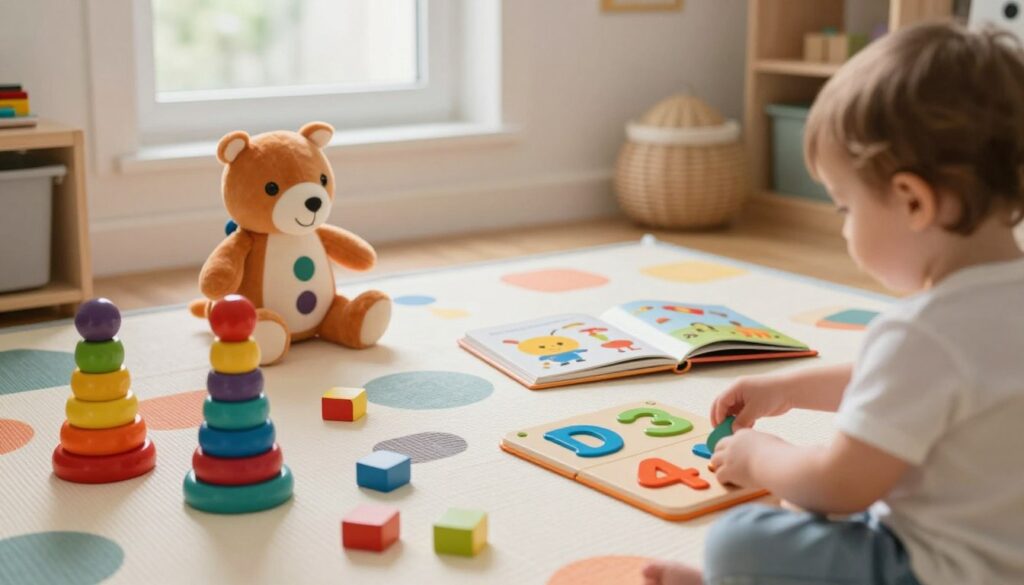

Remember the look of pure, triumphant joy on your child’s face when they fit that last shape into the sorter? It’s more than just a game. That moment is the sound of a new neural pathway firing.
Between the ages of one and three, your toddler’s brain is building its very foundation. Every interaction, every new texture, and every solved puzzle is a brick in that foundation. Their primary job isn’t to listen to lectures—it’s to play.
This means the items you bring into your home aren’t mere distractions. They are essential tools for development. The right choices can turn playtime into a powerful workshop for fine motor control, early logic, and even social skills.
Feeling overwhelmed by the endless aisles and online options? We’ve done the work for you. This curated list cuts through the clutter to spotlight playthings that deliver genuine, lasting skill development. Consider this your guide to becoming an empowered partner in your little one’s most critical learning years.
Table of Contents
Key Takeaways
- Play is the fundamental work of a toddler, directly shaping brain development and cognitive growth.
- The right tools build concrete skills like fine motor control, problem-solving, and early language.
- Selecting items aligned with your child’s developmental stage maximizes engagement and learning.
- Look for toys that encourage open-ended creativity, sensory exploration, and independent thinking.
- Quality, durable choices can introduce foundational STEM concepts and social-emotional learning.
- Our list prioritizes safety, educational value, and toys that grow with your child’s abilities.
- You have the power to transform everyday play into a rich, skill-building experience.
Why the Right Toys Are a Game-Changer for Your Toddler’s Brain
The toys you choose for your one to three-year-old do much more than occupy time; they actively shape the very architecture of their developing mind. This isn’t just a feel-good idea—it’s solid neuroscience.
From their first birthday to their third, your child’s brain is in a supercharged state of growth, forming over a million new neural connections every single second. Think of play as the construction crew that builds and strengthens these pathways.
Passive entertainment, like watching a screen, lets information wash over them. Active, engaged play is the opposite. It requires your toddler to touch, twist, solve, and imagine. This hands-on work is what literally builds a stronger, more capable brain.
This is where true toddler learning toys become a game-changer. A simple shape sorter isn’t just about fitting a circle into a hole. It’s a complex lesson in spatial reasoning, trial and error, and fine motor control. Each attempt fires and wires those neural circuits.
“Play is the work of childhood. It is through play that children at this age make sense of the world and construct their understanding of fundamental concepts.”
When you provide toys that challenge just enough—not too easy, not too hard—you fuel cognitive growth. You nurture the problem-solving skills they’ll use in school and the creativity that will help them innovate later in life.
You’re not just buying a toy. You’re investing in the most important project you’ll ever support: your child’s future potential. The right playthings are the tools that make that investment pay off every single day.
What Makes a Toy Truly “Educational” for This Age Group?
Forget flashy lights and branded characters; a truly educational toy for this age group acts as a tool for mastering real-world abilities. The label “educational” is plastered on countless boxes, but for your 1 to 3-year-old, the real value lies in specific, research-backed features.
We look beyond the marketing hype to identify toys that do more than just entertain. The best educational toys for 1-3 year olds are designed to partner with your child’s rapidly developing brain and body.
This alignment with developmental milestones is the first hallmark. A great toy for a one-year-old encourages the pincer grasp, while a toy for a three-year-old might spark early symbolic thinking—using a block as a phone, for instance. The toy should meet your child where they are and offer a gentle nudge forward.
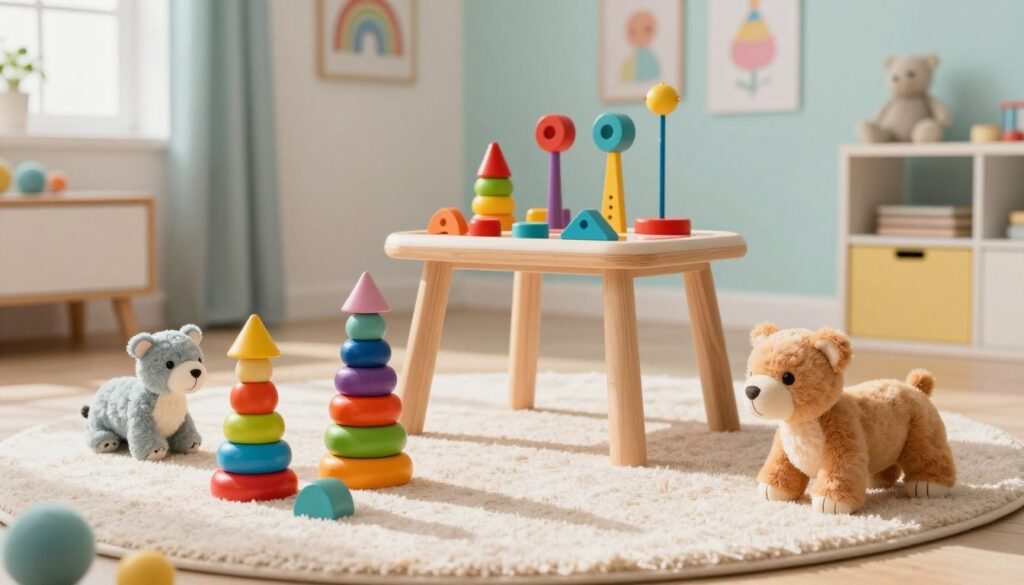
Another critical feature is open-ended play potential. Toys with a single, fixed function have limited value. The most powerful educational toys can be used in multiple ways, growing with your child’s imagination and skill level. This goes hand-in-hand with durability. A toy that survives being dropped, chewed, and stacked daily is a toy that provides lasting learning value.
True learning for toddlers is a full-body, multi-sensory experience. The best tools engage sight, sound, touch, and sometimes even taste (in a safe way). They provide a balance between a familiar challenge and an achievable success. This sweet spot keeps frustration low and the sense of accomplishment—and the desire to try again—incredibly high.
To make these distinctions clear, here is a comparison of what separates a genuinely educational toy from a merely entertaining one:
| Hallmark of an Educational Toy | What It Looks Like in Play | Common Toy Trait It Replaces |
|---|---|---|
| Aligns with Milestones | A shape sorter that requires a refined pincer grasp for a 2-year-old. | A button that only needs a slap to make noise. |
| Encourages Open-Ended Play | Wooden blocks that become a tower, a road, or an animal today. | A electronic gadget with one pre-programmed song and game. |
| Built to Last & Grow | A sturdy stacking toy that a 1-year-old knocks over and a 3-year-old carefully assembles by color. | Flimsy plastic pieces that break easily and are outgrown in months. |
| Engages Multiple Senses | A textured ball that crinkles, has a bumpy surface, and rolls with a bell inside. | A flat, smooth tablet screen. |
| Balances Challenge & Success | A simple puzzle with 3-4 chunky pieces that fits together logically. | A 50-piece jigsaw puzzle meant for an older child, causing instant frustration. |
When you apply these rigorous standards, the world of educational toys for 1-3 year olds becomes much clearer. You’re not just buying a plaything; you’re investing in a tool for development. These criteria form the foundation of our selection process, ensuring every toy on our list earns its place by fostering real, measurable skills through the powerful work of play.
The Real Skills Your Toddler Can Master Through Play
Every grab, stack, sort, and pretend scenario is more than play; it’s a deliberate step toward mastering the fundamental skills needed for school and life. The right developmental toys turn fun time into a powerful learning lab where your child builds a real-world toolkit.
When your toddler fits a ring onto a post or nests a cup inside another, they’re doing serious work. This play builds spatial reasoning—the ability to understand shapes, spaces, and how objects relate to each other. It’s the same skill they’ll later use for reading maps and solving geometry. Simultaneously, their hand-eye coordination gets a major workout, refining the precise muscle control essential for writing, eating, and dressing.
That moment of triumph when the last puzzle piece clicks into place? That’s problem-solving in action. Puzzles teach toddlers to analyze, try different approaches, and persist. They learn that challenges have solutions, fostering a growth mindset and the invaluable skill of patience. These are the best toddler developmental toys for showing your child how to tackle obstacles calmly and logically.
Don’t underestimate the tea party or the game of “doctor.” Role-play is a language explosion. As your child narrates their play, they experiment with new words, sentence structure, and storytelling. More importantly, they step into another’s shoes. This pretend play is the birthplace of empathy and social understanding, as they learn to consider feelings and perspectives beyond their own.
What happens when I push this button? Why does the ball roll down the ramp? Cause-and-effect toys introduce basic principles of physics and logic. Your toddler learns that actions have predictable results, laying the groundwork for scientific thinking and logical reasoning. They begin to understand sequences and consequences, which is critical for following instructions and safe exploration.
By choosing toys designed with these outcomes in mind, you’re directly supporting your toddler’s brain development. You’re not just keeping them busy; you’re providing the tools to build cognitive, physical, and emotional intelligence. The mastery of these real skills is the ultimate return on your investment in thoughtful, engaging play.
Safety First: Non-Negotiables for Toddler Toys
The most educational toy in the world loses its value if it poses a risk to your child. Your toddler’s safety is the absolute foundation of smart play. You cannot compromise on it.
Before any toy enters your home, you must become a safety inspector. Look for these non-negotiable features every single time.
Use this table as your quick-reference guide. It outlines the major hazards and exactly what to verify.
| Safety Concern | What to Look For | Why It Matters |
|---|---|---|
| Choking Hazards | Any small parts that can fit through a toilet paper tube. Toys should meet ASTM F963 standards. | This is the leading cause of toy-related injuries. The standard uses a “small parts cylinder” tester. |
| Toxic Materials | Labels stating BPA-free, lead-free, and phthalate-free. Wood toys should use non-toxic paints and finishes. | Toddlers mouth everything. Harmful chemicals can leach into their system during chewing. |
| Structural Integrity | No sharp edges, points, or pinching mechanisms. All parts must be securely fastened and cannot be pulled apart easily. | Prevents cuts, splinters, and injuries from broken pieces becoming choking hazards. |
| Battery Security | A battery compartment secured with a screw. It should be impossible for little fingers to open. | Loose batteries are a severe choking and poisoning risk. Secure compartments are mandatory. |
| Sound Level | Toys that do not exceed 85 decibels. Look for volume-limiting features. | Protects your child’s developing hearing from permanent damage. |
The ASTM F963 standard is your best friend. It’s a comprehensive set of safety regulations that reputable toy manufacturers follow. Always check the packaging for this designation.
Non-toxic materials are not a luxury. They are a requirement. Your child will chew, drool on, and handle toys constantly. Insist on products that proudly state they are free from harmful substances.
Structural flaws can turn a fun toy into a dangerous one. Run your fingers along all edges. Give larger parts a gentle tug. If anything feels loose, sharp, or flimsy, put it back on the shelf.
Battery-operated toys need special scrutiny. That tiny compartment door is a magnet for curious toddlers. A simple screw makes it safe. This one feature can prevent a nightmare.
The most educational toy is, first and foremost, a safe toy.
Every toy on our recommended list has been vetted against these non-negotiable criteria. We prioritize toddler toy safety so you can focus on the fun and learning. Never let flashy features distract you from these fundamental checks. Your child’s well-being depends on it.
Our Selection Process: Finding the Top-Rated Learning Toys
Finding the best educational toys isn’t about guesswork; it’s about a clear, evidence-based method. You want toys that deliver on their promises. We designed our selection process to cut through the noise and spotlight only the most effective tools for your toddler’s growth.
Our mission was simple. We aimed to identify toys that are celebrated not just in ads, but in living rooms and playrooms across the country. This meant looking beyond fancy packaging to find what truly works for kids and parents alike.
We built our findings on three solid pillars of research. First, we analyzed thousands of real parent reviews. Next, we consulted insights from child development specialists. Finally, we noted recognition from trusted industry awards. This triple-check system ensures every recommendation is well-rounded and reliable.
Real Parent Reviews were our starting point. We read feedback on major retail sites and parenting forums. We looked for patterns: which toys were mentioned repeatedly? Which ones held kids’ attention for months, not minutes? This real-world data is irreplaceable.
Expert Opinions from pediatric occupational therapists and early childhood educators gave us the “why” behind the “what.” They helped us evaluate if a toy’s design aligns with key developmental milestones for 1 to 3-year-olds.
Awards & Seals of Approval from organizations like ASTRA, TOTY, and Oppenheim Toy Portfolio provided an extra layer of validation. These awards are often based on rigorous testing for safety, quality, and play value.
| Research Source | What It Tells Us | Why It Matters |
|---|---|---|
| Parent Reviews | Real-life longevity, daily usability, child’s enjoyment level. | Shows how a toy performs outside a lab, in the hands of actual toddlers. |
| Expert Analysis | Developmental appropriateness, skill-building potential, design quality. | Confirms the educational merit and supports healthy brain development. |
| Industry Awards | Safety standards, innovation, overall excellence in toy design. | Acts as a trusted filter, highlighting toys that meet high professional benchmarks. |
After gathering all this data, we applied four core evaluation criteria to every single toy. A product needed to excel in these areas to earn a spot on our final list of top-rated learning toys.
- Longevity of Engagement: Does it offer open-ended play? Will your toddler return to it again and again, discovering new ways to play?
- Educational Value: Does it clearly teach a real skill? This could be fine motor control, cause-and-effect, early math concepts, or language development.
- Durability & Safety: Is it built to withstand toddler enthusiasm? Does it meet all U.S. safety standards and have no small, detachable parts for the recommended age?
- The Pure Fun Factor: This is critical. If a toy isn’t enjoyable, it won’t be used. We prioritized toys that make learning feel like play, not work.
This thorough vetting process means you can shop with confidence. The upcoming list isn’t just a collection of popular items. It’s a curated guide to highly-rated toys that have proven their worth through expert approval and countless hours of toddler-tested play.
The Ultimate List: 13 Best Educational Toys for Toddlers 1 to 3 Years
Imagine playthings that do more than entertain—they actively engage your child’s mind and body in meaningful development. This carefully curated list is your roadmap to the highest-rated, most effective interactive toddler toys on the market. Each selection promises to deliver joy while building crucial real-world skills, from early math to creative problem-solving.
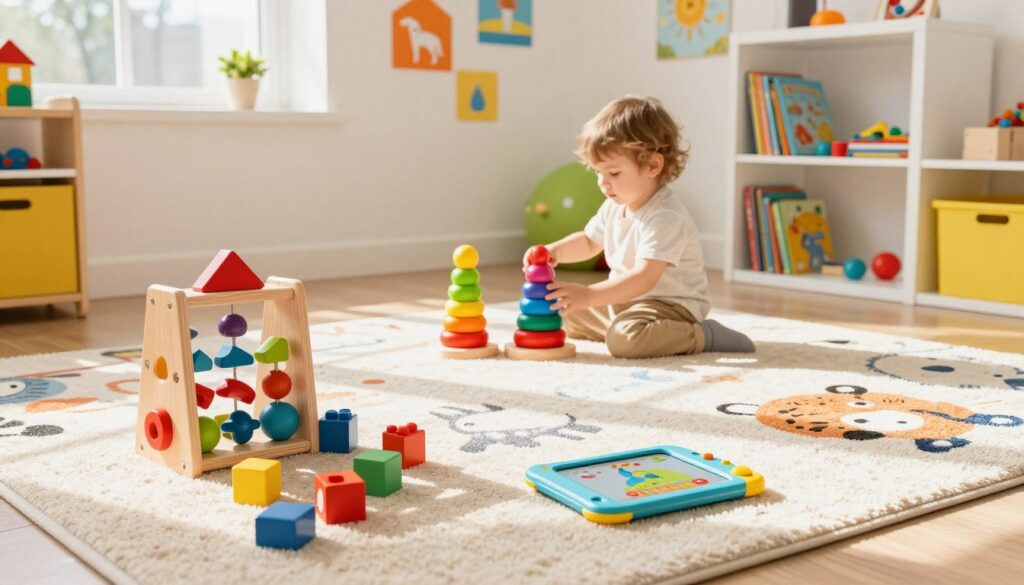
1. Melissa & Doug First Play Wooden Farm Puzzle
Overview
This chunky wooden puzzle is a classic for a reason. It invites your toddler into a world of friendly farm animals, offering a perfect first challenge for little hands. The satisfying fit of each piece builds confidence and introduces early logic.
Pros
- Extra-thick pieces are easy for small hands to grasp and manipulate.
- Bright, non-toxic paints and solid wood construction ensure durability.
- Teaches animal recognition, vocabulary, and basic spatial reasoning.
Cons
- Limited to seven pieces, so older toddlers may master it quickly.
- The wooden board can be somewhat heavy for very young children to carry.
Key Features
Focuses on fine motor skill development, hand-eye coordination, and early cognitive matching. It’s a foundational toy that turns simple play into a focused learning moment.
2. LeapFrog My Pal Scout
Overview
Meet your child’s first personalized pal! This adorable plush puppy can be programmed with your toddler’s name and favorite things. He sings songs, plays games, and teaches colors, numbers, and emotions through gentle, responsive interaction.
Pros
- High level of personalization creates a unique and engaging experience.
- Soft, huggable design makes it a comforting companion beyond playtime.
- Introduces early academic concepts in a fun, musical format.
Cons
- Requires batteries (not included).
- The electronic components mean it’s not machine washable.
Key Features
An exemplary interactive toddler toy that promotes emotional connection, language acquisition, and responsive play. It grows with your child through multiple learning modes.
3. Fat Brain Toys SpinAgain Stacking Toy
Overview
Watch your child’s fascination with motion and color come alive. This vibrant stacking toy features spinning gears that toddlers can arrange on a central dowel. The satisfying click-clack sound and visual spin provide endless sensory feedback.
Pros
- Unique spinning design captivates attention and teaches cause-and-effect.
- Promotes color recognition, size sequencing, and fine motor control.
- Durable, BPA-free plastic is easy to clean and built to last.
Cons
- The pieces are a bit large, requiring ample play space.
- Some children may find placing the gears on the dowel challenging at first.
Key Features
A standout among early STEM toys for toddlers, introducing basic engineering concepts like sequencing, balance, and kinetic energy through hands-on experimentation.
4. VTech Touch and Learn Activity Desk Deluxe
Overview
Transform any space into a dynamic learning station. This multi-mode activity desk features an interactive desktop that teaches letters, numbers, music, and more. It converts from a desk to an easel and chalkboard, offering years of adaptable fun.
Pros
- Incredibly versatile with over 20 interactive activity pages.
- Grows with your child through progressive learning levels.
- Encourages independent play and exploration in a structured format.
Cons
- Contains many small pieces (like cards and stickers) that require supervision.
- Can be noisy with multiple sound effects and songs.
Key Features
Targets comprehensive pre-academic skills: phonics, counting, drawing, and creative expression. It’s a powerhouse for school readiness.
5. Lovevery The Play Kit Subscription
Overview
This isn’t just a toy; it’s a developmental system delivered to your door. Expertly designed by child development specialists, each bi-monthly kit contains playthings perfectly matched to your toddler’s evolving brain and abilities.
Pros
- Play materials are precisely tailored to your child’s age and stage.
- High-quality, sustainable wood and organic fabrics are used throughout.
- Comes with a detailed play guide for parents to maximize learning.
Cons
- Subscription model represents a higher ongoing investment.
- You don’t get to select individual items; it’s a curated experience.
Key Features
Focuses on holistic development across cognitive, motor, and sensory domains. It takes the guesswork out of finding age-appropriate, interactive toddler toys.
6. Green Toys Shape Sorter Truck
Overview
Combine shape-sorting fun with a kid-powered vehicle. This recycled plastic dump truck has a shape-sorter roof and comes with three colorful blocks. Your toddler can sort the shapes, load them up, and then push the truck to deliver them.
Pros
- Made from 100% recycled plastic, making it an eco-friendly choice.
- Dishwasher safe for easy cleaning and hygiene.
- Dual-purpose design encourages both cognitive play and physical activity.
Cons
- Only includes three shapes, which limits sorting complexity.
- The truck wheels can be noisy on hard flooring.
Key Features
Develops shape recognition, problem-solving, and gross motor skills. It’s a simple, durable toy that exemplifies learning through real-world pretend play.
7. Hape Pound & Tap Bench with Slide Out Xylophone
Overview
A symphony of cause-and-effect! This wooden bench lets toddlers pound balls through holes with a mallet, watching them roll down a track. Then, flip the bench over to reveal a fully functional xylophone for musical exploration.
Pros
- Two toys in one: a pounding bench and a musical instrument.
- Excellent for developing hand-eye coordination and rhythm.
- Solid wood construction with child-safe, water-based finishes.
Cons
- The mallet is attached with a string, which can sometimes tangle.
- Pounding can be loud—consider your noise tolerance.
Key Features
Targets auditory discrimination, fine motor control, and understanding of action-reaction. It’s a fantastic sensory and early STEM toys for toddlers experience.
8. Fisher-Price Laugh & Learn Smart Stages Chair
Overview
Your toddler’s own interactive seat of learning! This adorable chair responds with songs, phrases, and sounds when your child sits, stands, or interacts with the attached book and light-up buttons. It personalizes content to their age.
Pros
- Smart Stages technology adjusts learning content as your child grows.
- Encourages association of sitting/standing with learning routines.
- Over 50 songs and sounds keep engagement high.
Cons
- Electronic features require batteries.
- The chair has a weight limit, so it has a limited usable lifespan.
Key Features
Promotes body awareness, routine building, and early language skills. It turns a simple piece of furniture into an active, interactive toddler toy.
9. Magna-Tiles Clear Colors 32-Piece Set
Overview
Unlock your child’s inner architect. These magnetic building tiles stick together easily from every side, allowing even young toddlers to create stunning 2D and 3D structures. The clear, colorful pieces are a window to geometric discovery.
Pros
- Magnetic connection is satisfying and frustration-free for little builders.
- Open-ended play encourages limitless creativity and spatial reasoning.
- High-quality, durable plastic withstands years of rigorous play.
Cons
- Higher price point per piece compared to standard blocks.
- Small magnets pose a choking hazard if a tile breaks—always supervise.
Key Features
The quintessential STEM toys for toddlers. They teach magnetic principles, geometry, symmetry, and engineering fundamentals through immersive, hands-on construction.
10. Baby Einstein Take Along Tunes Musical Toy
Overview
Classical music meets toddler tech. This portable player features a friendly face, easy-grasp handle, and buttons that trigger seven famous classical melodies. The soft, dancing lights sync with the music for a captivating sensory experience.
Pros
- Perfect size and shape for tiny hands to carry anywhere.
- Introduces the beauty of classical music in an accessible way.
- Volume control allows for quieter play.
Cons
- Limited to seven songs, which may become repetitive for parents.
- Not a toy that encourages active problem-solving or complex motor skills.
Key Features
Focuses on auditory development, rhythm recognition, and cause-and-effect. It’s a wonderful first musical toy that promotes calm focus.
11. Battat B. Pop Arty Beads Toy
Overview
Get ready for popping fun! This bead maze features brightly colored beads on winding wires that toddlers can push, slide, and spin. The unique “pop” beads provide tactile and auditory feedback with every move.
Pros
- Unique popping mechanism is highly engaging and satisfying.
- Excellent for developing pincer grasp and finger strength.
- Compact, sturdy base is ideal for car seats or travel.
Cons
- The popping sound, while fun, can be constant.
- Design is somewhat fixed, offering less creative freedom than free beads.
Key Features
Targets fine motor precision, color tracking, and sensory integration. It’s a fantastic busy toy that keeps little hands occupied and learning.
12. Playskool Explore ‘N Grow Busy Gears
Overview
Watch the magic of mechanics unfold. This set of interlocking, colorful gears mounts on a base or any magnetic surface. When one gear turns, they all spin in a mesmerizing chain reaction powered by your toddler’s curiosity.
Pros
- Gears easily snap together, enabling quick success and experimentation.
- Teaches fundamental mechanics and cause-and-effect in a visual way.
- Set is expandable with other Explore ‘N Grow toys.
Cons
- The plastic gears can be lightweight and tip over if not secured.
- May require initial adult help to understand the linking concept.
Key Features
A brilliant introduction to mechanical reasoning and one of the best early STEM toys for toddlers. It builds logical thinking and prediction skills.
13. LEGO DUPLO My First Number Train
Overview
All aboard for number learning! This buildable train comes with numbered bricks and a figure for pretend play. Your toddler can construct the train, order the numbers, and push it along on its rolling wheels.
Pros
- Combines construction, number recognition, and imaginative play seamlessly.
- Large, chunky DUPLO bricks are perfectly safe and easy for toddlers to handle.
- Encourages storytelling and narrative thinking alongside math skills.
Cons
- Contains smaller pieces like the animal figures, requiring supervision.
- The train can come apart easily if pulled roughly.
Key Features
Focuses on early math literacy, sequential thinking, and creative construction. It’s a classic that solidifies its place as a versatile, educational must-have.
| Toy Name | Primary Skill Focus | Best For Age | Play Type |
|---|---|---|---|
| Melissa & Doug Farm Puzzle | Fine Motor, Problem-Solving | 1-2 years | Independent Focus |
| LeapFrog My Pal Scout | Language, Social-Emotional | 1-3 years | Interactive Companion |
| Fat Brain Toys SpinAgain | Sensory, Early STEM | 1-2 years | Sensory Exploration |
| VTech Activity Desk | Pre-Academic, Cognitive | 2-3 years | Learning Station |
| Lovevery Play Kit | Holistic Development | 1-3 years | Curated System |
| Green Toys Shape Truck | Shape Recognition, Motor | 1-2 years | Active Pretend Play |
| Hape Pound & Tap Bench | Cause-Effect, Music | 1.5-3 years | Sensory & Musical |
| Fisher-Price Smart Chair | Routine, Body Awareness | 1-2 years | Interactive Furniture |
| Magna-Tiles Clear Colors | Spatial Reasoning, STEM | 2-3 years | Creative Construction |
| Baby Einstein Tunes | Auditory, Sensory | 1-2 years | Portable Music |
| Battat B. Pop Arty Beads | Fine Motor, Sensory | 1-2 years | Focused Manipulative |
| Playskool Busy Gears | Mechanical STEM | 2-3 years | Mechanical Discovery |
| LEGO DUPLO Number Train | Early Math, Construction | 2-3 years | Building & Pretend Play |
Matching Toys to Your Toddler’s Evolving Stage (1 vs. 2 vs. 3 Years)
A toy that captivates your one-year-old might bore your three-year-old—here’s how to pick winners for each stage. Your child’s brain is undergoing a massive transformation between ages one and three. Selecting the right playthings means aligning with their current abilities while gently stretching their skills.
This tailored approach ensures every play session builds real-world competence. It also makes your investment in educational toys for preschoolers and toddlers far more effective.
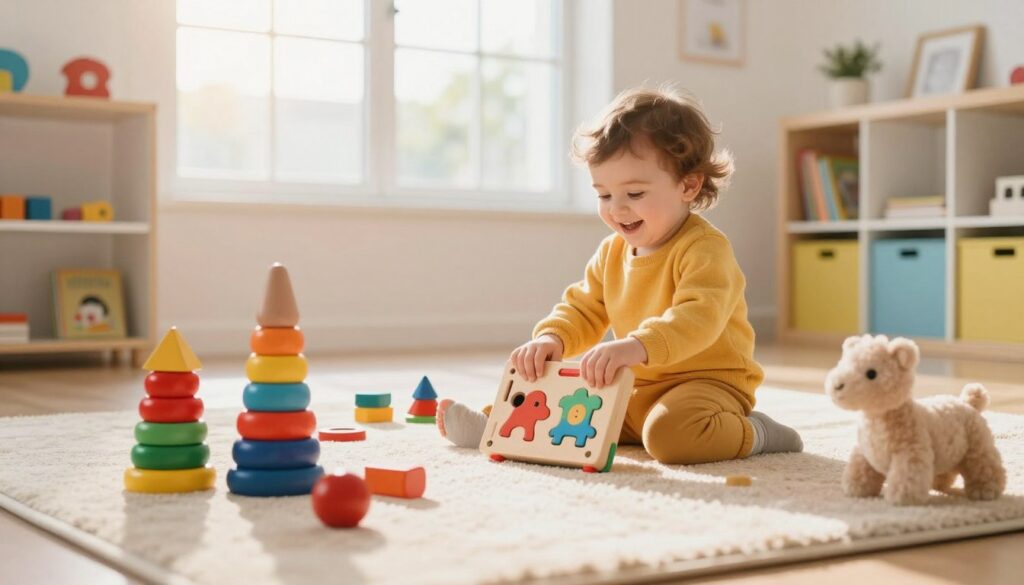
At one, your toddler is mastering gross motor skills like walking and climbing. Their play is intensely sensory. They learn by touching, mouthing, and manipulating objects.
Ideal toys are simple, durable, and safe for chewing. Look for items that encourage cause-and-effect discovery and large movements.
From our list, the Fat Brain Toys SpinAgain is perfect. Its colorful discs spinning down a corkscrew pole delight the senses and teach permanence. The Baby Einstein Take Along Tunes musical toy offers a rewarding button-press experience.
Other great choices include soft blocks, push-and-pull toys, and simple shape sorters with large pieces.
Toys for the 2-Year-Old Innovator: Language and Pretend Play
By age two, a language explosion occurs. Your child starts engaging in symbolic play, turning a box into a car. Fine motor skills improve, allowing for more precise manipulation.
Toys should now encourage vocabulary building, simple problem-solving, and early role-play. Interactive toys that respond to their actions are huge hits.
The LeapFrog My Pal Scout becomes a best friend, teaching personalized songs and words. The Green Toys Shape Sorter Truck combines vehicle play with cognitive matching.
Consider puzzles with more pieces, play kitchens, and sturdy musical instruments like the Hape Pound & Tap Bench.
Toys for the 3-Year-Old Problem-Solver: Logic and Early Academics
Your three-year-old is ready for more complex challenges. They ask “why” constantly and can follow multi-step instructions. This is the prime age for foundational educational toys for preschoolers that bridge to structured learning.
Focus on toys that build early math, literacy, and engineering concepts through hands-on play. Construction sets, beginner board games, and activity desks shine here.
The Magna-Tiles Clear Colors 32-Piece Set teaches geometry and creativity through magnetic building. The LEGO DUPLO My First Number Train introduces counting in a fun, tangible way.
This stage is where investment in high-quality educational toys for preschoolers pays the highest dividends, setting the stage for kindergarten readiness.
| Age | Key Developmental Milestones | Recommended Toy Types | Examples from Our List |
|---|---|---|---|
| 1 Year Old | Gross motor development, sensory exploration, cause & effect | Stacking rings, simple activity centers, push/pull toys, soft books | Fat Brain Toys SpinAgain, Baby Einstein Take Along Tunes |
| 2 Years Old | Language explosion, symbolic pretend play, improved fine motor skills | Interactive plush, shape sorters, role-play sets, pounding benches | LeapFrog My Pal Scout, Green Toys Shape Sorter Truck, Hape Pound & Tap Bench |
| 3 Years Old | Complex problem-solving, early math/literacy concepts, social play | Magnetic tiles, beginner construction sets, activity desks, simple puzzles with many pieces | Magna-Tiles, LEGO DUPLO My First Number Train, VTech Touch and Learn Activity Desk |
Remember, these stages are guides, not rigid rules. Your child is unique. Observe their interests and frustrations to fine-tune your choices.
A toy that was too hard last month might be the favorite next month. The goal is to provide a just-right challenge that fuels their natural curiosity and growing competence at every turn.
How to Be a Play Partner: Tips to Boost Learning
The secret to unlocking your toddler’s potential lies not just in the toy, but in how you play together. Your engagement is the amplifier that turns simple play into deep, skill-building work. Adopting the mindset behind Montessori toys for toddlers—respecting the child’s autonomy and curiosity—is something you can apply to any plaything in your home.
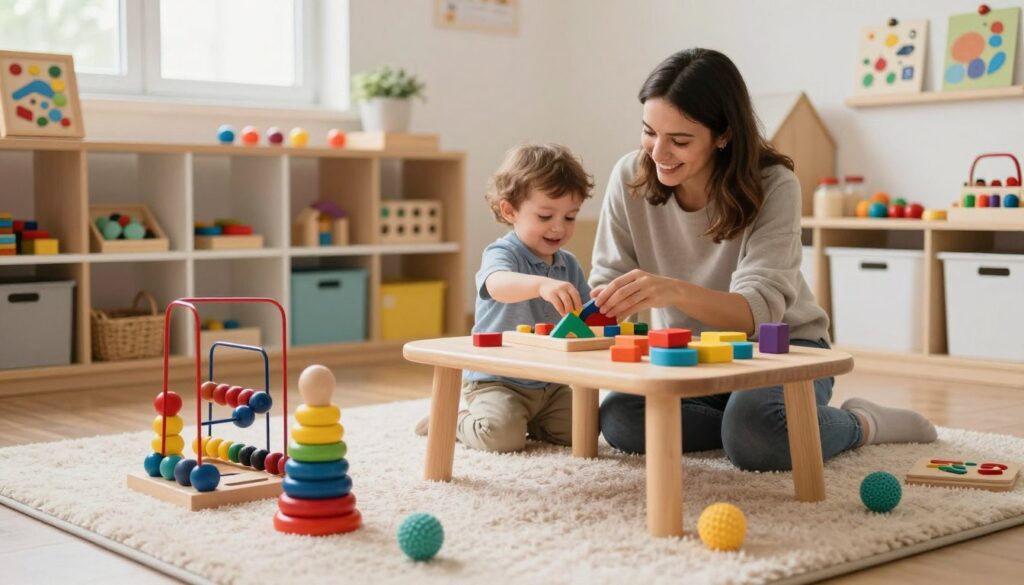
Your first and most powerful tool is observation. Sit nearby and watch. What is your child drawn to? How are they manipulating the blocks or puzzle pieces? Resist the urge to jump in and show the “right” way. This child-led observation is the cornerstone of a Montessori approach and signals that their choices are valuable.
Next, become a narrator. Use rich, descriptive language to label their actions and the toy’s properties. “You are carefully stacking the red ring on the post.” or “I see you sorted all the square blocks together.” This builds vocabulary and connects words to concrete experiences.
Asking questions is an art. Move beyond yes/no queries to open-ended wonders that spark thinking.
- “What do you think will happen if you spin that faster?”
- “How many different ways can you fit this piece?”
- “Tell me about what you’re building.”
These questions have no wrong answer. They encourage problem-solving and verbal expression.
Modeling play is different from directing. If your child seems stuck, don’t solve it for them. Instead, sit down with a duplicate toy (or similar item) and play alongside them. Silently demonstrate a new technique, like balancing a block in a new way. This shows possibilities without imposing a solution.
The goal of early childhood education should be to activate the child’s own natural desire to learn.
This philosophy means your role is to prepare the environment and then step back as a guide. It’s about scaffolding—offering just enough support for them to reach the next step independently. With a set of stacking cups, you might first model nesting them, then later ask, “Can you find the cup that fits inside this one?”
Ultimately, being a play partner is about a mindset shift. It’s not about teaching but about facilitating discovery. When you embrace this role, you’re not just playing—you’re nurturing a resilient, curious learner. Every interaction becomes a chance to boost their confidence and cognitive skills, proving the best educational tool is you.
Building a Learning Ecosystem Beyond the Toy Box
Think of your toddler’s playtime as a garden where educational toys are just one type of seed you plant. For those seeds to flourish, they need the right soil, sunlight, and care. That’s your home environment. The most powerful learning happens when you view play as a holistic system, not a series of isolated moments with a toy.
Start with how you present toys. A simple, Montessori-inspired tip is to organize playthings on low, open shelves. This allows your child to see their options clearly and make independent choices. It fosters decision-making and a sense of autonomy. When toys are dumped in a bin, they become visual noise. On a shelf, each item invites engagement.
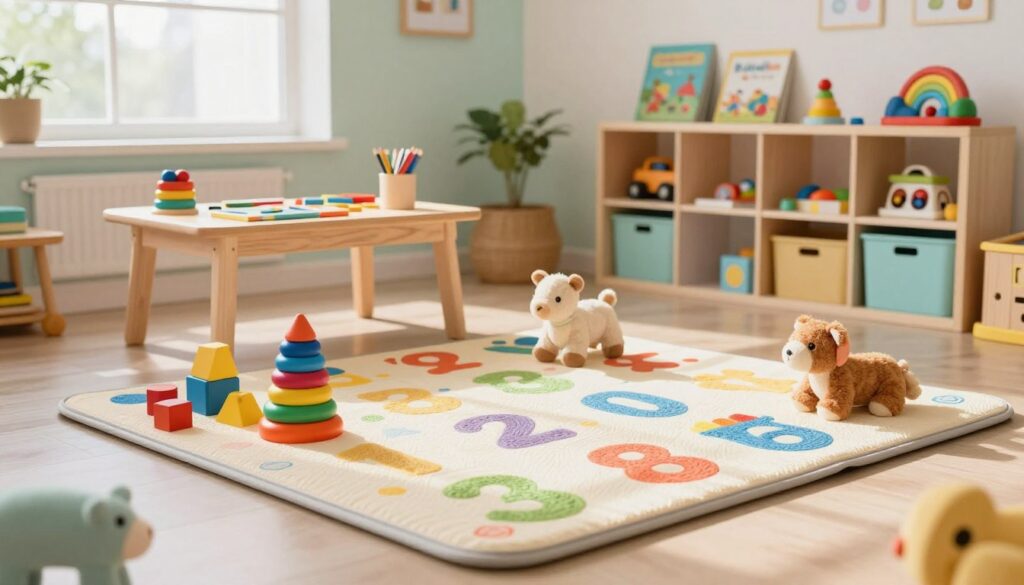
The magic doesn’t stop with organization. Implement a toy rotation system. Every week or two, swap out a few items from the shelf for others stored away. This practice solves the “I’m bored” dilemma instantly. Familiar toys feel new again, and interest is sustained. Rotation keeps the play environment fresh and challenging without requiring new purchases.
Your best learning tools might already be in your kitchen. Incorporate everyday household items into play. Measuring cups become nesting toys. A colander and pipe cleaners turn into a fine motor activity. A blanket over chairs creates a problem-solving fort. These items teach resourcefulness and show that learning is everywhere.
The environment must be rich in motives which lend interest to activity and invite the child to conduct his own experiences.
In today’s world, balancing activities is crucial. Be intentional about screen time versus hands-on play. While educational apps have their place, they can’t replace the tactile feedback of stacking blocks or the cause-and-effect discovery of a shape sorter. Prioritize toys that engage multiple senses and require physical manipulation. This builds neural pathways in ways a screen simply cannot.
Finally, see your role as the curator of this learning ecosystem. You are not just a spectator. You set the stage by creating orderly spaces, rotating materials, and offering simple household objects. You model how to explore. This intentional approach transforms your entire living space into a dynamic learning lab. The right toys are vital components, but the ecosystem you build around them multiplies their value exponentially.
By crafting this supportive play environment, you do more than entertain. You nurture curiosity, foster independence, and lay a durable foundation for lifelong learning. The toy box is just the beginning.
Smart Shopping: 5 Common Toy-Buying Pitfalls to Skip
Even with the best intentions, parents often fall into predictable traps when picking playthings for their little ones. These missteps can drain your budget and clutter your home with toys that see no play. By learning to spot these common errors, you transform from an impulse buyer into a savvy shopper who invests in real learning.
Let’s walk through the five biggest blunders so you can shop with confidence and purpose.
Pitfall 1: Chasing the “Next Stage” Too Soon
It’s tempting to buy toys labeled for an older age group, hoping to give your child a head start. This almost always backfires. A toy designed for a three-year-old will likely frustrate your 18-month-old.
When a task is too hard, toddlers lose interest quickly. They might even feel discouraged. The magic of play happens in the just-right challenge zone. Sticking to toys that match your child’s current abilities builds confidence and mastery.
Pitfall 2: Getting Dazzled by Lights and Sounds
Flashy electronic toys with automated songs and blinking lights can be irresistible in the store. They promise to “teach” your child everything. However, these toys often do all the work, leaving your toddler as a passive observer.
True educational toys invite interaction and problem-solving. They have what experts call open-ended play value. A simple set of blocks offers more long-term learning than a noisy gadget that only does one thing.
The best toys are 90% child and 10% toy. They are tools for the child’s imagination, not pre-programmed entertainment.
Pitfall 3: Prioritizing Low Price Over Lasting Quality
Everyone loves a good deal. But a cheaply made toy that breaks in a week is no bargain. It teaches disappointment, not a skill.
Look for solid construction, sturdy materials like solid wood or thick plastic, and secure fittings. A slightly higher upfront cost for a durable toy means it will survive toddler handling, last for siblings, and even hold resale value.
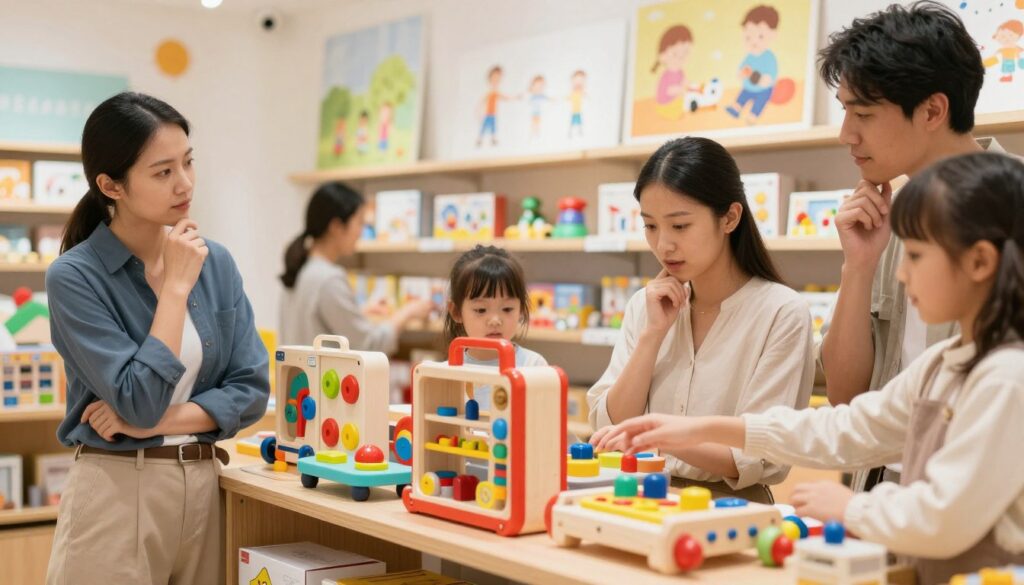
You find the perfect, large activity table. But did you measure your living room? Overlooking storage is a classic mistake that leads to constant clutter and trip hazards.
Before you buy, ask yourself: Do we have a dedicated spot for this? Does it come with its own storage bin? Opting for toys with built-in organization or sets that stack neatly makes clean-up part of the learning routine.
Pitfall 5: Ignoring Your Child’s Unique Passions
Just because a toy is top-rated doesn’t mean it’s right for your child. A toddler who loves music might ignore a fancy puzzle but spend hours with a basic xylophone.
Pay attention to what captivates your little one. Do they love sorting, building, pretending, or moving? Choosing toys that align with their natural interests guarantees engagement and extends playtime naturally.
Steering clear of these five pitfalls protects your investment and your peace of mind. It ensures every toy you bring home has a real purpose in your toddler’s development. This mindful approach is why our curated list focuses on toys that offer lasting value, match developmental stages, and spark genuine joy. Your smart shopping journey starts with knowing what to skip.
Conclusion
The toys you select are more than just playthings. They are powerful tools for building your toddler’s mind. Choosing the right educational toys for toddlers is one of the most impactful investments you can make in their future.
This guide has shown that real skill development happens through play. The best educational toys, like the Melissa & Doug Farm Puzzle or the Fat Brain Toys SpinAgain, target specific milestones. Safety and quality, as seen with brands like Green Toys and Hape, must always come first.
Match toys to your child’s exact age and stage for maximum benefit. Your role as an engaged play partner transforms simple play into deep learning. Your interaction is the secret ingredient.
See every play session as a precious opportunity for connection and growth. You are now equipped with knowledge and specific recommendations, from Lovevery Play Kits to Magna-Tiles, to create a rich learning ecosystem.
Move forward with confidence. Use playtime to lay a strong foundation for your toddler’s lifelong love of learning and discovery.