


Imagine walking into your home and finally feeling complete within the silence. For many, that quiet stillness feels like a heavy weight, yet it can become your most sacred place. You deserve to flourish in your current life by rewriting the scripts society gave you regarding your worth.
Psychotherapist Nancy Colier suggests your primary relationship must center on your true self, not the person others expect. Society often labels self-care as a selfish thing, but choosing yourself remains an essential part of a balanced life. You must learn to know yourself unapologetically without the constant fear of judgment.
Embracing your solitude is an empowering way to reclaim time. You will develop sustainable habits that shift focus from seeking validation from people toward finding internal happiness. Learning that you can thrive while happy alone ensures you never settle for less than you deserve with your time.
Table of Contents
Key Takeaways
- Prioritizing your internal connection is the foundation for lasting contentment.
- Authenticity requires letting go of who you “should” be for other people.
- Solitude offers a powerful space for personal growth and creative discovery.
- Sustainable self-love practices shift your mindset from dependency to confident independence.
- Internal validation provides freedom from external expectations and societal stigmas.
- Spending quality moments with yourself is an essential act of personal empowerment.
Reframe Your Relationship With Solitude
Many women fear being alone, but reframing this experience can actually become your greatest source of inner strength. You need to understand that solitude and loneliness are fundamentally different experiences. While one is an emotional state, the other is a powerful choice that gives your mind the mental space it needs to recharge.
Why Being Alone Is Your Superpower, Not Your Weakness
In a world that demands your constant attention, choosing to spend time by yourself is a radical act of self-reclamation. Dr. Thuy-vy Nguyen from Durham University explains that solitude is usually less stimulating than interacting with people. This lower stimulation helps you feel significantly more relaxed and calm on your own.
When you are by yourself, you can dedicate less brain power to what others expect of you. This process allows your nervous system to genuinely recover from the pressures of social performance. You are not “antisocial”; you are simply gathering the energy required to lead an intentional life.
The Mental and Physical Health Benefits of Quality Alone Time
Science proves that prioritizing quality alone time creates a measurable impact on your overall health. Giving yourself permission to exist without judgment allows your body to exit “fight or flight” mode. This biological shift nurtures your well-being in a way that constant social engagement never can.
| Benefit | Impact on Your Life |
|---|---|
| Lower Blood Pressure | Improves heart health and reduces physical stress. |
| Reduced Anxiety | Promotes emotional regulation and inner peace. |
| Enhanced Creativity | Boosts problem-solving and fresh perspectives. |
Overcoming the “Selfish” Stigma Around Putting Yourself First
You may have been conditioned to believe that wanting time alone makes you selfish. The fact is that personal reflection is essential for your mental wellness. Many women struggle with the outdated idea that they must always be available to nurture everyone else before themselves.
The real remedy for loneliness is intimacy with yourself.
By embracing solitude, you are not rejecting connection with the world. Instead, you are enhancing your capacity for genuine relationships. You show up as a whole, fulfilled person rather than someone seeking external validation to feel complete.
How to Be Happy Alone as a Woman: Build an Unshakable Self-Relationship
To find true joy in solitude, you must first commit to the most important project of your life: your relationship with yourself. This process involves peeling back the layers of societal expectations to find the woman underneath.
Developing this bond requires more than just spending quality hours alone. It demands a deep, intentional focus on your internal world to ensure you are never truly lonely, even when you are by yourself.
Get Curious About Who You Really Are
Nancy Colier emphasizes that building a self-bond starts with genuine curiosity. You must begin to wonder what you truly feel in specific situations and what you actually want out of life.
Treat yourself as a destination worth knowing rather than just a one-dimensional role. When you relate to yourself with kindness, a new kind of intimacy forms that serves as the ultimate remedy for loneliness.
Investing time into this curiosity allows you to identify your authentic preferences. You stop performing for others and start living for your own satisfaction.
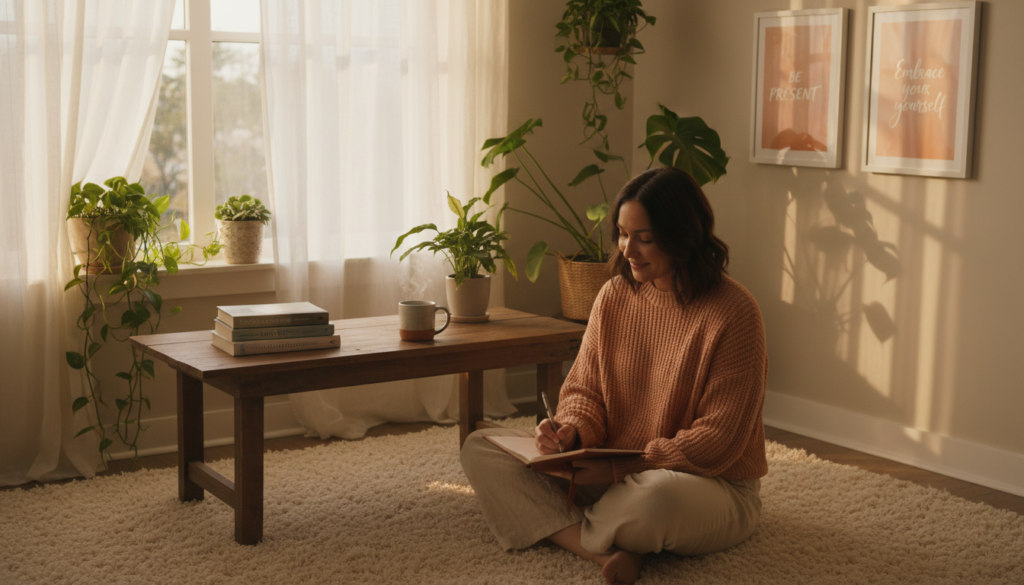
Become Your Own Best Friend Through Self-Discovery
Counselor Kristin Wilson suggests that journaling is a wonderful way to discover new things about yourself. It provides an emotional release where you can be completely honest and authentic without fear of judgment.
Practice treating yourself like one of your closest friends by asking meaningful questions. Listen to your internal responses with the same compassion you would offer someone you love dearly.
This practice helps you uncover things that bring you genuine joy. It creates a safe space to process complex emotions and identify patterns that no longer serve your growth.
When you start paying attention to and relating to yourself with curiosity and kindness, as a destination and someone worth knowing, a new kind of intimacy forms.
Ask “What Do I Want?” Instead of “What Should I Do?”
Shifting your internal dialogue is revolutionary for most women. You need to move away from the pressure of “should” and center your own valid desires and needs.
| The “Should” Mindset | The “Want” Mindset | The Result |
|---|---|---|
| Focuses on external duty | Centers personal fulfillment | Authentic living |
| Driven by fear of judgment | Driven by inner joy | Increased confidence |
| Drains mental energy | Restores personal power | Emotional resilience |
This change challenges the conditioning that tells you to prioritize everyone else’s happiness over your own. By choosing what you want, you reclaim your autonomy and build self-trust.
Turn Inward With Self-Reflection Practices
The work of self-discovery isn’t selfish; it is essential for showing up authentically in every other relationship. Practices like meditation or quiet walks create the mental space needed for your inner voice to emerge.
Dedicate time each week to evaluate how you are feeling and what needs to change. Treating these check-ins as non-negotiable appointments makes you the most important person in your world.
To deepen this practice, make a list of inquiries to guide your journey toward self-knowledge:
- What made me feel truly alive today?
- What activities drained my energy or felt like a chore?
- What would I do if I were completely unafraid of judgment?
- Which experiences do I want to prioritize this month?
Break Free From Digital Distractions and Comparison
True solitude remains out of reach as long as you allow digital noise to drown out your inner voice. When a screen constantly tethers you to the outside world, you never actually spend time with yourself. This constant connection keeps your mind occupied with the opinions of others instead of your own growth.
Recognize How Social Media Fuels Your Loneliness
Kristin Wilson explains that mindless scrolling often leaves us feeling sad and empty. You might feel like you are missing out on important things or that your reality is dull. This pseudo-connection actually intensifies loneliness because it prevents you from being fully present in your own environment.
Social media creates a dangerous illusion that everyone else has a more exciting path. You see carefully curated photos that bear little resemblance to daily experiences. Breaking this cycle requires you to acknowledge that what you see online is rarely the full truth.
Schedule Regular Phone-Free Hours
You must reclaim your time to experience authentic peace and self-discovery. Try a practical rule for the next 48 days: no phone for the first hour after waking and the last hour before bed. These windows are precious for self-connection rather than plugging into other people’s narratives.
- Designate 2-3 specific time blocks each week where your phone is completely off.
- Store your device out of sight to allow your brain to fully disengage.
- Focus on a hobby or a book during these quiet intervals.
Stop Comparing Your Life to Others’ Highlight Reels
The comparison trap steals your joy and distorts how you view your own life. Stop comparing your “behind-the-scenes” struggles to the staged productions of your friends. Most people only share their highlights, which makes your normal day feel inadequate by comparison.
| Digital Illusion | Authentic Reality |
|---|---|
| Perfectly filtered travel photos | The messy growth of daily routines |
| Constant social engagement | The quiet power of solo reflection |
| Validation through likes | Validation through self-respect |
Create a Safe Space Free From Interruptions
Dr. Nguyen’s research shows that if scrolling makes you stressed, you must move your device to another place. Creating a physical sanctuary in your home gives you a tangible retreat. This could be a reading nook or just a quiet corner where technology is not allowed.
Dr. Carolyn Rubenstein recommends setting clear boundaries with the people you live with to protect your solitude. Tell them exactly when you need to be left alone so you can recharge. Establishing these rules clears a lot of mental clutter and helps you value your own life without external interference.
Mindless scrolling can often leave us feeling sad and lonely, advising to take a step back so you’re not focused on what others are doing.
Master the Art of Dating Yourself
Mastering the art of dating yourself means shifting from passive waiting to active, intentional enjoyment of your own life. Instead of just waiting for the day to pass, you plan activities that bring you genuine fun and fulfillment.
Approaching your own company with the same effort you would invest in a romantic partner changes your perspective. Treating yourself with dignity is the foundation of high-level self-love.
Dating yourself adds excitement that can counteract shame or negative self-talk around being alone.
Start Small With 5-Minute Solo Sessions
You do not need to jump into a 24-hour solo retreat to see results. Start with just five minutes of intentional solitude each day to build your comfort level slowly.
Dr. Nguyen suggests penciling this time into your schedule to make the habit feel more manageable. These small windows create positive feedback loops that prove you are safe and happy in your own presence.

Plan Exciting Self-Dates You Actually Look Forward To
Actually spend time scheduling specific events on your calendar that ignite your interest. Whether it is buying a concert ticket or visiting a new place, treat these appointments as non-negotiable commitments.
This level of intentionality ensures you are building a life you truly love. You become your own best friend by prioritizing your specific interests without needing external approval.
| Date Activity | Effort Level | Emotional Reward |
|---|---|---|
| Coffee & Book | Low | Peaceful Relaxation |
| Solo Cinema | Medium | Immersive Entertainment |
| Fine Dining | High | Ultimate Confidence |
Treat Yourself the Way You’d Treat a Beloved Partner
The way you treat yourself during these experiences matters more than the activity itself. Use the good dishes for a simple meal at home or wear your favorite outfit for just one person: yourself.
Doing these things demonstrates that you are worthy of high-quality care. It shifts your mindset from “just getting by” to thriving in your own presence.
Embrace Solo Public Outings With Confidence
It is perfectly normal to feel self-conscious when you first explore the world alone. However, a lot of people are too focused on their own lives to notice or judge your independence.
Focus on the fun of the experience rather than the eyes of strangers. You will find that the anticipation of being alone in public is often harder than the actual time spent out.
Establish Self-Love Habits That Stick
Transforming your daily experience begins with the small, repeatable actions you take for yourself. Sustainable habits are not about achieving perfection overnight or following a rigid schedule. Instead, they focus on showing up for your life with consistency and grace.
Start with achievable practices that fit realistically into your current routine. When you choose rituals that feel good, you are more likely to keep them for the long term. This approach ensures you do not feel overwhelmed by a long set of requirements.
Begin a Daily Journaling Practice for Emotional Release
Daily journaling creates a powerful emotional release valve for your mind. It helps you process experiences, identify negative patterns, and gain clarity about your deepest desires. Dedicate just 10 minutes of your time each day to writing freely without any censoring.
Try to write at the same time every morning or evening to build a rhythm. Let your authentic thoughts flow onto the page without worrying about grammar. This simple act of self-expression allows you to become a better observer of your own internal world.
Move Your Body to Release Feel-Good Endorphins
Moving your body is non-negotiable for maintaining your mental and physical health. Physical activity triggers the release of endorphins, which are neurotransmitters that naturally boost your mood and energy levels. You do not need an intense gym session to see results.
Start with manageable goals, like a 10-minute morning walk or light stretching. Increase your activity by just one or two minutes each day until it becomes a natural part of your routine. Movement should feel like a gift to yourself rather than a chore.
Spend at Least 2 Hours Per Week in Nature
Science confirms that spending at least two hours of time per week in nature significantly improves your wellbeing. Research suggests this habit can lower blood pressure and reduce symptoms of depression. It serves as a legitimate health intervention for your busy mind.
Schedule these outdoor sessions into your calendar just like you would an important meeting. Whether you are hiking, gardening, or sitting under a tree, the fresh air helps you feel grounded. Connecting with the natural world reminds you that you are part of something much larger.
Discover a Creative Outlet That Brings You Joy
Discovering a creative outlet transforms your solitude into something you genuinely anticipate. Whether you enjoy painting, cooking, or playing music, creative work provides a satisfying sense of flow. It helps you access parts of yourself that might remain dormant during a normal workday.
It is a wonderful idea to put these creative sessions on your calendar to give yourself something to look forward to. Engaging in a hobby purely for fun removes the pressure of being productive. You deserve the space to play and experiment without any specific goal in mind.
Practice Gratitude to Boost Your Happiness Levels
Practicing gratitude literally rewires your brain for happiness by training your focus on the positive. It prevents you from dwelling on what is missing and highlights the abundance already present in your life. Make a physical or mental list of three specific things you appreciate every single night.
Focus on concrete details, like the taste of your morning coffee or a kind word from a stranger. Recording these moments helps you cultivate a hopeful perspective even during difficult times. Small shifts in your attention lead to massive changes in your overall outlook.
“Self-care is never a selfish act—it is simply good stewardship of the only gift I have, the gift I was put on earth to offer to others.”
To help you decide where to start, consider the impact of these different activities on your daily routine:
| Practice | Primary Benefit | Time Commitment |
|---|---|---|
| Journaling | Emotional Clarity | 10 Minutes Daily |
| Nature Time | Stress Reduction | 120 Minutes Weekly |
| Gratitude | Positive Mindset | 5 Minutes Daily |
The key to making these rituals last is to track your progress and celebrate every small win. Use a simple habit tracker or calendar checkmarks to visualize your consistency. Each day you follow through is a powerful demonstration of self-respect and long-term well-being.
Build Emotional Resilience for Long-Term Happiness
Mastering emotional resilience transforms your solo journey from a fragile state into an unbreakable foundation for life. This strength is the most important thing you can build to protect your inner peace. It allows you to navigate challenges without being derailed or losing your sense of self.
When you learn to spend time refining your inner world, you become less reactive to external stress. Resilience is not about avoiding pain, but about how quickly you can recover and grow from it.

Develop Stronger Coping Skills for Life’s Challenges
Emotional resilience is built through intentional practice. You can strengthen your capacity for happiness by using perspective-taking and problem-solving whenever a hurdle appears. This mental work ensures that setbacks do not shatter your hard-won peace.
Focus on emotional regulation to keep your reactions balanced. When you face a problem, ask yourself if it will matter in a month. This simple shift in thinking builds a durable mind that survives any storm.
“Resilience is knowing that you are the only one that has the power and the responsibility to pick yourself up.”
Practice Self-Forgiveness and Let Go of Harsh Self-Judgment
Research shows that the act of forgiveness may reduce stress, anxiety, and depression. It is less about making someone else feel better and more about freeing your own heart. Forgiving yourself is equally important for your long-term mental health.
Practice releasing yourself from past mistakes with compassion. Harsh self-judgment keeps you trapped in cycles of shame that prevent growth. Treat yourself with the same kindness you would show to your dearest friends.
Maintain Meaningful Relationships While Enjoying Solitude
Being happy alone does not mean isolating yourself from all other people. In fact, maintaining deep relationships with family and friends actually enhances your capacity for solitude. It ensures you choose to be alone from a place of strength rather than fear.
Schedule regular check-ins to keep your social bond strong. Healthy relationships and meaningful solitude are complementary aspects of a balanced life. You show up as a more complete person when your own cup is already full.
| Feature | Healthy Solitude | Isolation |
|---|---|---|
| Motivation | Self-growth and peace | Fear or feeling unworthy |
| Connection | Meaningful relationships | Avoiding others |
| Outcome | Empowerment | Increased loneliness |
Set Future Goals That Inspire You
Consider where you want to be in 5 years or 10 years, both personally and professionally. Setting clear goals transforms your alone time into intentional preparation for a life you love. These targets should excite you and reflect your most authentic values.
- Identify three personal goals for the coming year.
- Revisit your progress annually to stay on track.
- Celebrate small wins to keep your motivation high.
Recognize When You Need Professional Support
Therapy is a proactive investment in your relationship with yourself. You do not have to wait for a crisis to seek help from a professional. If you feel stuck for many days or find it difficult to cope, reaching out is a sign of immense strength.
Professional support can accelerate your journey toward authentic joy. It helps you process past trauma and develop healthier patterns for the future. Always remember that asking for help is an act of self-love, not a sign of failure.
Conclusion
Reclaiming your independence starts with the decision to value your own company above external validation. Learning to be happy alone is a journey that requires time and a lot of patience.
The result is a deep sense of happiness that no one can take away from you. This process isn’t about avoiding people or rejecting relationships.
Instead, it is about making your connection with others a choice rather than a necessity. You can have fun exploring new things on your own terms.
This shift is a vital part of your growth. Dedicate time to yourself and discover how much fun your own life can be when you prioritize your inner peace.
| Focus Area | Key Takeaway |
|---|---|
| Self-Validation | Find worth within rather than from external sources. |
| Solo Exploration | Try new hobbies to build confidence and joy. |
| Healthy Boundaries | Choose connections based on value, not loneliness. |