


Remember that moment today when everything felt completely upside down? The toys are everywhere, lunch is on the floor, and naptime is a distant dream.
You’re not alone in craving a little more calm. That deep desire for predictability is your secret superpower. It’s the first step toward a happier child and a more peaceful home.
This isn’t about a strict, minute-by-minute schedule that adds more stress. It’s about crafting a gentle rhythm that gives your little one the security they need to thrive.
A flexible, effective framework turns chaos into connection. You can build a structure that fits your unique family life perfectly. Success is closer than you think.
Table of Contents
Key Takeaways
- A consistent schedule dramatically reduces meltdowns by building a sense of security.
- Building in flexibility allows you to adjust for real-life surprises without derailing the whole day.
- The right rhythm promotes healthier sleep patterns and better eating habits naturally.
- This approach creates more quality time and significantly lowers stress for everyone.
- You can easily tailor the plan to match your child’s unique personality and needs.
- Start with one simple anchor activity to build momentum for bigger changes.
- This method is about loving guidance, not control, which fosters early independence.
The Unbeatable Power of a Predictable Toddler Day
The secret to a harmonious home with a toddler lies not in strict rules, but in the gentle power of predictability. When your child knows what to expect, the entire dynamic of your day shifts. You move from a state of constant reaction to one of calm guidance. This isn’t about rigidity; it’s about creating a reliable rhythm that serves as a safety net for your little one’s big emotions and explorations.
How Routine Fosters Security and Development
For a toddler, the world is a vast and often confusing place. A predictable sequence of events acts like a familiar map in uncharted territory. This consistency directly reduces anxiety. When your child knows that playtime follows breakfast and that a nap comes after lunch, they feel secure. This security is the bedrock for healthy development.
An effective toddler routine does more than just prevent meltdowns. It actively builds your child’s brain. Executive function skills—like planning, impulse control, and working memory—are strengthened through repetition and expectation. By following a structured toddler day, your child begins to internalize sequences. They learn to anticipate “what comes next,” which is a foundational cognitive skill.
This framework also nurtures budding independence. When the steps of the day are familiar, your toddler can participate more confidently. They might try to put on their shoes before going outside or bring their plate to the sink after a snack. These small acts of autonomy are empowered by the predictability you’ve created.
Reclaim Your Sanity: The Parental Benefits
While the benefits for your child are profound, the advantages for you are equally transformative. Implementing an effective toddler routine is one of the most powerful acts of self-care you can undertake as a parent. It systematically removes points of friction from your day.
First, it drastically cuts down on decision fatigue. You’re no longer wondering, “What should we do next?” or negotiating every transition. The plan is already set, which frees up your mental energy for connection and creativity. This leads to fewer power struggles. When “clean-up time” always comes after playtime, it becomes a non-negotiable part of the flow, not a sudden command.
Perhaps the most cherished benefit is the gift of reclaimed time. A structured toddler day creates predictable pockets where you know your child will be engaged in play or resting. This allows you to sip a hot coffee, tackle a work email, or simply breathe. You gain moments of respite that make you a more patient and present parent.
Ultimately, a predictable schedule transforms your home environment. It replaces chaos with calm and uncertainty with connection. You’re not just managing time; you’re building a framework for a happier, more cooperative family life.
Decoding Your Toddler’s Internal Clock
Before you can build a schedule that works, you must first learn to read the subtle signals your child’s body sends throughout the day. Think of yourself as a detective. Your mission is to uncover your toddler’s unique biological blueprint. This isn’t about forcing a rigid plan. It’s about discovering the natural flow that makes a successful toddler schedule feel almost automatic.
When you align your day with your child’s internal clock, you work with their biology, not against it. This simple shift minimizes resistance and meltdowns from the very start. You stop battling their natural energy dips and hunger pangs. Instead, you plan for them.

Mapping Natural Sleep and Wake Windows
Sleep is the most powerful anchor in your toddler’s day. Getting it right solves half your routine challenges. The key is the “wake window”—the ideal length of time your child can stay happily awake between sleeps. Push past this window, and overtiredness triggers a cortisol rush, making it harder to fall asleep and stay asleep.
To map these windows, observe for three days. Note the exact times your toddler wakes up, shows first sleepy signs (rubbing eyes, zoning out), and finally falls asleep. Patterns will emerge.
| Age Range | Morning Wake Window | Afternoon Wake Window | Total Daily Sleep Goal |
|---|---|---|---|
| 12-18 Months | 3 – 3.5 hours | 3.5 – 4.5 hours | 12 – 14 hours |
| 18-24 Months | 4.5 – 5.5 hours | 4.5 – 5.5 hours | 11 – 13 hours |
| 2-3 Years | 5.5 – 6.5 hours | 5.5 – 6.5 hours | 10 – 12 hours |
Use this table as a starting guide, but always trust your child’s unique signals. A toddler on one nap needs a longer morning window before naptime. A child transitioning out of naps needs a consistent “quiet time” block instead.
Locking in these sleep rhythms is the first pillar of your successful toddler schedule. It creates predictable downtime for you and ensures your child has the rest they need to learn and play.
Predicting Hunger Cues and Energy Peaks
Just like sleep, your toddler’s hunger and energy operate on a cycle. When you predict the low points, you can preempt the “hangry” meltdown. When you catch the high-energy peaks, you can schedule active play or learning.
Hunger cues often appear before your toddler can say “I’m hungry.” Watch for these signs:
- Increased fussiness or irritability for no clear reason
- Putting hands or toys in their mouth
- Pacing near the kitchen or pantry
- A sudden dip in energy or concentration
Energy peaks usually follow meals and naps. Most toddlers have a burst of alertness and physical drive in the mid-morning and again in the late afternoon. This is the perfect time for playground trips, dance parties, or messy art projects.
The goal isn’t to clock every minute. It’s to see the pattern so you can offer food before the crash and channel energy before it turns into chaos.
By tracking these cycles for a few days, you’ll see when your child naturally gets hungry or tired. This allows you to set meal and snack times that align with their body’s expectations. Consistent timing reduces battles at the high chair because your toddler is genuinely ready to eat.
This biological harmony is what makes a successful toddler schedule truly work. You’re not imposing arbitrary times. You’re building a daily flow that respects your child’s innate needs. With sleep mapped and hunger predicted, you have the core data to construct the rest of your routine with confidence.
The Core Components of a Toddler Daily Routine That Works
The secret to a smooth toddler day lies in understanding two distinct types of time: non-negotiable anchors and malleable blocks. A successful routine is not a minute-by-minute prison. It is a flexible framework that provides the predictability your child craves while leaving room for life’s beautiful spontaneity. This toddler routine guide introduces the philosophy that true structure creates freedom, not confinement.
Master this balance, and you transform daily chaos into a harmonious flow. The day is built on two core components that work in concert.
The Fixed Anchors: Sleep, Meals, and Hygiene
Fixed anchors are the non-negotiable pillars of your day. They are the events that happen at roughly the same time, every day. Their consistency provides the rhythmic backbone that makes your toddler feel secure and regulates their little body.
These anchors are biological and essential.
- Sleep: This includes a consistent bedtime and predictable nap times. A regular sleep schedule regulates your child’s circadian rhythm, directly impacting mood, learning, and growth.
- Meals & Snacks: Offering food at consistent intervals stabilizes blood sugar. This prevents hangry meltdowns and establishes healthy eating patterns. Think breakfast, lunch, dinner, and one or two scheduled snacks.
- Hygiene: Routines like morning face-washing, post-meal tooth brushing, and a calming bath before bed are more than just cleanliness. They are powerful sensory cues that signal what part of the day comes next.
When these three anchors are steady, the entire day feels stable. They are the must-dos that everything else can gracefully bend around.
The Flexible Blocks: Play, Learning, and Adventure
This is where your creativity and your child’s interests shine. Flexible blocks are the periods of activity that fill the space between your fixed anchors. Their order and content can change based on energy levels, weather, and your family’s plans for the day.
Think of them as themed containers for engagement.
- Play: This includes both independent play, where your toddler explores solo, and connected play where you engage together. The type of play can vary daily.
- Learning: Weave in simple, focused activities that build skills. This could be a puzzle, reading books, a craft, or singing songs. It’s a purposeful block but not a rigid curriculum.
- Adventure: This is your wild card. It could be a trip to the playground, a grocery store errand, a playdate, or a walk in the park. These outings provide novel stimulation and break up the day.
The power of this toddler routine guide approach is adaptability. If an adventure runs long, you can shorten a play block. If your child is tired, you might swap a learning activity for quiet reading. The fixed anchors remain untouched, so the day’s foundation stays solid.
By distinguishing between anchors and blocks, you gain a powerful tool. You have a plan that works without being fragile. This framework empowers you to build a toddler routine guide that is uniquely yours—predictable enough for your child, flexible enough for you.
Blueprint Schedules: Adaptable Templates for Your Day
Your practical toolkit begins here with two proven daily schedule for toddlers blueprints. Theory is great, but you need a clear map to follow. These best toddler routine examples are designed to be customized, not copied rigidly.
Think of them as a starting point you can mold to your child’s unique rhythm and your family’s flow. They take the overwhelming guesswork out of planning.
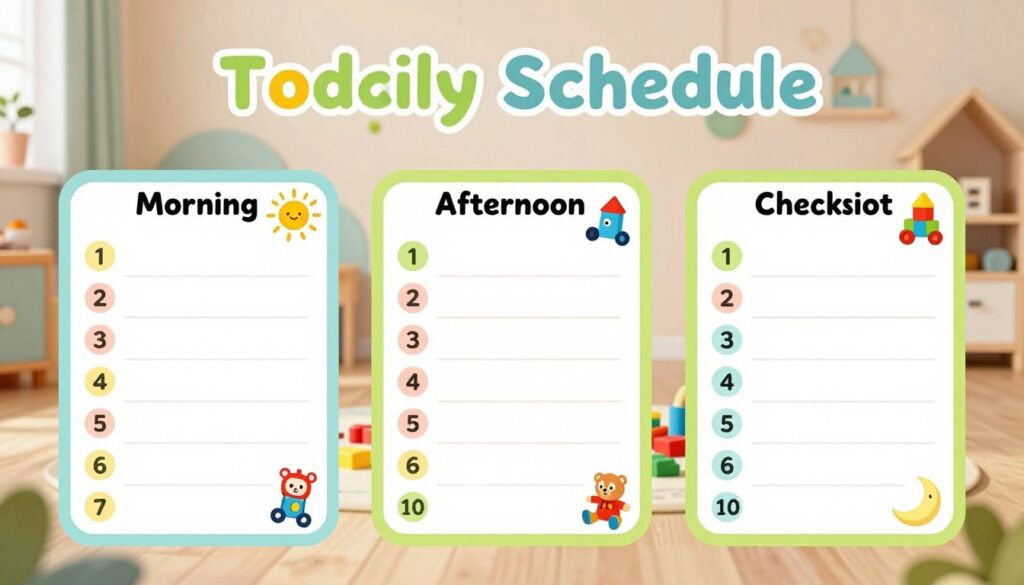
The One-Nap Day (Ages 15-24 Months)
Around this age, most toddlers consolidate their two naps into one longer afternoon nap. This shift creates a more predictable daytime structure. Your goal is to protect that crucial nap while filling the morning and late afternoon with balanced activity.
Consistency here prevents overtired meltdowns and supports better nighttime sleep.
Sample Timeline and Activity Flow
This is a realistic framework. Adjust the clock times by 30-60 minutes to match your toddler’s natural wake-up.
- 7:00 AM – 8:00 AM: Wake Up & Morning Connection. Keep lights low, offer cuddles, and change diapers. This gentle start sets a positive tone.
- 8:00 AM: Breakfast. A solid meal fuels the long stretch until lunch. Involve your toddler by letting them choose a cup or spoon.
- 8:30 AM – 10:30 AM: Active Play & Learning. Head outside if possible. Sandbox play, pushing a wagon, or a neighborhood walk builds motor skills. Mix in some indoor reading or puzzle time.
- 10:30 AM: Morning Snack. A simple, nutritious bite to bridge the gap. Offer water in a sippy cup.
- 11:00 AM – 12:00 PM: Independent or Calm Play. This wind-down period helps transition to lunch. Set out blocks or drawing materials while you prep food.
- 12:00 PM: Lunch. A predictable meal time helps regulate hunger cues. Keep it simple and stress-free.
- 12:30 PM – 2:30/3:00 PM: Nap Time. The day’s anchor. Create a dark, quiet environment. This long rest is essential for brain development and mood regulation.
- 3:00 PM: Afternoon Snack & Hydration. Offer a quick snack upon waking to replenish energy.
- 3:30 PM – 5:30 PM: Adventure or Creative Time. This is a great window for errands, playground visits, or messy art. The nap provides a second wind for exploration.
- 5:30 PM: Dinner. A family meal when possible. Toddlers learn by watching you eat and socialize.
- 6:00 PM – 7:00 PM: Wind-Down & Bedtime Routine. Bath, books, and quiet songs. The predictable sequence signals that sleep is next.
- 7:00/7:30 PM: Bedtime. A consistent lights-out time protects nighttime sleep duration.
The “Quiet Time” Day (Ages 2-3+ Years)
As naps become inconsistent or disappear, replacing them with mandatory “Quiet Time” is a game-changer. This period of rest in their room allows for recharge and teaches independent play. The daily schedule for toddlers at this stage focuses more on stamina and structured learning moments.
Sample Timeline and Activity Flow
This template assumes a later wake-up and a focus on sustained morning activity. The afternoon quiet time block is non-negotiable for everyone’s sanity.
- 7:30 AM – 8:30 AM: Wake Up & Family Breakfast. A more leisurely morning. Encourage self-dressing and help with simple tasks like pouring cereal.
- 9:00 AM – 11:00 AM: Focused Learning & Outdoor Play. Capitalize on peak morning energy. Do a craft, practice letters, or have a dance party. Then, head outside for vigorous play.
- 11:00 AM: Morning Snack. Refuel after the big activity push.
- 11:30 AM: Pre-Lunch Calm. Quiet books or drawing to settle before the meal.
- 12:00 PM: Lunch.
- 1:00 PM – 3:00 PM: Quiet Time. This is the new anchor. Your child stays in their room with books, puzzles, or soft toys. They don’t have to sleep, but they must rest. This break is critical for their mood and your productivity.
- 3:00 PM: Afternoon Snack. A “reunion” snack after quiet time.
- 3:30 PM – 5:00 PM: Social or Free Play. Playdates, helping with chores, or free play with toys. This is a less structured, more social block.
- 5:30 PM: Dinner.
- 6:15 PM – 7:30 PM: Extended Wind-Down. Bath, longer storytime, and calm conversation about the day. Without an afternoon nap, an earlier, relaxed bedtime process is key.
- 7:30/8:00 PM: Bedtime.
These best toddler routine examples prove a great daily schedule for toddlers is both structured and flexible. Use the timelines as a guide. Swap activity blocks, adjust meal times, and tailor the quiet time duration. Your family’s perfect rhythm is waiting to be discovered.
Step 1: Observe and Build Your Custom Routine Foundation
Before you pencil in a single activity, your first step is to become a detective in your own home, tracking your toddler’s daily flow. The best toddler daily routine tips always start here. You are not imposing a foreign schedule. You are uncovering the natural rhythm that already exists and building upon it. This approach ensures your routine feels familiar and comforting, not forced.
The 3-Day Observation Method
Think of the next three days as a fact-finding mission. Your goal is simple: watch and note what happens, without trying to change anything. Grab a notebook or use your phone. Jot down key events, moods, and transitions.
Focus on these four elements each day:
- Wake-up & Sleep Times: When does your child naturally rise and show signs of tiredness?
- Hunger Cues: When do they ask for food or get fussy? Note snack requests.
- Energy Peaks & Valleys: When are they most active and engaged? When do they crash or get irritable?
- Transition Reactions: How do they handle moving from play to lunch or from outside to inside?
After three days, patterns will emerge. You’ll see their biological clock in action. This data is pure gold for creating a schedule that works.

To make it easy, use a simple log. Here is a sample table to guide your observation:
| Time | Activity | Toddler’s Mood | Notes & Cues |
|---|---|---|---|
| 7:15 AM | Wakes up, plays in crib | Calm, chatty | Natural wake time. No crying. |
| 8:00 AM | Breakfast | Eager, hungry | Ate well. Asked for “more” fruit. |
| 10:30 AM | Playground visit | Energetic, joyful | High energy peak. Great motor skills. |
| 12:45 PM | Lunch | Fussy, distracted | Low energy. Rubbed eyes. Clear tired cue. |
This method takes the guesswork out of planning. It turns intuition into a solid plan.
A routine built on observation respects the child. It says, ‘I see you, I hear you, and I’m building a day that works for us.’ It’s the opposite of a power struggle.
Locking Down Your Family’s Time Anchors
With your child’s natural patterns noted, it’s time to layer in reality. Time anchors are the fixed points in your family’s day that cannot move. They are the pillars your flexible routine will hang on.
Your anchors might include:
- Work or School Start/End Times: A parent’s work-from-home block or an older sibling’s school drop-off.
- Fixed Appointments: Weekly therapy, a standing playgroup, or a gym class.
- Non-Negotiable Household Tasks: The time you start dinner prep or when the dog needs a walk.
Identify your top three anchors. Write them down. These become the immovable pieces of your daily puzzle. Schedule your toddler’s meal and nap times around these anchors for a harmonious flow.
For example, if you must leave for preschool pickup at 3 PM sharp, that becomes a hard stop. You then plan your toddler’s afternoon snack and quiet time to conclude by 2:45 PM. This proactive planning is a core part of successful toddler daily routine tips. It prevents frantic transitions and reduces stress for everyone.
By combining your observational data with your family’s fixed anchors, you create a custom routine foundation that is both child-centered and practically possible. This is how you build a schedule that lasts.
Step 2: Launch the Day Right with a Morning Routine
The first hour after your toddler wakes up sets the emotional tone for the entire day. This step is where you apply the foundation you built in step one. You turn observation into action. A predictable morning sequence cuts through the chaos. It builds cooperation instead of sparking battles.
Your goal is not just to get tasks done. You want to launch the day with a sense of calm and connection. This positive start makes every other part of your routine flow more easily.
Gentle Wake-Ups and Connection Time
How your toddler greets the morning matters deeply. A jarring alarm or a rushed “time to get up!” can trigger resistance immediately. Instead, aim for a gentle transition from sleep to wakefulness.
Start with soft lights and a calm voice. Sit on the bed for a few minutes of quiet cuddles. This connection time fills your child’s emotional cup before any demands are made. It tells them they are safe and loved.
Keep this period short but meaningful. You might read one short board book or talk about what you see out the window. The key is your full attention. This investment pays off with a more cooperative toddler for the next steps.

Streamlining Dressing, Diapers, and Breakfast
Once your child feels connected, you can move into the necessary tasks. The trick is to make them feel like a natural, predictable sequence. Rush creates friction, but rhythm creates flow.
For dressing, eliminate morning decisions. Lay out two simple outfit choices the night before. Let your toddler pick one. This gives them control and speeds up the process. Use a consistent song or silly game to make putting on clothes fun.
Diaper changes or potty time should be next. Keep all supplies in one organized station. Use the same simple phrases each time, like “All clean and dry!” This consistency removes the power struggle.
Breakfast should be a calm anchor, not a short-order cook crisis. Prepare simple, familiar options.
- Set the table together the night before.
- Offer two healthy choices, like oatmeal or yogurt with fruit.
- Use a visual timer if dawdling becomes an issue.
This entire morning block works best when you stay present and calm. Your toddler mirrors your energy. A smooth morning routine reduces battles and sets a positive trajectory for learning and play ahead.
Step 3: Establish Rhythm with Meals and Snacks
Think of meal and snack times as the steady drumbeat that provides energy and calm throughout your toddler’s active day. This step moves you from the morning launch into the core sustaining patterns of your schedule. When you get this rhythm right, you solve one of the most common parenting frustrations.
Why Consistent Meal Times Curb Battles
Erratic eating creates a perfect storm for toddler turmoil. Their little bodies thrive on predictability. Consistent meal times work because they align with your child’s natural hunger cycles.
When snacks are offered randomly, a toddler might not be hungry when you finally serve lunch. This leads to food refusal and your worry that they aren’t eating enough. A predictable schedule regulates their appetite. They learn to expect food at certain times, which reduces anxiety and the “hangry” meltdowns that derail your day.
There’s a powerful psychological benefit, too. Mealtime battles are often about control. Your toddler discovers they can say “no” to broccoli and get a big reaction. But when food arrives reliably at 12:00 PM every day, it becomes a non-negotiable part of the routine, just like nap time. The power struggle loses its fuel.
The result? You spend less energy coaxing and negotiating, and your child is genuinely hungry and more willing to try what’s on their plate.

Setting the Stage for Stress-Free Eating
Consistency in timing is half the battle. The other half is crafting an environment where eating feels easy and positive. Your goal is to make the highchair or table a place of connection, not conflict.
Start with the physical setup. Use a toddler-sized table and chair or a secure highchair. Ensure their feet are supported. This simple step gives them stability and independence. Keep distractions like loud TVs or tablets away from the eating area. You want their focus on the food and family.
Manage portions wisely. A mountain of food on a plate can overwhelm a small child. Start with tiny portions. You can always offer more. This approach minimizes waste and reduces the pressure they feel to “clean the plate.”
Your mindset is the final, crucial piece. Adopt the division of responsibility model, endorsed by feeding experts like Ellyn Satter:
“Parents are responsible for the what, when, and where of feeding. Children are responsible for the how much and whether of eating.”
This means you provide nutritious options at consistent meal times in a calm setting. Your toddler decides what and how much to eat from what you offer. Releasing the need to control every bite transforms the meal dynamic.
Implementing these strategies turns feeding from a daily challenge into a reliable pillar of your toddler routine. You create a foundation for stress-free eating that supports their growth and your peace of mind.
Step 4: Fill the Day with Purposeful Play and Learning
Filling your toddler’s day doesn’t mean becoming a cruise director; it’s about creating a simple framework for natural learning. This step is where your routine transforms from a basic schedule into an engine for growth. You provide the structure, and your child provides the curiosity. A thoughtful toddler activities plan turns potential chaos into calm, focused engagement.
Your goal is enrichment, not exhaustion. By weaving play with purpose into the flexible blocks of your day, you stop scrambling for ideas. You start fostering development almost effortlessly. Let’s build that plan together.
Balancing Guided Activities and Free Exploration
Think of your day as having two types of play: guided and free. Both are essential for a well-rounded toddler. Guided activities are those you set up with a specific goal. You might say, “Let’s make a collage,” or “Let’s see what floats in this water.” You lead the start, but your child takes over.
Free exploration is child-directed time. This is when your toddler digs in the sandbox, builds with blocks, or flips through books alone. Your role is to be available, not to instruct. This time builds independence, problem-solving skills, and imagination.
The magic is in the mix. Aim for one short, guided activity per day. It could last 15-20 minutes. Then, let long stretches of free play fill the space around it. This balance prevents you from feeling like a full-time entertainer. It also gives your child the security of your involvement and the freedom to explore.

A simple toddler activities plan might look like this: a guided sensory bin in the morning, followed by an hour of free play with toys. After lunch, a short guided craft, then outdoor free exploration. This rhythm feels natural, not forced.
Weaving in Motor Skills, Language, and Creativity
You don’t need a teaching degree. Key developmental areas fit seamlessly into everyday play. The trick is to be slightly intentional with your activity choices. Look for chances to build motor skills, boost language, and spark creativity.
Most play hits multiple areas at once. Stacking cups builds fine motor skills. Narrating what you’re doing (“You put the red cup on top!”) builds language. Painting a wild, colorful blob builds creativity. See how it works?
This table shows how easy it is to weave development into your plan:
| Activity Type | Motor Skills Focus | Language Boost | Creativity Spark |
|---|---|---|---|
| Play-Doh or Clay | Fine motor (pinching, rolling) | Describe textures, colors, shapes | Making imaginary creatures |
| Obstacle Course (cushions, tunnels) | Gross motor (crawling, climbing) | Use action words: “Crawl under!” “Jump over!” | Designing their own course layout |
| Simple Sorting (buttons by color) | Fine motor (pincer grasp) | Name colors and categories | Creating patterns with sorted items |
| Storytelling with Toys | Manipulating small figures | Narrative building, new vocabulary | Inventing characters and plots |
Your daily toddler activities plan becomes a development toolkit. A morning walk isn’t just fresh air. It’s a chance to work on gross motor skills by jumping over cracks. It’s a language lesson as you name the birds and trees. It’s a creative session when you imagine clouds as animals.
Keep supplies simple. Cardboard boxes, pots and pans, crayons, and balls are powerhouse tools. Rotate toys to keep interest high. Most importantly, follow your child’s lead. If your guided craft turns into finger painting, that’s a win. You’ve successfully woven in creativity and sensory motor skills.
When you view play through this lens, the pressure vanishes. You’re not planning elaborate lessons. You’re setting the stage. Your consistent routine provides the security. Your simple, purposeful toddler activities plan provides the growth. Together, they create days that are both predictable and wonderfully full of discovery.
Step 5: Protect Rest with Nap Time and Quiet Time
Protecting your toddler’s rest isn’t a luxury; it’s the essential foundation for a happy, balanced day for your entire family. This step is about defending that crucial restorative block on your schedule. A well-rested child is more cooperative, learns better, and is emotionally regulated. More importantly, this time gives you the necessary break to recharge, making you a more patient and present parent.
Think of nap time and quiet time as the recharge station for your toddler daily routine. Without it, the entire system can falter. The goal here is twofold: first, to master the environment for sleep, and second, to build your child’s skill for independent quiet time as naps naturally fade.
Crafting the Perfect Nap Environment
Your toddler’s sleep space is the most powerful tool you have to encourage rest. It’s not just about putting them in a cot; it’s about engineering a setting that signals to their brain and body that it’s time to wind down.
Start with light control. A dark room is non-negotiable for quality sleep. Blackout curtains or shades are a game-changer, especially for naps that happen during daylight hours. Pair this with a consistent, soothing sound. A white noise machine masks household disruptions and creates a predictable auditory cue for sleep.

Comfort is key, but keep it simple. A favorite lovey or a specific sleep sack can provide security without becoming a complicated sleep prop. The room temperature should be cool, around 68-72°F. Most importantly, this environment should be used only for sleep. This builds a powerful mental association that makes falling asleep easier.
Follow a mini pre-nap ritual, just like bedtime. This might include reading one short book, singing a specific song, and saying a key phrase like, “Time to rest your body.” This consistency within the environment tells your toddler exactly what comes next, reducing resistance.
Successfully Transitioning to Independent Quiet Time
As toddlers approach age three, naps often become shorter or are skipped entirely. This doesn’t mean the need for afternoon rest disappears. This is where independent quiet time becomes your family’s new best friend. It’s a vital skill that gives your child a chance to decompress and gives you a guaranteed daily break.
Frame this change positively. Explain that they are growing up and now get to have special “quiet play time” in their room. It’s not a punishment; it’s a big-kid privilege. Start by setting up a safe, engaging space in their room with a few select activities.
- Book Basket: Fill it with picture books they can “read” to themselves.
- Puzzle Box: Simple wooden puzzles or large-piece floor puzzles.
- Soft Toys: Stuffed animals or dolls for quiet imaginative play.
- Audio Stories: A child-safe player with audiobooks or gentle music.
Begin with a very short duration, like 15 minutes, and use a visual timer they can see. Sit quietly with them at first, modeling calm behavior. Gradually increase the time and step out of the room for longer periods. The goal is for them to learn to enjoy their own company.
Be consistent and compassionate. There will be days they come out of their room. Gently and calmly guide them back, reaffirming the rule. This transition protects your schedule and teaches your child self-regulation. It ensures your toddler daily routine remains sustainable long after naps are gone, safeguarding that precious period of afternoon peace for everyone.
Step 6: Wind Down with an Evening and Bedtime Ritual
Step six transforms the often chaotic post-dinner hours into a serene bridge leading directly to dreamland. This final phase is not just about getting your child to bed. It’s about sealing the day with security and love. A predictable evening ritual is the capstone of a toddler daily routine that works. It signals to your toddler’s brain that it’s time to shift gears from play to peace.

Decompressing After Dinner: Calm Activities
The hour after dinner is a critical buffer zone. Jumping straight from mealtime chaos to bath time is a recipe for resistance. Your goal is to lower the room’s energy. Think of this as a gradual descent into calm.
Choose activities that are soothing, not stimulating. These should engage your toddler without exciting them. The key is consistency. Doing similar quiet things each night builds a powerful cue for sleep.
Here’s a comparison of effective calm activities to help you choose what fits your family best:
| Activity Type | Examples | Key Benefit |
|---|---|---|
| Quiet Play | Puzzles, Duplo blocks, stuffed animal play, stacking cups | Develops focus without physical exertion |
| Creative & Calm | Coloring with crayons, play-doh (simple shapes), watercolor painting | Allows expression in a controlled, seated manner |
| Connection Time | Looking at family photo albums, gentle cuddling on the couch, quiet conversation | Fosters security and emotional bonding |
| Sensory Soothers | Dim lights, soft music, a cozy blanket fort, reading a familiar book | Directly calms the nervous system |
Avoid high-energy games, roughhousing, or screen time. The blue light from tablets and TVs can interfere with melatonin production. Stick to these low-key options for a smoother transition.
The Step-by-Step Bedtime Sequence for Better Sleep
Predictability is your secret weapon for bedtime. When your toddler knows what comes next, anxiety melts away. This sequence becomes a comforting script. Follow these steps in the same order every single night.
- Bath or Wash-Up: Warm water is naturally relaxing. Keep baths short (10-15 minutes) and calm. Use this time for gentle play, not splashing adventures.
- Pajamas & Diaper: Do this in the bedroom with dim lights. Make it a cozy moment, not a rushed chore.
- Brush Teeth: Be consistent with timing and technique. A two-minute song can make this fun and automatic.
- Final Potty/Diaper Check: This prevents mid-sleep disruptions and completes the hygiene routine.
- Story Time: Choose 1-2 short, familiar books. Sit close. Use a soft, slow reading voice. This is a cornerstone of your bedtime sequence.
- Song or Lullaby: One special song in the darkened room. It’s a powerful sleep cue your child will associate with drifting off.
- Goodnight Ritual: Say the same phrase every night. “I love you. Sweet dreams.” Give a hug and a kiss. Then leave the room while your toddler is drowsy but awake.
This order is not random. Each step logically leads to the next, physically preparing the body for sleep. The repetition tells your toddler’s brain, “It’s safe to sleep now.” This is the final, non-negotiable anchor of your day.
Stick to this bedtime sequence and you will see results. Fewer stalling tactics. Less crying. Earlier and longer sleep. You are building a lifelong foundation for healthy sleep habits. Your evening ritual is the peaceful ending your toddler’s day deserves.
Mastering the Art of Transition Between Activities
You’ve built a beautiful daily rhythm, only to watch it shatter during the switch from playtime to lunch—this is the transition trap. These moments between activities are the most common triggers for toddler meltdowns. The good news? With the right tools, you can move from chaos to calm. Becoming a transition master is your ultimate power move for a smoother day.
It’s all about making the unknown, known. Toddlers live in the present. Telling them “we’re leaving in five minutes” means nothing. Your job is to translate time and expectations into a language they understand. This isn’t about strict control, but about offering predictable guidance that makes them feel secure.
Using Visual Schedules and Timers Effectively
Think of these tools as your toddler’s personal day planner. A visual schedule turns abstract time into concrete pictures. You can create one with simple photos or drawings of daily events: breakfast, play, park, lunch, nap. As you complete each activity, your child moves a clothespin or checks off the picture.
This creates a powerful sense of order and accomplishment. They can see what comes next, which reduces anxiety and the resistance that comes from surprise. “First we play, then we have lunch” becomes a visible, agreed-upon sequence.
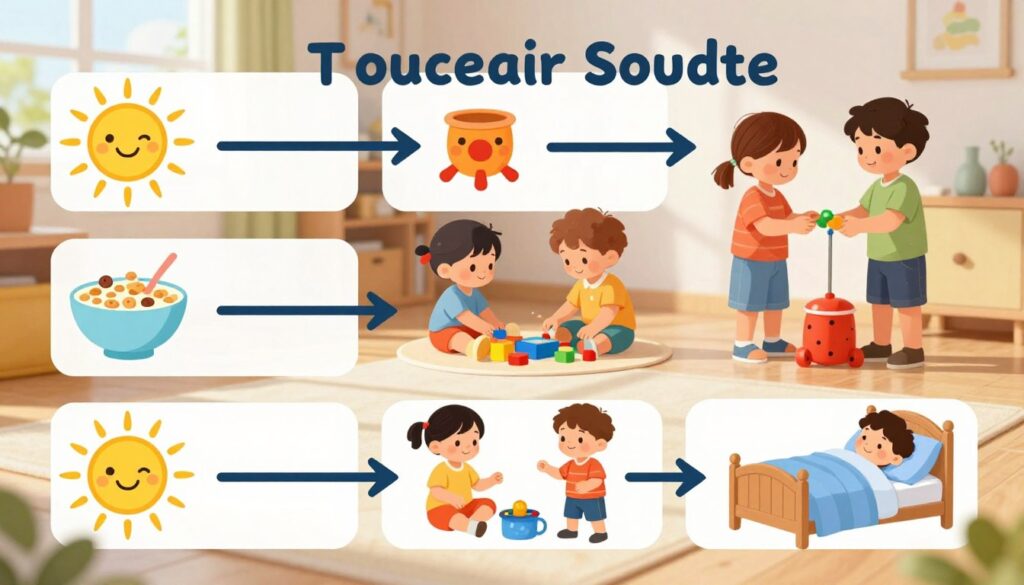
A timer is your best friend for making time tangible. Use a simple kitchen timer or a visual timer app that shows time counting down with a colored disk. Set it for playtime, clean-up, or screen time. When the bell rings or the red disappears, time is up. This externalizes the limit, so you’re not the “bad guy” ending the fun.
The magic happens when you combine them. Point to the visual schedule and say, “When the timer beeps, it’s time to put on our shoes to go to the park!” You’re giving a double cue that’s clear and fair.
The 5-Minute and 2-Minute Warning Strategy
This strategy is a non-negotiable, game-changing tactic. Never end an activity abruptly. Always bridge the gap with a gentle, predictable countdown.
The 5-minute warning is your first alert. Get on their level, make eye contact, and state the plan. “You’re doing a great job with your puzzles. In five minutes, the timer will go off, and then it will be time for lunch.” This allows their brain to start processing the upcoming change.
The 2-minute warning is the final preparation. Repeat the cue. “Two more minutes of playing, then we eat!” This is when you might start a transition song or ask them to choose which toy will go to the table with them.
When the time arrives, follow through calmly. The resistance is often far less because you’ve prepared them for success. This strategy teaches them to manage expectations and builds trust—you said five minutes, and you meant it.
Mastering these toddler transitions turns daily friction into flow. You’re not just avoiding tantrums; you’re teaching valuable life skills about time, sequence, and flexibility. Your day will feel lighter, and your toddler will feel more in control of their world.
Quick Fixes for When Your Routine Hits a Snag
When your toddler’s schedule goes off the rails, it’s not a sign of failure—it’s a chance to apply smart, quick fixes. Every family encounters days where the best-laid plans fall apart. The goal isn’t perfection. It’s having the tools to get your toddler daily routine that works back on track with minimal stress.
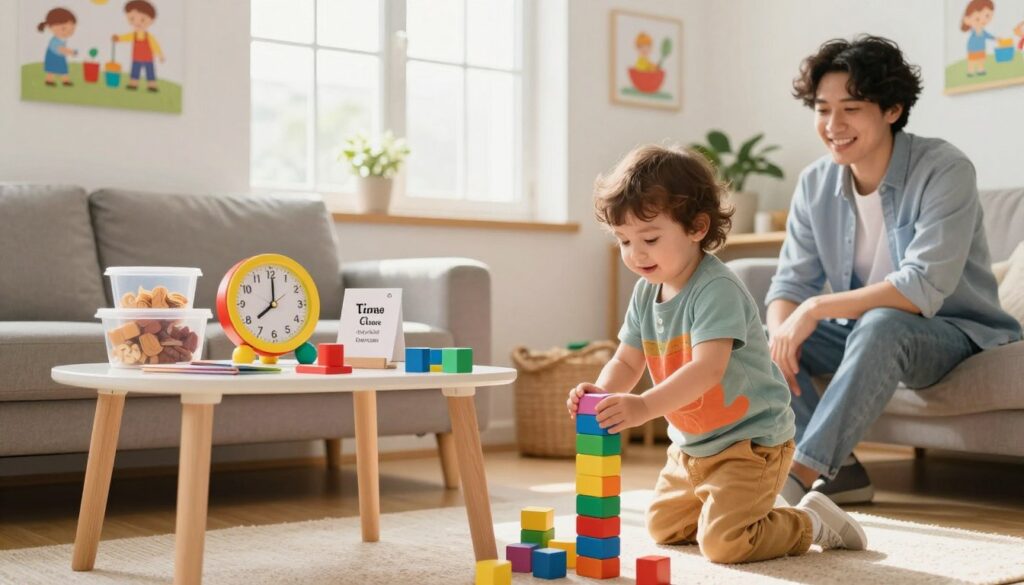
Solving Common Problems: Resistance, Early Waking, Skipped Naps
These three issues are the most common derailments. Tackle them with targeted strategies.
Resistance to Transitions: Your toddler digs in their heels when it’s time to stop playing for lunch or bath. This is often about control.
Quick Fixes:
- Use a visual timer. Give a 5-minute and then a 2-minute warning before a change.
- Offer limited choices. “Do you want to walk to the bath or be carried like a airplane?”
- Turn the transition into a game. “Let’s see if we can hop to the bathroom like frogs!”
Early Morning Waking: Your child is up for the day at 5 AM, throwing the entire daily routine into chaos.
Quick Fixes:
- Ensure the room is pitch black. Use blackout curtains to block early sunlight.
- Use an “okay to wake” clock that turns green at the desired wake-up time.
- Keep the response boring and quiet. Avoid immediate play or bright lights.
Skipped Naps: The dreaded day where your toddler simply refuses to sleep, leading to a cranky afternoon.
Quick Fixes:
- Don’t force it. Implement mandatory “quiet time” in their room with books and soft toys.
- Move bedtime 30-60 minutes earlier to prevent overtiredness.
- Check the nap environment. Is it cool, dark, and free from distractions?
This table summarizes the core problems and immediate actions you can take.
| Problem | Likely Cause | Immediate Action | Long-Term Tweak |
|---|---|---|---|
| Resistance | Lack of control, surprise | Give warnings, offer choices | Involve child in planning the schedule |
| Early Waking | Light, sleep associations | Darken room, use wake-up clock | Adjust bedtime slightly later |
| Skipped Nap | Overtired, developmental leap | Enforce quiet time, earlier bedtime | Evaluate if it’s time to transition to one nap |
Signs It’s Time for a Schedule Overhaul
Sometimes, the issue isn’t a one-day snag. It’s a signal your child has outgrown the current plan. Your toddler daily routine that works must evolve.
Watch for these clear signs:
- Consistent Nap Refusal: If skipped naps become the norm for 2+ weeks, your child may be ready to drop a nap.
- Frequent Night Waking: New, unexplained night wakings can mean daytime sleep needs adjustment.
- Mood Shifts: Your once-happy toddler is now often irritable, especially near meal or sleep times. Hunger and sleep windows change.
- Rushed or Dragged-Out Activities: Your child consistently finishes meals in 5 minutes or plays for only 2 minutes before wandering. Timing is off.
When you see these patterns, it’s time for a recalibration. Go back to observation. Track your toddler’s natural rhythms for a few days. Then, rebuild your schedule anchors—meal times, sleep windows, and activity blocks—around their new needs.
A flexible routine is a living plan. It grows and changes right alongside your child.
This proactive approach ensures your family’s predictable day continues to provide security and sanity, even as your toddler blossoms.
Conclusion
A well-crafted toddler daily routine is not about rigid control. It is your tool for creating freedom and deeper connection with your child. This predictable schedule builds a world of security where your toddler can thrive.
You now hold the blueprint. Start by observing your child’s natural rhythms. Lock in your family’s non-negotiable time anchors for sleep and meals. Fill the day with purposeful play and learning blocks. Protect rest with nap time or quiet time. End each day with a calming bedtime ritual.
The true magic lies in balancing structure with flexibility. Use visual schedules from brands like Melissa & Doug or simple timers to master transitions. When the routine hits a snag, you have quick fixes ready.
Implementing these strategies leads to a profound payoff. You will see a happier, more cooperative child. You will reclaim a sense of order and peace in your home. This peaceful home is your achievable goal. Take the first step today. Observe, adapt, and enjoy the rhythm of your new days.