


Do you feel a knot in your stomach when the bills come? Do you worry if your single paycheck will cover everything? I’ve been there too.
I once faced a mountain of credit card debt with only my income to rely on. But I proved it’s possible to achieve financial freedom on one salary. I’ve done it myself.
This isn’t just generic advice. It’s a real plan that changed my finances. You’ll learn the mindset shift and practical steps to move forward.
Table of Contents
Key Takeaways
- A powerful change in how you view money is the essential first step to debt freedom.
- Creating a simple, realistic budget is your most important tool on a single income.
- Identifying and cutting non-essential expenses frees up significant cash for debt payments.
- Exploring small, manageable ways to increase your income can accelerate your progress.
- Staying motivated with visual trackers and celebrating small wins is key to long-term success.
- You are not alone; a proven, empathetic strategy exists for your situation.
The Truth About Debt on a Single Income
Debt on one income is more than just numbers. It’s a constant battle against scarcity and fear. I know this feeling well. When you’re the only one earning, that monthly debt statement feels heavier.
It whispers doubts about your ability and future. The psychological weight is real. You feel trapped.
Every financial decision seems monumental. A single unexpected car repair isn’t just an inconvenience. It feels like a derailment of your entire debt reduction tips plan.
Practically, the limitations are stark. Your cash flow is tighter. There’s no second paycheck to cushion a blow or make a double payment. The margin for error is frighteningly small.
“Managing debt alone means your strategy can’t be a suggestion—it has to be a system.”
If you see yourself in this struggle, know your feelings are valid. The challenge is real. But here is the empowering truth I discovered.
These very constraints can become your greatest allies in finding effective single income debt solutions.
Having one income forces a level of clarity that dual-income homes can often avoid. You must know where every dollar is going. There’s no fuzzy math.
This clarity is the bedrock of a powerful payoff plan. It demands unparalleled discipline. This isn’t about deprivation, but about purposeful spending.
Every choice is intentional, which ironically creates a sense of control amidst the chaos. Most importantly, it sparks creativity.
You become a problem-solver. You look for new ways to stretch a dollar, boost your income, and optimize your payments. This creative hustle is the engine that can accelerate your journey.
Let’s break down this shift in perspective. The table below contrasts the common challenges with the hidden strengths they can cultivate.
| Common Challenge | Immediate Feeling | Hidden Advantage It Creates |
|---|---|---|
| Tighter Cash Flow | Restriction, anxiety | Forces hyper-aware budgeting and eliminates wasteful spending. |
| “All-or-Nothing” Pressure | Overwhelm, fear of failure | Builds relentless focus and commitment to the chosen plan. |
| Smaller Margin for Error | Constant vigilance, stress | Develops proactive planning skills and a robust emergency mindset. |
| No Backup Income | Isolation, vulnerability | Fosters self-reliance and the drive to build multiple income streams. |
This isn’t about painting a rosy picture. It’s about recognizing that your unique position isn’t a permanent disadvantage. Within the right system, these pressures are transformed into power.
The discipline you learn now will serve you long after the debt is gone. The journey to find the right single income debt solutions starts by reframing your constraints.
See your limited cash flow as a laser focus. View the pressure as motivation. Your path requires smarter, more intentional debt reduction tips, not just harder work. And that’s exactly what we will build together.
My Debt-Free Journey: How I Did It on One Salary
My journey to becoming debt-free started with a panic attack in a grocery store parking lot. My card was declined, not for lack of funds, but because I hit the credit limit. That moment was my “enough is enough” moment. I vowed to stop letting debt control my life.
I was earning $45,000 a year as a project coordinator. My debt was $38,500. It wasn’t from one big mistake, but from many small ones. The breakdown was a mix of past choices and present stress.

The feeling was overwhelming. I had no partner’s income or family financial safety net. Every month was a juggling act of minimum payments. Seeing my debt in one place was terrifying, but it was the first step in my debt payoff strategies.
| Type of Debt | Amount Owed | Interest Rate (APR) | Minimum Monthly Payment |
|---|---|---|---|
| Credit Card #1 | $12,400 | 24.99% | $310 |
| Credit Card #2 | $8,700 | 19.99% | $218 |
| Personal Loan | $10,000 | 11.5% | $220 |
| Student Loans | $7,400 | 6.8% | $85 |
My plan took shape over a long weekend. I aimed to pay off my debt in 24 months. It wasn’t about luck or inheritance. It was about a systematic approach to my finances.
First, I stopped adding new debt. I cut up the credit cards and used cash for daily spending. Then, I built a tiny emergency fund—just $1,000—so a flat tire wouldn’t derail me. Next, I got brutally honest with my budget. Every dollar from my $45,000 salary had a job.
The core of my payoff plan involved the debt avalanche method. I listed my debts from the highest interest rate to the lowest. I paid the minimum on everything except the top debt. Every extra penny went to that first credit card. When it was gone, I rolled all that money into attacking the next one. This method saved me thousands in interest.
To speed things up, I took on a flexible side hustle doing freelance writing for 10 hours a week. I also negotiated lower rates on my internet and phone bills. Every tax refund, bonus, or even $20 from selling old clothes went directly to debt. It was a total lifestyle shift.
This 24-month journey changed me. It wasn’t easy. There were months of sacrifice and doubt. But by sticking to the framework I’ll share with you, I sent my final payment 24 months and 11 days after I started. My story is living proof that getting out of debt on one income is possible. It requires a plan, not luck. The specific steps I used are exactly what you’ll find in the rest of this guide.
Your Financial Mindset: The Non-Negotiable First Step
The most powerful tool for financial freedom on one income isn’t a spreadsheet. It’s your perspective. Forget about interest rates and payment plans for now. We need to build your foundation first.
I hit every mental roadblock on my own journey. The shame of having debt. The panic of a scarcity mindset, where every dollar feels like your last. The resentment from feeling deprived. These thoughts are heavy anchors.
Your brain will fight the process if you don’t change its programming. Let’s install some new software. We start with three powerful reframes that changed everything for me.
First, see debt payoff as the ultimate act of self-care. You are not punishing yourself. You are healing your finances to reduce stress and create security. Every payment is an investment in your peace of mind.
Second, your budget is not a jailer. It is your passport. This document is your map to financial freedom on one income. It tells your money where to go so you don’t wonder where it went. It creates choice, not restriction.
Third, celebrate consistency, not perfection. You will have off-months. The goal is progress, not a flawless record. Showing up for your plan 80% of the time is a massive win.
The only thing standing between you and your goal is the story you keep telling yourself about why you can’t achieve it.
To move from “I can’t” to “I am in control,” try these simple exercises. Do one each morning for a week.
- Affirmation Reset: Write down: “I am capable of managing my money and building a secure future.” Say it out loud.
- Gratitude Flip: Instead of “I have to pay this bill,” think, “I get to reduce my debt and move closer to freedom.”
- Small Win Tracker: At the end of each day, write down one money-smart choice you made, no matter how small.
This mental work silences the noise. It turns a scary numbers game into a personal mission. When your mind believes in the possibility of financial freedom on one income, your actions will follow.
You are not just paying off debt. You are reclaiming your power. You are proving to yourself that your single income is enough to build the life you want. This belief is your non-negotiable first step.
Gut-Check Time: Creating Your Complete Debt & Income Snapshot
Looking at your full financial picture is a powerful step in one income debt management. It might seem scary at first. But, it’s where your true power begins.
This snapshot is for planning, not judging. It’s like a financial check-up. You need the results to find the right solution.
“Knowledge is power. The first step is always honest assessment.”
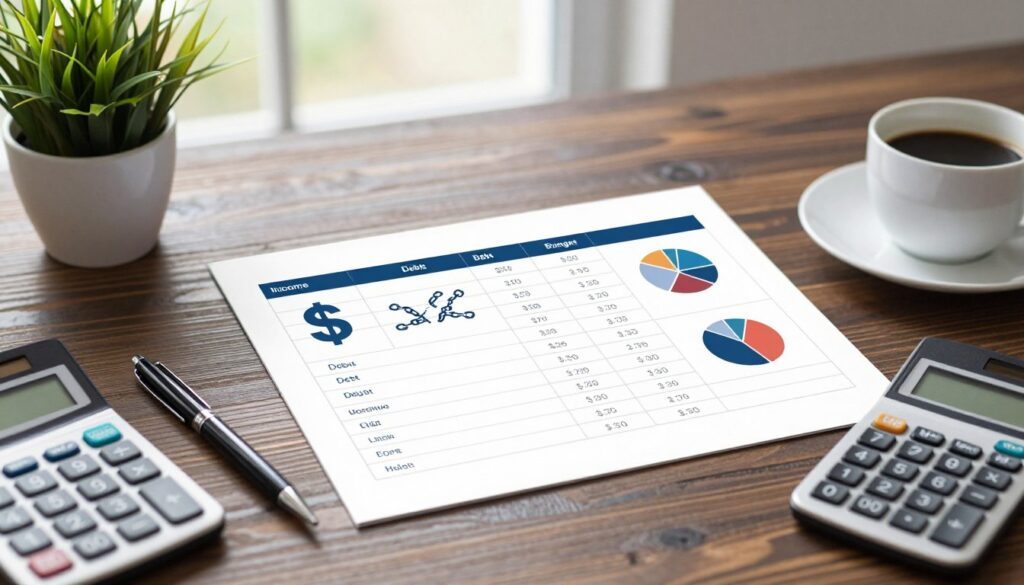
We’ll tackle this in two parts. Get your last statements ready, log into your accounts, and grab a cup of coffee. Let’s start.
Part 1: Your Debt Inventory: Every Single Obligation
Be brutally honest here. List everything you owe money on. This includes:
- Credit cards
- Personal loans
- Medical bills
- Auto loans
- Student loans
- Any money owed to family or friends
For each debt, you need three key numbers: the total balance, the interest rate (APR), and the minimum monthly payment. Don’t guess. Check the latest statement or online.
Here’s an example of how your debt snapshot should look:
| Creditor | Balance | Interest Rate (%) | Minimum Payment |
|---|---|---|---|
| Credit Card A | $4,500 | 24.99% | $135 |
| Auto Loan | $11,200 | 7.5% | $275 |
| Medical Bill | $1,800 | 0% (payment plan) | $150 |
| Personal Loan | $6,000 | 12% | $220 |
Seeing it all in one place changes everything. That table isn’t a wall; it’s a map.
Part 2: Your Income Clarity: Your True Take-Home Pay
Now, let’s shine the same light on your income. This is not your salary. This is the net income that actually hits your bank account each month after taxes and deductions.
If your paycheck varies, calculate an average from the last three months. Include any consistent side hustle income, child support, or other regular cash flow. This number is your fuel. You need to know exactly how much fuel is in the tank.
This step of one income debt management requires you to be a detective in your own life. No hiding, no rounding up. The precision of this snapshot is what makes our next steps so powerful.
Knowing the exact battlefield is the first step to winning the war. This document you’re creating is your first act of command. You are no longer being pushed by your bills. You are gathering your intelligence to push back.
Complete this snapshot. Print it out or save it where you can see it. This is your baseline, your “before” picture. And I promise you, the “after” picture is worth every moment of this courageous honesty.
The Core Framework: How to Get Out of Debt Fast on One Income
There are two main debt repayment methods to consider. Your choice depends on what works best for you. It’s not about finding a single solution. It’s about picking a method that you can stick with.
Picking Your Debt Payoff Engine: Avalanche vs. Snowball
Think of your debts as a mountain. You need a plan to climb it. The Debt Avalanche and the Debt Snowball are two proven strategies. Your personality will help you choose the right one.
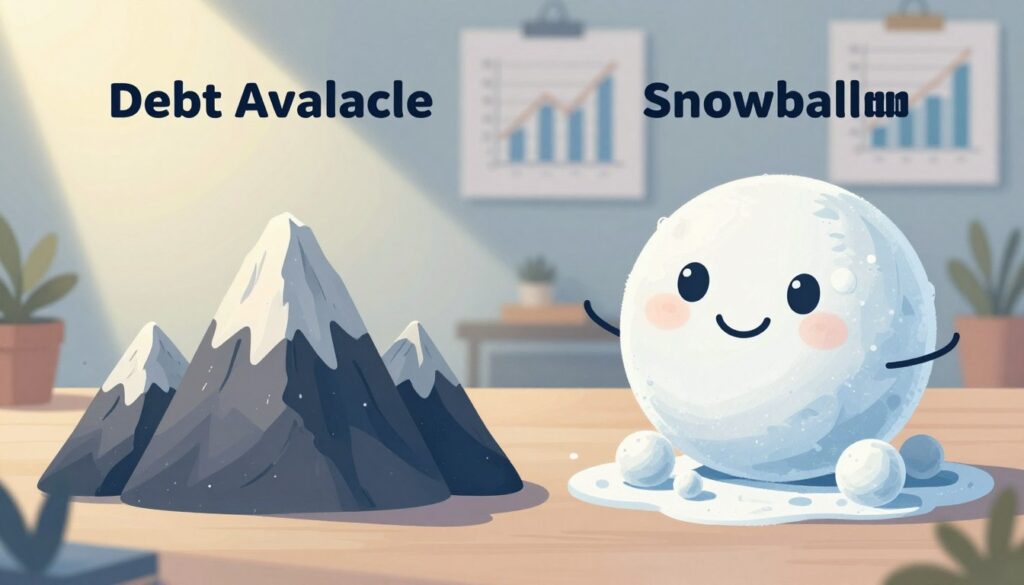
The Debt Avalanche is all about logic. You list debts by interest rate, from highest to lowest. You pay the minimum on all but the highest rate debt. Then, you throw all extra money at that debt until it’s gone.
This method saves you the most on interest over time. It’s the fastest way to get rid of debt because you tackle the most expensive balances first. However, I needed quicker wins to stay motivated.
The Debt Snowball: The Motivator’s Choice
The Debt Snowball lists debts by total balance, from smallest to largest. You pay minimums on all but the smallest debt. Then, you focus on paying off the smallest debt first.
Beating a debt, no matter how small, is incredibly motivating. It boosts your confidence and shows your plan works. This boost is why I chose the Snowball. That first “paid in full” notification kept me going for months.
So, how do you decide? Ask yourself:
- Are you motivated by data and long-term efficiency? Choose Avalanche.
- Do you need quick wins and emotional proof to keep going? Choose Snowball.
The right method is the one you won’t quit.
Your Financial Safety Net: The $1,000 Starter Emergency Fund
Before focusing on debt, save a small emergency fund of $1,000. This is a critical, non-negotiable step.
Life can be unpredictable. A car tire might blow, a kid might get sick, or an appliance might break. Without this fund, you might use a credit card. This would dig a new hole just as you’re climbing out of the old one. This fund protects your debt repayment plan.
This isn’t a full safety net yet. That comes later. It’s a shield for your debt repayment focus. Keep this $1,000 in a separate savings account. Only use it for true emergencies. This simple rule helped keep my journey on track.
Pillar 1: Boost Your Income with Flexible Side Hustles
Trimming expenses only gets you so far on one paycheck. I hit that wall hard. But, your earning potential is different. This pillar is about creating new cash flow. It turns your spare hours into a powerful engine for your single income debt solutions.
I’m not talking about a second full-time job. That’s not sustainable. I’m talking about flexible, low-barrier-to-entry work you can fit around your life. Every dollar you earn here goes straight to your debt snowball or avalanche. It creates momentum that feels incredible.

Online & Remote Opportunities
The digital world is a goldmine for flexible income. You can work in your pajamas after the kids are asleep or during your lunch break. The key is to leverage skills you already have.
Freelance writing was my starting point. Platforms like Upwork or Fiverr connect you with clients needing blog posts, website copy, or social media content. If you’re organized, virtual assistance is in huge demand. Tasks include email management, scheduling, or basic data entry.
Other fantastic online options include:
- Online Tutoring: Sites like Tutor.com or Chegg let you teach subjects you’re good at, from math to language arts.
- Selling Digital Products: Create printables, Canva templates, or guides on Etsy. You make it once and sell it repeatedly.
- Remote Customer Service: Many companies hire part-time support agents to work from home.
These roles offer serious flexibility. They are core to modern single income debt solutions because they work on your schedule.
In-Person & Local Gigs
Sometimes, getting out of the house and earning physical cash is the perfect change of pace. Local gigs often provide immediate payment. This is cash you can literally drive to the bank and apply to your debt the same day.
Dog walking and pet sitting through apps like Rover were a consistent earner for me. People pay well for reliable care. Weekend retail or hospitality shifts are another straightforward path. Stores often need extra help on Saturdays, and the discount perks can be a bonus.
Don’t overlook the classic, always-in-demand services:
- Babysitting or Nannying: Your parenting experience is a valuable skill. Post on local Facebook groups or use Care.com.
- Task-Based Apps: TaskRabbit for furniture assembly, Handy for cleaning, or Instacart for grocery delivery. You choose the jobs.
- Seasonal Work: Holiday help, tax preparation assistance, or landscaping in the spring.
The beauty of these gigs is their simplicity. You show up, you do the work, you get paid. There’s no long-term commitment. This direct approach supercharges your debt payoff plan.
Combining both online and local hustles creates a robust income stream. It was the game-changer in my own single income debt solutions strategy. You are not just managing scarcity. You are actively building abundance, one gig at a time.
Pillar 2: Reduce Expenses with Smart, Sustainable Cuts
This phase isn’t about cutting back on everything. It’s about smartly spending less on things that don’t matter. My top debt reduction tips focus on this. Money saved is money that goes straight to paying off your debt. Let’s look at your biggest expenses and those sneaky monthly costs.

Attack the Big Three Budget Items
Housing, transportation, and food usually take up 60-70% of your budget. Making smart changes here can free up a lot of money.
Housing: This is a big area to focus on. Could you talk to your landlord about a rent reduction for a longer lease? Or maybe take in a roommate for a year? Even a small cut here can save you $1,200 a year.
Transportation: Be honest with yourself. Is a car payment really necessary? I downsized to a reliable used car for two years. The savings in payments and insurance were huge. If you need two cars, consider one being a paid-off “beater” for just commuting.
Food: Don’t go too extreme here. I’m not saying you should only eat rice and beans. Instead, plan your meals and cook in bulk. Use grocery pickup to avoid buying things you don’t need. A family can save $200-$400 a month without feeling deprived.
Eliminate Silent Budget Drains
These are the subscriptions and bills you pay without thinking. It’s time for a quarterly check-up.
Audit Every Subscription: Go through your bank and credit card statements. For each service or app, ask if you used it in the last month. Cancel anything you don’t need. Share services with friends or family if you can.
Negotiate Bills: You have more power than you think.
- Insurance: Call your auto and renters/home insurers. Say: “I’m shopping for better rates to manage my budget. Can you review my policy for any discounts or lower my premium?” Get quotes from competitors like Geico or Progressive first to leverage.
- Cell Phone & Internet: Call and ask for retention or loyalty departments. Mention competitor promotions. Often, they can offer a better plan or a temporary discount to keep you.
- Utilities: Ask your provider about budget billing, which averages your cost. Ensure you’re on the most economical rate plan. Small habits, like lowering your water heater temperature, add up.
To help you prioritize, here’s a comparison of common expense areas and the potential impact of strategic cuts:
| Expense Category | Common “Silent Drain” | Smart Cut Strategy | Estimated Monthly Savings |
|---|---|---|---|
| Streaming & Subscriptions | 3+ unused streaming services, gaming subscriptions | Rotate services; cancel unused memberships | $30 – $60 |
| Insurance Premiums | Loyalty penalty (not shopping around) | Annual rate comparison & bundle policies | $25 – $100 |
| Groceries & Dining | Unplanned takeout, lack of meal plan | Weekly meal plan, use grocery pickup | $150 – $300 |
| Utilities | Inefficient rate plan, phantom energy loads | Switch to budget billing, use smart power strips | $20 – $50 |
| Miscellaneous Spending | Cash withdrawals, small impulse purchases | Use a cash envelope system for “fun money” | $50 – $100 |
The goal of these debt reduction tips is to spend with purpose. You’re not cutting back for the sake of it. You’re redirecting every saved dollar with a plan. This approach is key for long-term success on a single income.
Pillar 3: Make Strategic Moves to Accelerate Payoff
Getting out of debt isn’t just about being disciplined. It’s about being smart with money. You turn every extra dollar into a direct hit on your debt. This is how you go from paying off debt to obliterating it.
Think of these tactics as your financial special forces. They are precise, powerful, and designed for maximum impact. Mastering this pillar is key to the fastest way to get rid of debt on a single income.

Deploy Every Windfall and “Found Money”
I had one rule during my debt journey: any money I didn’t budget for went straight to debt. This mindset turns surprises into progress. A windfall isn’t for shopping; it’s a weapon against your balance.
You need to see “found money” everywhere. It’s not extra; it’s assigned. This proactive capture of cash makes big leaps in your payoff timeline.
| Source of “Found Money” | Typical Example Amount | Strategic Action |
|---|---|---|
| Tax Refund | $1,500 – $3,000 | Immediately send 100% to your target debt. Adjust withholdings next year to keep more monthly cash, but this refund is a debt bomb. |
| Work Bonus or Side Hustle Surplus | $200 – $1,000+ | Resist lifestyle inflation. Pretend it never hit your checking account. Schedule the payment the day you receive it. |
| Gift Money (Birthday, Holiday) | $50 – $200 | Thank the giver warmly, then let that generosity compound by applying it to your financial freedom. |
| Money Saved from a Successful Bill Negotiation | $20 – $100/month | Automate a monthly transfer for the saved amount from checking to your debt payment. You’ve already lived without it. |
| Unexpected Rebate or Class-Action Settlement | $25 – $500 | Treat it like a bill credit from the universe. Its only purpose is to reduce your principal. |
Negotiate Lower Interest Rates and Bills
This is a powerful tool in personal finance. A lower interest rate means more of your payment goes to the principal, not the bank’s profits. You must get comfortable making a 15-minute phone call that could save you hundreds.
Preparation is everything. Have your account info ready, know your current rate, and be polite but firm. Here’s the exact script I used:
Phone Script for Credit Card APR Reduction:
- You: “Hi, I’d like to speak with someone about a lower interest rate on my account [ending in XXXX]. I’ve been a customer for [X] years and always pay on time.”
- If they ask why: “I’m working on paying down my balances aggressively and a lower rate would really help me make progress. I’ve also seen other offers, but I’d prefer to stay with you if we can work something out.”
- If they say no: “I understand. Is there a retention department or a supervisor I could speak to about possible options? If not, I may need to explore a balance transfer to a card with a 0% introductory offer to manage this debt.”
This works for more than credit cards. Call your insurance, internet, and cell phone providers. Simply say, “I’m reviewing my monthly expenses and was hoping you could check for any current promotions or discounts I might qualify for.” Loyalty often gets you nothing unless you ask.
Every dollar you save through negotiation is found money. It automatically gets funneled into your debt snowball or avalanche, creating a powerful feedback loop. Your savvy negotiation directly funds your escape. This proactive, tactical approach—capturing windfalls and slashing costs—is what transforms a good plan into the fastest way to get rid of debt. You stop being a passive payer and become an active conqueror.
My Secret Weapon: How I Stayed Motivated for 24 Months
I almost quit my debt payoff plan three times. But simple habits kept me going for 24 months. Getting out of debt is easy math. But the emotional challenge is harder, especially on one income.
My secret wasn’t a fancy app or a second job. It was mental strategies that fueled my journey. When I felt unmotivated, these four tactics helped me keep going.

1. The Unavoidable Visual Debt Tracker. I made a poster board with a thermometer chart. Every payment colored in a new section. Seeing the debt shrink and freedom grow was a daily boost.
2. Mini-Milestone Rewards That Cost $0. Celebrating every $500 paid off was key. My rewards were experiences, not things. Enjoying a park afternoon or a movie night at home reminded me joy isn’t about spending.
3. My Accountability Partner, Not My Therapist. I chose a financially savvy friend as my accountability partner. We met every two weeks. I reported my progress, and she encouraged me to keep going.
4. The Weekly “Why” Review. Every Sunday, I read my “debt-free why” letter. It reminded me of the peace and security of financial freedom on one income. It kept me focused on my goals.
The hardest moment was around month 14. I was tired, and progress seemed slow. I almost spent a large payment on a new couch. But looking at my tracker and talking to my accountability partner kept me on track.
Motivation is renewable, but you must keep it up. These habits made perseverance automatic. They kept me focused on financial freedom on one income, even when it was hard.
Life After Debt: Building a Future That Keeps You Free
When my last debt payment cleared, I felt more than just relief. I felt a new energy in my finances. A weight I’d carried for years was gone. Suddenly, a big part of my monthly income was mine to use.
Your budget changes overnight. The money you fought for is now in your account, ready for you. It’s like fuel for your finances. The discipline you learned paying off debt helps you build wealth.
First, you need to strengthen your financial base. A starter emergency fund helped you during debt repayment. Now, aim for three to six months of expenses saved in a separate account.
“Financial security isn’t about having a huge income. It’s about creating a buffer between you and life’s surprises.”
This fund is your peace of mind. It keeps you from going back to debt for unexpected expenses. It ends the debt cycle for good.
Next, make your money work for you. This is where wealth building starts. With a solid emergency fund, you can start investing, even with small amounts.
I started with a Roth IRA for retirement. The power of compound interest means starting early is key. Every dollar invested today grows over decades. You are no longer just earning an income; you are building assets.
Finally, save for your dreams. What did you put off while paying off debt? Now you can save for it with purpose.
Creating a plan for this new cash flow is key. Here’s how I allocated my former debt payment to build my future:
| Priority | Percentage of Former Debt Payment | Purpose & Account Type | Key Benefit |
|---|---|---|---|
| Full Emergency Fund | 50% | High-yield savings account until 3-6 months of expenses are saved. | Creates unbreakable financial security. |
| Start Investing | 30% | Roth IRA or low-cost index fund in a brokerage account. | Harnesses compound interest for long-term wealth. |
| Goal-Based Savings | 20% | Separate savings accounts for specific goals (travel, home, car). | Funds dreams without returning to debt. |

This structured approach covers all bases. The exact percentages can change as goals are met. The point is to have a plan.
The mindset shift is huge. You move from scarcity to abundance. From asking “Can I afford this?” to “How does this fit into my wealth plan?” Your budget is now a tool for creating the life you want.
This is the freedom you worked for. The security of knowing you can handle emergencies. The excitement of watching your investments grow. The joy of saving for a goal you truly desire. This sustainable, single-income wealth building is your new normal.
You’ve proven you can achieve incredible financial goals on one income. Now, use that power to build a future that keeps you free, secure, and thriving for good.
Conclusion
This path to freedom is clear. You start by changing your mindset. You face your numbers with a complete debt and income snapshot. This builds your core framework for getting out of debt fast on one income.
The three pillars—boosting income, cutting expenses, and making strategic moves—give you control. The work demands focus. The sacrifice is real. The reward is financial peace you own yourself.
Do not wait for a perfect moment. Your moment is now. Choose one action from this plan. Open a separate savings account for your starter emergency fund. List your debts for the avalanche or snowball method. Do that one thing today.
You have the blueprint. You are the hero of this story. True financial freedom on a single income is your next chapter. Start writing it now.