


I stared in the mirror, frustrated that my favorite jeans wouldn’t zip. After turning 30, my body changed overnight. That stubborn abdominal fat felt like a new, unwelcome companion.
If you’re reading this, you likely know that feeling too. The diets that worked in your 20s don’t. The quick fixes are anything but. I’ve been there, spending years lost in a maze of confusing advice.
This guide is different. It’s the honest, sustainable map I wish I had. We’ll cut through the noise and focus on what science and real life show actually works for our changing bodies.
Forget deprivation and extreme workouts. The solution is simpler, kinder, and more powerful. It’s about understanding your metabolism, honoring your hormones, and building habits that last.
Key Takeaways
- Hormonal shifts after 30 require a tailored approach to nutrition and exercise.
- Consistency with simple, sustainable habits beats intense, short-term diets every time.
- Managing stress and prioritizing sleep are non-negotiable for reducing abdominal fat.
- Strength training is crucial for boosting metabolism and building a strong core.
- Progress is measured in how you feel and perform, not just the scale.
- Finding a supportive community can make the journey more enjoyable and successful.
My Journey From Frustration to Freedom
When I hit my 30s, it felt like my body had changed the rules without telling me. The old ways of losing belly fat no longer worked. I tried the same belly fat loss tips but nothing changed. It was like my body was rebelling against me.
This frustration grew every day. It made me wonder if I was stuck with this new body forever.
Why Everything That Worked in My 20s Stopped Working
In my 20s, losing weight was easy. A few extra workouts or skipping carbs would do the trick. But after 30, nothing worked. Here’s what stopped working:
- Extreme Calorie Cutting: It left me tired and hungry, and I couldn’t lose belly fat.
- Endless Cardio Sessions: Hours on the treadmill didn’t help my stubborn belly.
- Fad Diet Hopping: Keto, juice cleanses, and detox teas only led to temporary weight loss.
- Ignoring Strength Training: I was afraid of getting too big, so I avoided weights, which hurt my metabolism.
I was working hard but not seeing results. It was unfair. My body was storing fat differently, especially around my belly. I needed a new approach.
The Moment I Decided to Find What Actually Works
The turning point was a quiet Tuesday morning. I saw a photo from a family event and didn’t recognize myself. It was not because of my size, but the look in my eyes. It was resignation.
In that moment, I decided to stop chasing trends and understand my body. I vowed to break free from the cycle of restriction and guilt. My goal changed from just losing belly fat to feeling strong, energetic, and free.
This decision led me to research and find belly fat loss tips that work for women over 30. I learned that real change is about building a sustainable, compassionate lifestyle. That moment of clarity was the start of my journey to true freedom.
Understanding Your Body After 30: It’s Not Your Fault
If you’re frustrated by belly fat that won’t budge, biology might be the real culprit. It’s not a failure of willpower. It’s a natural shift in your physiology that requires a new playbook.

For years, I blamed myself. I thought I just needed to try harder. The truth liberated me: the rules of the game changed after 30. Understanding this is the first step toward effective lifestyle changes for reducing belly fat.
The Hormonal Shifts That Prioritize Belly Fat Storage
Our hormone balance begins to evolve in our 30s. Estrogen levels start a gradual, natural decline. This shift can change where your body prefers to store fat.
Lower estrogen is often linked to increased abdominal fat storage. At the same time, stress hormones like cortisol become more influential. High cortisol tells your body to conserve energy as visceral fat around your organs.
This fat isn’t just superficial. It’s metabolically active and stubborn. It’s a survival mechanism, not a personal failing.
Metabolic Changes and the Loss of Lean Muscle
Your metabolism isn’t what it used to be, and that’s normal. We naturally lose a small percentage of lean muscle mass each decade after 30. This process is called sarcopenia.
Muscle is metabolically hungry tissue. Less muscle means your body burns fewer calories at rest. The result? You can eat the same as before but still gain weight, especially around the middle.
The good news is this loss isn’t a one-way street. Strategic lifestyle changes can rebuild muscle and re-ignite your metabolic engine.
How Modern Stress and Lifestyle Amplify the Problem
Our biology meets a perfect storm in modern life. Chronic stress from work, family, and constant connectivity keeps cortisol elevated. This directly signals your body to hold onto belly fat.
Sedentary jobs, processed food convenience, and disrupted sleep patterns throw gasoline on the fire. They deepen the hormonal and metabolic imbalances.
This is why old tactics fail. The solution isn’t a stricter diet. It’s smarter lifestyle adjustments that work with your body, not against it. You’re not broken. You just need a new approach tailored to this chapter of your life.
The Foundational Mindset for Lasting Change
After years of yo-yo dieting, I found the secret to losing belly fat after 30. It’s not about the food, but your mindset. Changing your mind is key to success.
Think of it like building a house. You start with the foundation, not the wallpaper. We must focus on our health mindset first.
Trade Diets for a Sustainable Lifestyle
I had to say goodbye to the word “diet.” It always felt like a temporary fix. What works after 30 is a permanent upgrade to your daily life.
A sustainable lifestyle is about nourishment, not deprivation. It’s about adding things that make you feel great, not taking away. This small change makes a big difference.
Consider the difference:
| Diet Mentality | Lifestyle Approach |
|---|---|
| Focuses on quick weight loss | Focuses on long-term health |
| Uses willpower and restriction | Relies on habits and enjoyment |
| Feels like a punishment | Feels like self-care |
| Ends when a goal is reached | Has no end date; it’s just how you live |
When you stop dieting and start living well, the pressure goes away. You’re no longer judged by what you eat. You’re making choices that love your body.
Measure Progress Beyond the Measuring Tape
My scale was my biggest critic. It controlled my mood. Letting go of that single number was scary but freeing. I started tracking a portfolio of victories.
Here are the metrics that truly matter:
- Energy Levels: Do you wake up feeling refreshed? Do you have steady energy throughout the afternoon without a crash?
- Sleep Quality: Are you falling asleep easier and staying asleep? This is a huge sign of hormonal balance.
- Strength Gains: Can you lift a heavier grocery bag? Do your workouts feel a bit easier? This shows your metabolism is firing up.
- Clothing Fit: How do your favorite jeans feel? This is often more telling than a scale that doesn’t account for muscle.
- Mental Clarity: Is your brain fog lifting? Can you focus better?
Celebrating these wins keeps motivation alive, even when the scale is stubborn. It shows you’re moving in the right direction, even if it’s not linear.
Practice Self-Compassion on the Hard Days
You will have days where you skip a workout or eat more than you planned. This is not failure; it is data. The old me would have spiraled into guilt and given up for the week. The new me practices a simple mantra: “One choice does not define my journey.”
Self-compassion is your safety net. It means talking to yourself like you would a dear friend who stumbled. You wouldn’t yell at her. You’d say, “It’s okay, tomorrow is a new day.”
Progress is never a straight line. It’s a series of steps forward, a few steps to the side, and sometimes a pause to rest. The key is to never stop walking.
On my hard days, I do two things. First, I name the feeling—”I’m feeling stressed and tired, and that’s why I reached for the cookies.” Second, I make the very next choice a loving one, like drinking a big glass of water or going for a short walk. This breaks the cycle of shame instantly.
Building this foundational mindset transforms the entire process from a grueling battle into an empowering journey. With this solid ground beneath you, you’re ready to explore the powerful tools of nutrition, movement, and recovery.
How to Lose Belly Fat for Women Over 30 With Food
Let’s explore the food plan that helped me beat belly fat in my 30s. Food is more than just fuel; it sends signals to your hormones and metabolism. Getting this right is key to any good plan.
I tried many diets but felt deprived and saw no results. Then, I changed my approach. I started focusing on what and when I eat.
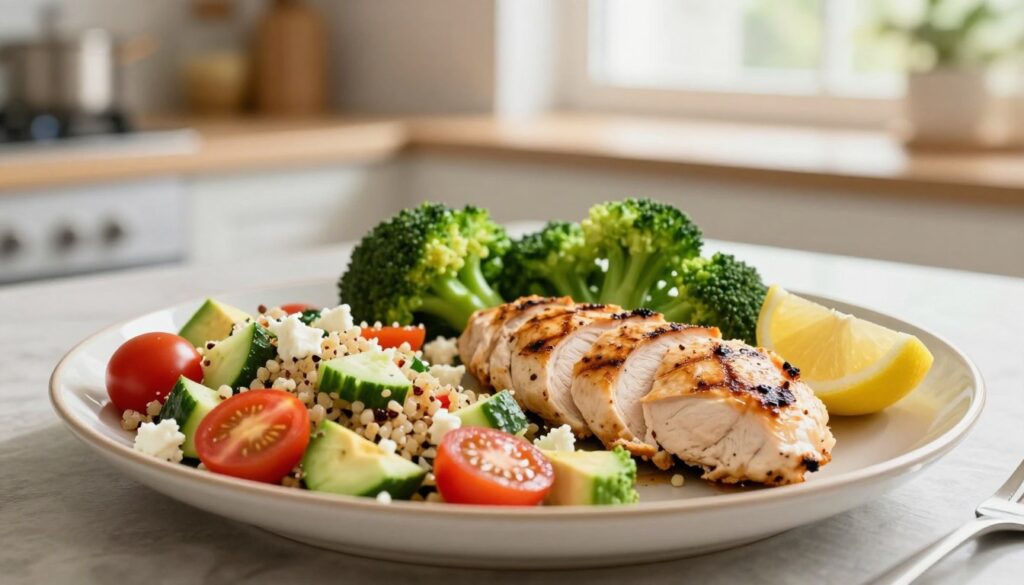
Rebuilding Your Plate: The Priority Pyramid
Forget about counting calories. I use a simple method to plan my meals. Imagine your plate divided by priority, not just space.
This “Priority Pyramid” helps you get the nutrients you need for fat loss, energy, and hormone balance. Start from the base and build up.
Protein First: Calculating Your Needs and Best Sources
Protein is essential. After 30, we need more to keep our metabolism going. I aim for 0.8 to 1 gram of protein per pound of my goal body weight daily.
This changed my hunger and metabolism. My top protein sources are:
- Lean poultry like chicken and turkey breast
- Fatty fish such as salmon and sardines
- Plant-based options like lentils, tofu, and tempeh
- Greek yogurt, eggs, and the occasional lean red meat
Eating protein first kept me full, stable, and helped my body use stored fat.
Fiber is Your Best Friend: Vegetables, Fruits, and Whole Grains
Fiber does two important things. It slows digestion for steady blood sugar and feeds a healthy gut microbiome. This is key for reducing inflammation linked to belly fat.
I fill half my plate with colorful, fibrous vegetables at lunch and dinner. My favorites are leafy greens, broccoli, bell peppers, and asparagus. For fruits, I choose lower-sugar options like berries and apples. Whole grains like quinoa and oats give me sustained energy without spiking insulin.
Smart Fats and Carbs for Energy and Hormone Health
Don’t be afraid of fats or carbs. Choose them wisely. Healthy fats are crucial for hormone production, including those that regulate metabolism.
I add a thumb-sized portion of smart fats like avocado, olive oil, or a small handful of nuts to my meals. For carbs, I focus on complex sources like sweet potatoes, brown rice, and legumes. They give me the energy I need for workouts and daily life without storing fat.
Meal Timing and Frequency: What I Found Most Effective
When you eat is as important as what you eat, especially for managing hunger and cortisol. I tried different approaches, from intermittent fasting to six small meals a day.
Here’s the simple rhythm that worked best for my body and schedule:
| Time | Meal / Focus | Key Benefit |
|---|---|---|
| 7:00 AM | Protein-Rich Breakfast | Kickstarts metabolism, drastically reduces cravings |
| 12:30 PM | Balanced Lunch with Fiber | Sustained energy, prevents afternoon slump |
| 6:00 PM | Light Dinner, No Snacking After | Supports sleep quality, allows overnight fat mobilization |
The Case for a Nourishing Breakfast
Skipping breakfast made me hungry and prone to bad choices. Now, I see breakfast as a chance to set a metabolic and hormonal tone for the day.
A breakfast with 25-30 grams of protein—like a veggie omelet or a protein smoothie—tells my body it’s time to burn energy, not store it. This simple habit was a major key in crafting my best diet for losing belly fat.
Why I Stopped Snacking After Dinner
This change was tough but transformed my diet. Evening snacks, even healthy ones, kept my insulin high when my body should be repairing and burning fat.
Allowing a 12-14 hour overnight fast gives your digestive system a break and encourages your body to tap into stored fat for energy.
Stopping food intake 2-3 hours before bed led to better sleep, less morning bloat, and a noticeable difference in my waistline within weeks. If I feel hungry, I sip on herbal tea or water.
Mastering Portion Control Without Obsession
Learning to control portions without tools was liberating. I ditched scales for a simple guide. This made eating intuitive, not a math problem.
It’s about understanding serving sizes in a way that fits your life. You learn to know what your body needs. This stops the cycle of too little or too much eating.
The Visual Guide Method: Your Hands as Tools
Your hands are the best tools for portion control. I stopped using cups and scales. I started using my hands.
This visual guide is personalized, portable, and foolproof. Here’s the simple system I follow:
- Your Palm: Determines your protein serving. A piece of chicken, fish, or tofu the size and thickness of your palm is perfect.
- Your Cupped Hand: Measures your carb portion. Think cooked quinoa, rice, or sweet potato that fits neatly in your hand.
- Your Fist: Guides your vegetable serving. Aim for at least one to two fists of non-starchy veggies like broccoli or spinach.
- Your Thumb: Gauges healthy fats. This is about a tablespoon of olive oil, nut butter, or a small handful of nuts.
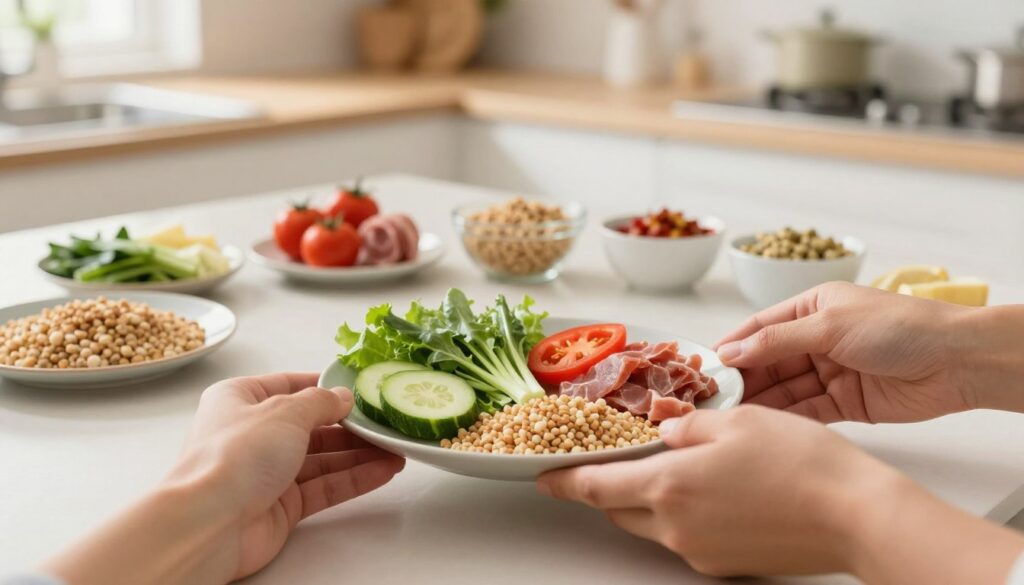
This method eliminates guesswork. It naturally adjusts portions for your body size. It’s the easiest way to prevent overeating without any complicated rules.
Mindful Eating Techniques to Prevent Overeating
Knowing how much to eat is one thing. Knowing how to eat is where the magic happens. Mindful eating transformed my relationship with food.
It’s not about eating perfectly. It’s about bringing your attention to the meal. This simple shift helps you recognize true fullness.
Here are the techniques I use daily:
- The Pause Rule: Before you eat, take three deep breaths. This signals to your body that it’s time to nourish, not just consume.
- Remove Distractions: Step away from your phone, computer, or TV. When you focus on your food, you taste it more and eat less.
- Chew Slowly: Put your fork down between bites. This gives your brain time to register satisfaction, which takes about 20 minutes.
- Check-In Mid-Meal: Halfway through, ask yourself, “Am I still hungry, or am I eating out of habit?” This pause can stop automatic overeating.
These practices help you savor every bite. You start to notice flavors and textures you missed before. Meals become a source of calm, not stress.
Combining the visual guide with mindful eating creates a powerful system. You nourish your body with the right amount. You enjoy your food without guilt. This is how you build a peaceful, sustainable way of eating for life.
The Exercise Formula That Targets Stubborn Fat
Targeting belly fat isn’t just about endless crunches. It’s about a precise formula of strength, intensity, and deep core work. The right blend of effective exercises for women over 30 revs your metabolism, burns stored fat, and builds the muscle that keeps it off for good.
This isn’t about punishing workouts. It’s about strategic movement that respects your body’s wisdom after 30.

Strength Training: Non-Negotiable for Muscle and Metabolism
This was my game-changer. Lifting weights is the most powerful tool you have. It builds lean muscle, which acts like a metabolic furnace, burning calories even when you’re resting.
Forget the fear of bulking up. Our hormonal profile makes that incredibly difficult. Instead, you’ll gain strength, definition, and a resilient metabolism.
Essential Compound Movements for Women Over 30
Compound exercises work multiple muscle groups at once. They give you the most bang for your buck. Focus on mastering these foundational moves:
- Squats: They strengthen your legs, glutes, and core. Start with bodyweight, then progress to holding dumbbells or a kettlebell.
- Hip Hinges (Deadlifts): This movement teaches you to lift from your hips, protecting your back and building powerful posterior muscles.
- Push-Ups: A total upper-body and core strengthener. Begin on your knees or against a wall.
- Rows: Crucial for pulling strength, they counteract hunching and build a strong back. Use resistance bands or dumbbells.
How to Start Lifting Weights Safely at Home or Gym
You don’t need a fancy gym membership. Here’s how to begin with confidence:
- Master the Form First: Use light weights or no weight. Watch reputable tutorial videos and practice in front of a mirror.
- Invest in Basics: A set of adjustable dumbbells and a resistance band are perfect for home workouts.
- Start Slow: Aim for 2-3 strength sessions per week. Perform 2-3 sets of 8-12 repetitions for each exercise.
- Listen to Your Body: Soreness is normal; sharp pain is not. Prioritize proper movement over heavy weight.
High-Intensity Interval Training (HIIT) for Maximum Burn
HIIT involves short bursts of all-out effort followed by rest. It’s incredibly efficient for fat burning and boosting cardiovascular health.
The key is strategic use. Too much can spike cortisol. One to two short sessions per week is the sweet spot for amazing results.
Low-Impact HIIT Workouts That Protect Your Joints
You can get your heart rate soaring without jumping. These are my favorite joint-friendly options:
- Fast-Paced Walking Intervals: Power walk for 60 seconds, recover for 90 seconds. Repeat.
- Stationary Bike Sprints: Pedal as hard as you can for 30 seconds, coast for 60 seconds.
- Bodyweight Circuits: Alternate between exercises like mountain climbers (on a mat), standing punches, and step-ups.
These targeted workouts for women over 30 deliver intensity without the wear and tear.
Core-Specific Workouts That Go Beyond Crunches
Crunches often work the superficial muscles and can strain your neck. The secret to a flatter, stronger stomach lies deeper.
True core strength is about stability and engagement from the inside out. It’s what supports your spine and pulls everything in.
Engaging the Transverse Abdominis for a Flatter Stomach
The transverse abdominis (TVA) is your body’s natural corset. It’s the deepest abdominal layer that wraps around your spine. When strong, it provides a toning, supportive effect.
Here’s how to activate and strengthen it:
- Vacuum Exercise: Exhale all your air, then pull your navel toward your spine as far as you can. Hold for 10-20 seconds. This is a direct TVA workout.
- Forearm Plank with Draw-In: In a plank position, actively pull your belly button up and in. Hold for 20-30 seconds.
- Dead Bug: Lying on your back, extend opposite arm and leg while keeping your lower back pressed to the floor. This teaches anti-extension core control.
Incorporating these effective exercises for women over 30 into your routine transforms your approach. You build a body that is strong, capable, and metabolically active from every angle.
The Sleep Solution: Your Overnight Fat-Burning Tool
Turning my bedroom into a fat-burning sanctuary was a game-changer after 30. I used to see sleep as a luxury, something I could skip. Now, I view it as the most productive seven hours of my day. It’s when my body repairs muscle, balances mood, and burns belly fat.
This isn’t about lying still. It’s about creating the perfect internal environment for your hormones to switch from fat-storage mode to fat-burning mode. Think of it as setting the thermostat for your metabolism. When you get this right, everything else—diet, exercise—becomes exponentially easier.
How 7-8 Hours of Sleep Regulates Fat-Storage Hormones
Missing sleep doesn’t just make you tired. It sends direct signals to your body to store fat, especially around your midsection. The magic happens in your hormonal chemistry. When you consistently sleep 7 to 8 hours, you keep three key players in perfect balance.
First is ghrelin, your hunger hormone. Poor sleep makes ghrelin spike, causing intense cravings for sugary, fatty foods. Then there’s leptin, the hormone that tells your brain you’re full. Sleep deprivation lowers leptin, so you don’t feel satisfied after meals.
The biggest culprit for belly fat? Cortisol. This stress hormone should drop at night. If you’re not sleeping well, cortisol stays elevated. High cortisol tells your body to protect vital organs by storing fat right in your belly.

Here’s a clear breakdown of how sleep quality directly impacts your fat-loss hormones:
| Hormone | Role in Fat Loss | Effect of 7-8 hrs Sleep | Effect of |
|---|---|---|---|
| Ghrelin | Signals hunger | Stays at normal levels | Spikes, increasing appetite |
| Leptin | Signals fullness | Functions optimally | Decreases, causing overeating |
| Cortisol | Manages stress response | Dips naturally at night | Remains high, promoting belly fat storage |
| Growth Hormone | Repairs tissue & burns fat | Released in deep sleep phases | Production is significantly reduced |
Seeing it laid out like this made it click for me. My goal wasn’t just to sleep more. It was to optimize my sleep to manipulate these hormones in my favor.
Creating a Sleep Sanctuary: My Pre-Bed Routine
I don’t just hope for good sleep. I engineer it. My pre-bed routine is a non-negotiable 60-minute ritual that signals to my brain and body that it’s time to wind down and burn fat. Consistency is everything.
My sanctuary starts with the environment. An hour before bed, I:
- Dim the lights and activate blue-light filters on all devices. This tells my brain to produce melatonin, the sleep hormone.
- Set the temperature to a cool 65-68°F. A cooler room helps lower your core temperature, which is essential for deep sleep.
- Use a diffuser with lavender and cedarwood essential oils. The scent is calming and now triggers an immediate relaxation response.
Then, I focus on my personal wind-down. This isn’t about scrolling. It’s about gentle transition.
- I drink a warm mug of magnesium-rich tea, like chamomile.
- I write down three things I’m grateful for and one intention for the next day. This clears mental clutter.
- I do five minutes of very gentle stretching or diaphragmatic breathing on my bedroom floor.
Finally, I climb into bed and read a physical book (never a tablet) for 15-20 minutes. This routine didn’t happen overnight. I built it one step at a time. Now, it’s my sacred space for recovery and my secret weapon for a calmer, flatter stomach.
Taming Stress and Cortisol for a Calmer Waistline
My journey to lose belly fat was tough until I found out about cortisol. I was eating right and exercising, but my belly wouldn’t shrink. Stress, not diet, was the real enemy. Learning to manage stress changed my body and mind.
When we talk about natural remedies for losing belly fat, we must address cortisol. It’s not just about feeling stressed. It’s a hormone that tells your body to store fat around your organs.
The Direct Link Between Chronic Stress and Belly Fat
Cortisol is your body’s stress hormone. It’s good in short bursts. But chronic stress keeps cortisol high. This high level harms your waistline in two ways.
First, it tells your body to store calories as visceral fat. This is the deep, dangerous belly fat. Second, it makes you hungry for sugary, fatty foods. It creates a cycle that’s hard to break.
“Chronic stress and elevated cortisol consistently correlate with increased abdominal fat deposition, independent of overall calorie intake.”
I realized my always-on lifestyle was keeping my cortisol high. My body was always in “fight or flight” mode, storing fat for survival. To see real change, I had to signal safety to my nervous system.

Daily Practices to Lower Cortisol Naturally
You don’t need a big change. Small, consistent habits can calm your cortisol. These natural remedies for losing belly fat worked for me. They only take a few minutes a day.
Morning Sunlight and Grounding
Within 30 minutes of waking, I go outside for 5-10 minutes. This resets my circadian rhythm, which controls cortisol. Morning light tells my body it’s daytime, prompting a healthy cortisol spike that then declines naturally throughout the day.
I often combine this with grounding—standing barefoot on grass or soil. The benefits are profound:
- Regulates cortisol secretion for a smoother daily rhythm.
- Boosts mood through serotonin production.
- Reduces inflammation, a key driver of stubborn fat.
This combo became a non-negotiable start to my day. It sets a calm tone that makes other healthy choices easier.
Short, Effective Meditation Breaks
I used to think meditation required 30 silent minutes. I was wrong. What lowered my cortisol were 60-second breathing breaks scattered throughout my day. When I feel tension rising, I pause.
Here is my go-to method:
- Stop what you’re doing and sit tall.
- Inhale slowly through your nose for a count of four.
- Hold your breath gently for a count of four.
- Exhale completely through your mouth for a count of six.
- Repeat for just one minute.
This extended exhale activates the parasympathetic nervous system—your body’s “rest and digest” mode. It directly counteracts the stress response. I do this before meals, in my car, or between tasks. These micro-moments of calm dramatically changed my stress baseline.
To help you choose your practices, here’s a comparison of simple, daily stress reduction techniques and their impact:
| Daily Practice | Time Commitment | Primary Action | Impact on Cortisol |
|---|---|---|---|
| Morning Sunlight Viewing | 5-10 minutes | Resets circadian rhythm | High – Promotes healthy daily pattern |
| Grounding (Earthing) | 10-15 minutes | Connects with Earth’s electrons | Medium – Reduces overall inflammation |
| Box Breathing (4-4-6) | 1-5 minutes | Activates vagus nerve | High – Rapid calming effect |
| Gentle Walk in Nature | 15-20 minutes | Combines movement & green space | Medium – Sustained reduction |
Consistency with these small actions is far more powerful than occasional deep dives into stress management. By building them into your routine, you train your body to stay out of constant high-alert mode. This creates the internal environment where your other efforts—nutrition and exercise—can finally pay off at your waistline.
The Hydration and Digestion Connection
Unlocking belly fat loss needs two key allies: hydration and digestion. I used to think drinking water was just basic. But digestion is crucial too. Mastering this connection helped me feel lighter and see my hard work’s results.
Why Water is Crucial for Mobilizing Stored Fat
Let’s dive into the science. Your body stores fat in cells called adipocytes. To use that fat, a process called lipolysis must break it down. This happens in a water-based environment.
Water acts as a transport system. It carries fatty acids out of fat cells and into your bloodstream. There, they can be burned for energy. Without enough water, this process slows down, and your body holds onto fat.
Even mild dehydration can make you feel tired and confuse hunger with thirst. My rule was to drink half my body weight in ounces of water daily. For a 160-pound woman, that’s 80 ounces. It boosted my energy and helped my body release stubborn fat.
| Hydration Source | Hydration Efficiency | Bloat Potential | Additional Benefits |
|---|---|---|---|
| Plain Water | Excellent | Very Low | Directly supports metabolism & fat mobilization |
| Sparkling Water | Good | Medium (for some) | Can satisfy soda cravings; choose unsweetened |
| Herbal Tea (e.g., Peppermint, Ginger) | Very Good | Low (ginger reduces bloat) | Calming, anti-inflammatory, aids digestion |
| Infused Water (Lemon, Cucumber) | Excellent | Low | Adds flavor and trace minerals without sugar |
Supporting Digestion to Reduce Bloat and Inflammation
Even with good food and exercise, poor digestion can hide your progress. Bloating isn’t just uncomfortable; it’s a sign of inflammation that slows fat loss.
I started eating more mindfully. I sat down for meals, chewed well, and paused between bites. This signals your body to start digestion properly.
I also focused on feeding my gut fiber and good bacteria. Soluble and insoluble fiber keep digestion smooth. I added probiotic-rich foods like yogurt and sauerkraut to support a healthy gut, reducing inflammation.

- Start your day with warm lemon water. It gently wakes up your digestive system.
- Include a probiotic source daily. This builds a resilient gut.
- Move after meals. A 10-minute walk aids digestion and reduces blood sugar spikes.
- Identify personal trigger foods. For many, dairy, gluten, or certain raw veggies can cause bloat.
Strategic hydration and smooth digestion create an optimal body environment. Bloat disappears, inflammation reduces, and fat loss becomes visible. It’s a huge confidence boost.
Lifestyle Tweaks That Accelerate Results
There are daily changes that boost your belly fat burning techniques. These small habits add up to big results. They don’t need a lot of effort, just a bit of planning.

These tweaks helped me get past plateaus. They make your body burn fat all day.
Strategic Use of Apple Cider Vinegar and Green Tea
Let’s talk about supplements. Apple cider vinegar and green tea can help, but they’re not magic. I drink ACV in water before meals, especially carb-heavy ones. This helps control my blood sugar and fat storage.
Green tea is my afternoon pick. It’s better than coffee for a metabolism boost without jitters. Drinking it daily adds a small, positive effect to your belly fat burning techniques.
The Impact of Alcohol and Simple Swaps
Alcohol is a big challenge. It’s full of empty calories and makes you eat more. I didn’t quit, but I made smart choices.
Here are my favorite swaps for socializing without ruining my diet:
- Vodka Soda > Sugary Cocktails: Choose vodka or tequila with soda water and lime instead of margaritas.
- Wine Spritzer > Full Glass: Mix sparkling water with wine to make it last longer.
- Herbal Tea > Nightcap: Drink herbal tea in the evening for a satisfying ritual without the calories.
These changes cut down sugar and calories, making a big difference over time.
Movement Outside of Workouts: NEAT
NEAT stands for Non-Exercise Activity Thermogenesis. It’s the calories you burn doing daily activities. For women over 30, boosting NEAT is key for belly fat burning techniques.
It’s about moving more in your day. When I focused on NEAT, I felt more energetic and my waistline got smaller. Here’s how:
- Take a 5-minute “walk-and-talk” break for every hour you sit.
- Park at the back of the lot, every single time.
- Do simple chores like tidying up or gardening with more vigor.
- Stand while on phone calls or even during parts of your TV time.
This isn’t about burning 500 calories at once. It’s about burning hundreds more daily, leading to significant fat loss over a month. Your metabolism stays active, and so do you.
Try these tweaks. They turn everyday life into a chance for progress, helping you reach your goals in a lasting, empowering way.
Your First Week: A Practical Plan to Start Today
This week-long plan is your guide to start losing belly fat easily. It’s easy to get lost in all the info. So, I’ve made a simple, day-by-day guide to build habits slowly. You won’t do everything at once. First, you’ll learn the basics, then you’ll keep going strong.

Day 1-3: Focus on Hydration and Mindful Eating
Your first three days are about getting back to basics. Forget big changes. We start with what you drink and how you eat.
Hydration Goal: Drink half your body weight in ounces of water each day. If you weigh 160 lbs, aim for 80 oz. Carry a water bottle and set phone reminders.
Mindful Eating Practice: For just one meal a day, eat without distractions. No phone, TV, or computer. Pay attention to the taste and texture. Stop when you feel 80% full.
- Morning: Start with a large glass of water before coffee.
- Mealtime: Put your fork down between bites.
- Evening: Note how you feel after eating mindfully—less bloated, more satisfied.
These small acts build awareness. They quiet the noise so you can hear your body’s true signals.
Day 4-7: Incorporating Strength and Sleep Rituals
Now, add two powerful tools: strength training and sleep hygiene. This is where you start actively shaping your metabolism.
Strength Introduction: Commit to two short sessions. Do bodyweight squats, push-ups (against a wall is fine), and planks. Even 10 minutes counts. The goal is to signal your muscles to stay active, boosting your metabolic rate.
Sleep Sanctuary Ritual: Your bedtime routine is non-negotiable. One hour before bed, power down all screens. Try reading, light stretching, or sipping herbal tea. Consistency in sleep timing is crucial for regulating the hormones that control fat storage.
“Progress is built in the quiet moments of consistency, not the loud bursts of effort.”
By the end of this first week, you’re not just following steps. You’re building a lifestyle designed for achieving a slim waist after 30.
Overcoming Initial Hurdles and Staying Motivated
You might hit some bumps. That’s normal. Here’s how to navigate them and keep your fire burning.
Energy Dips & Cravings: In the first few days, your body might resist. When energy lags, take a brisk 5-minute walk. For sugar cravings, drink sparkling water or have a piece of fruit. Remember, this is a sign your body is adjusting.
Lack of Time: If a full workout feels impossible, break it into 5-minute chunks. Three 5-minute sessions of bodyweight exercises spread through the day are just as effective.
My Motivation Tricks:
- Track Tiny Wins: I wrote down one positive thing each day—like “drank all my water” or “slept 7 hours.” Seeing the list grow was powerful.
- Positive Self-Talk: I swapped “I have to” with “I get to.” It changed my mindset from obligation to opportunity.
- Find an Anchor: Connect your new habit to an existing one. For example, “After I brush my teeth, I will do my 10-minute strength routine.”
The journey to achieving a slim waist after 30 is a marathon of small, daily choices. Don’t aim for perfection. Aim for showing up. Your first week proves you can do this, one simple step at a time.
Conclusion
This journey to lose belly fat for women over 30 is not a race. It’s a commitment to a sustainable lifestyle. It respects your body’s wisdom after 30.
You learned the science. Hormonal shifts make your body store fat in the belly. Metabolic changes mean you need a new approach. The solution combines food, movement, rest, and mind.
The goal is freedom, not just a smaller waist. Freedom from strict diets. Freedom from feeling frustrated. Freedom to feel strong and confident in your own skin.
Strength training boosts your metabolism. Mindful eating improves your food relationship. Quality sleep is key to burning fat.
Start with self-compassion, not perfection. Some days will be easy. Others will challenge you. Your dedication to the process leads to lasting change.
Your first step is the most powerful one. Rebuild your plate with protein and plants. Go for a walk. Create a bedtime ritual. These small actions lead to big results.
You have everything you need to transform your health. Your journey towards a stronger, more vibrant you starts now.