
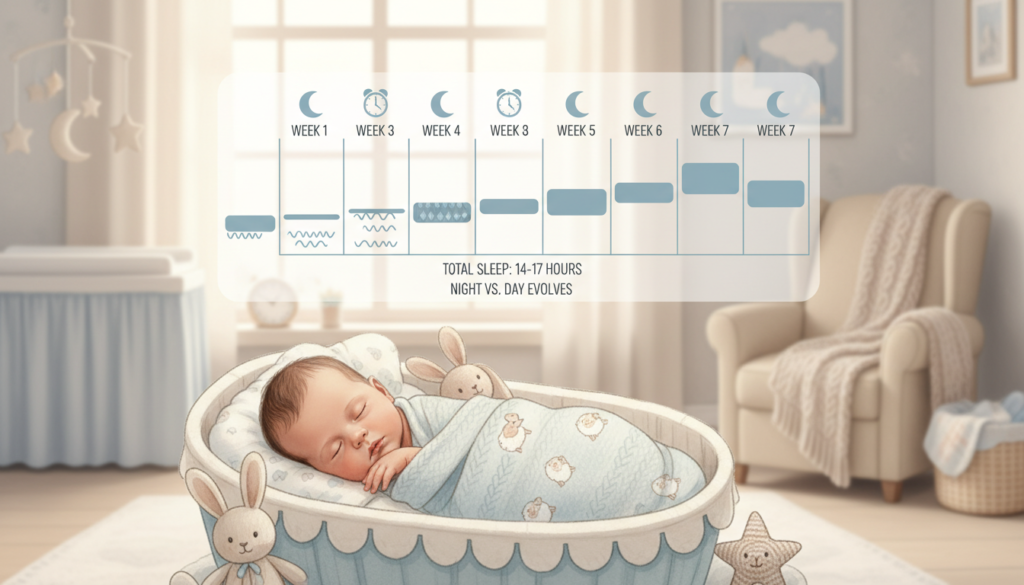

Do you ever stare at the clock in the hazy 3 a.m. glow, wondering if you’ll ever sleep again? That deep exhaustion mixed with love is the signature of early parenthood.
You crave a pattern, a sign that you’re doing this right. This guide is that sign. We’re moving past the myth of a perfect routine.
Instead, you’ll get a compassionate, week-by-week blueprint for the first two months. It respects your baby’s unique infant sleep development.
You will master safe sleep rules and gentle soothing methods that actually work. The goal isn’t control, but understanding.
Let’s transform those anxious nights into a journey you navigate with confidence. Embrace the fourth trimester sleep phase with clarity and calm.
Table of Contents
Key Takeaways
- A strict schedule is unrealistic for a newborn; a flexible, biology-based plan is key.
- The first eight weeks, known as the fourth trimester, involve rapid and unpredictable sleep development.
- Prioritizing safe sleep environments is the absolute foundation for your baby’s well-being.
- Learning a handful of expert-approved soothing techniques can dramatically improve rest for everyone.
- Setting realistic expectations helps reduce frustration and allows you to enjoy the bonding moments.
- This guide provides a clear framework to track progress and build parental confidence week by week.
- Your need for rest is valid; a sustainable approach supports both your health and your baby’s.
1. Why Newborn Sleep Doesn’t Look Like Your Sleep
Comparing your baby’s sleep to your own is like comparing a sprinter’s training to a marathon runner’s; they are built for entirely different purposes. Your newborn’s seemingly random newborn sleep patterns are not a sign of trouble. They are a brilliant, biological design for survival and explosive growth.
Before you can work with your baby’s sleep, you need to appreciate the “why” behind the round-the-clock wake-ups. Understanding this turns frustration into fascination.
The Science Behind Your Baby’s Sleep Patterns
Your baby is born without a mature internal clock, or circadian rhythm. This takes months to develop. Instead, they operate on a simple cycle: sleep, wake to feed, sleep again. Their baby sleep cycles are also much shorter than yours—about 50 minutes long.
Most importantly, newborns spend nearly 50% of their sleep in active REM (Rapid Eye Movement) sleep. For adults, it’s about 20%. This REM-heavy sleep is light, noisy, and twitchy. Those fluttering eyelids and jerky movements? That’s a busy brain at work.
| Sleep Feature | Newborn | Adult |
|---|---|---|
| Cycle Length | ~50 minutes | ~90 minutes |
| % of Sleep in REM | ~50% | ~20-25% |
| Sleep-Wake Driver | Hunger & comfort | Circadian rhythm |
| Typical Sleep Stretch | 2-4 hours | 7-9 hours |
How Sleep Fuels Your Newborn’s Rapid Development
This is where the magic happens. All that active REM sleep infant brain time is not for nothing. It is the prime time for brain development. During REM, your baby’s brain is building neural pathways, processing new sensations, and solidifying learning.
Think of it as the brain’s construction zone. Sleep directly fuels cognitive leaps and physical growth. This is why growth spurts often come with extra fussiness and clinginess—their brains and bodies are working overtime.
What looks like restless, inefficient sleep is actually a powerful engine. It’s forging the connections needed for future milestones like smiling, grabbing, and babbling. By reframing this chaos as essential progress, you can meet those 3 AM feeds with a new sense of purpose.
2. Setting Your Mindset: Realistic Sleep Expectations for New Parents
Your journey into parenthood begins with a critical mindset shift: letting go of the clock and embracing the rhythm. Chasing a rigid, by-the-minute plan in the early weeks is a recipe for frustration. This section is your permission slip to release that pressure. We will redefine success and build a foundation of realistic newborn sleep expectations that actually work.
Redefining “Schedule” for the Fourth Trimester
The first three months, often called the “fourth trimester,” are a period of immense adjustment. Your baby is learning to live outside the womb. A schedule here doesn’t mean feedings at 10, 2, and 6. It means a rhythmic pattern based on your baby’s hunger and sleep cues.
Think of it as a flowing routine instead of a fixed timetable. You watch for signs like yawning, fussing, or sucking on fists. These cues tell you what your baby needs next. This responsive approach is the heart of a flexible baby schedule.

Embracing Flexibility as Your Superpower
Flexibility is not a sign of a plan gone wrong. It is your greatest parenting asset. Being adaptable allows you to meet your newborn’s needs without guilt or stress. Your baby’s sleep and feeding needs change daily, sometimes hourly.
When you embrace this fluidity, you reduce your own anxiety. You start to see patterns in the chaos. This skill helps you tune into your baby’s unique tempo. It sets the stage for all the practical sleep strategies that follow.
| Aspect | Rigid Schedule Mindset | Flexible Pattern Mindset |
|---|---|---|
| Feeding Times | Strictly every 3 hours on the clock. | Based on baby’s hunger cues (rooting, crying). |
| Sleep Duration | Expecting 2-hour naps at set times. | Observing natural sleep cycles, which vary. |
| Parental Stress | High, from trying to force a timeline. | Lower, from responding to actual needs. |
| Baby’s Cues | Often ignored to maintain the schedule. | The primary guide for all decisions. |
Adjusting your parent expectations is the first step toward peaceful weeks. By focusing on patterns over rules, you build confidence. You learn to trust your instincts and your baby’s signals. This mindset is the quiet foundation for everything else.
3. Non-Negotiables: Safe Sleep Practices You Must Follow
Before you focus on schedules or soothing, there’s one critical chapter you must master: creating a safe sleep space. These safe sleep guidelines are not flexible tips. They are the bedrock of your baby’s well-being.
Following them gives you the peace of mind to actually rest yourself.
Building a Hazard-Free Sleep Environment
Think of the sleep space as a minimalist zone. Every item you add is a potential risk. Your goal is a clean, flat, and firm surface where your baby can breathe easily.
Start with a safety-approved crib, bassinet, or play yard. Check for recalls and ensure it meets current standards.
The ABCs of Safe Sleep: Alone, Back, Crib
Memorize this simple mantra. It’s the cornerstone of all modern SIDS prevention advice.
- Alone: Your baby should sleep in their own space, without pillows, stuffed animals, blankets, or sleep positioners. Room-sharing is encouraged, but bed-sharing is not recommended for safe sleep.
- Back: Always place your baby on their back for every sleep, nap, and night. This position keeps their airway clear.
- Crib: Use a dedicated, safety-certified sleep product. Couches, armchairs, and adult beds are soft and pose suffocation risks.
The firm crib mattress is non-negotiable. Press on the center and edges. It should snap back quickly without conforming to the shape of your hand.
Use only one tight-fitting sheet designed for that specific mattress. Loose bedding can bunch up and cover your baby’s face.
Here’s a quick hazard checklist to run through:
- Mattress is firm and flat (not inclined).
- Sheet is snug and elastic all around.
- Crib slats are no more than 2 3/8 inches apart.
- No cords, strings, or curtains are within reach.
- The room is kept at a comfortable, cool temperature.
Your Role in SIDS Risk Reduction
You have immense power to protect your baby. By consistently applying the ABCs of safe sleep, you are dramatically lowering the risk of Sudden Infant Death Syndrome (SIDS).
These practices work. They are backed by decades of research from the American Academy of Pediatrics.
Your role extends beyond the crib. Offer a pacifier at nap and bedtime after breastfeeding is established. Ensure everyone who cares for your baby knows and follows these same safe sleep guidelines.
Avoid smoke exposure and ensure your baby receives all recommended immunizations. These are also proven factors in SIDS prevention.
Creating this safe space is your most important job. It lets you worry less and enjoy those peaceful moments more.
4. Your Newborn Sleep Schedule Week by Week
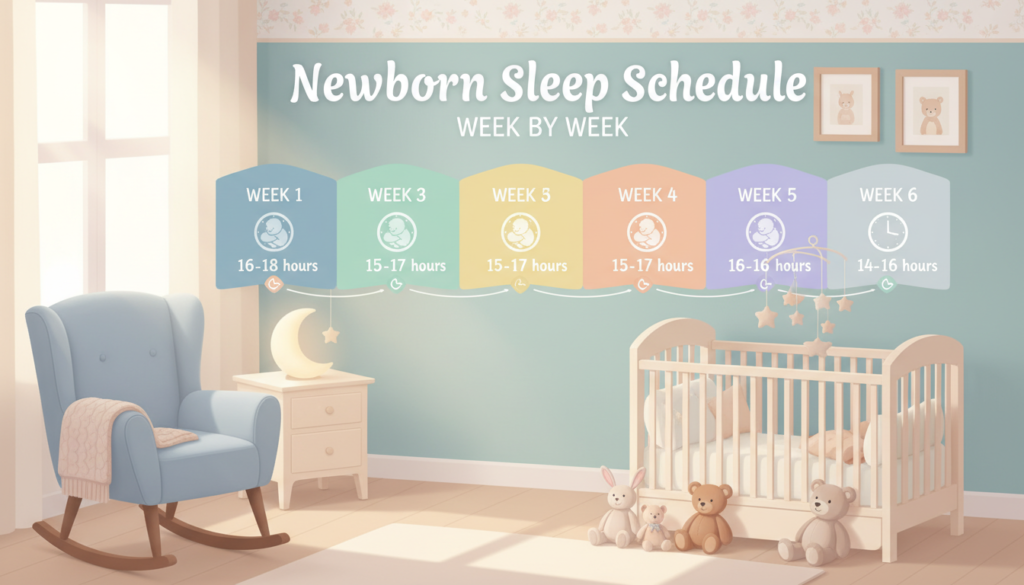
Forget rigid timetables. The first month is about observing natural rhythms. This week by week sleep guide breaks down exactly what to expect. You will move from survival mode to recognizing patterns that help your baby rest better.
Week 1: The Post-Birth Adjustment Period
Your baby is fresh from the womb. Their world is brand new. Sleep and feeding are their only jobs right now.
Sleep Totals and Erratic Patterns
Newborns sleep about 14 to 17 hours a day. But it happens in short bursts of 2 to 4 hours. Do not expect any consistency. This erratic pattern is completely normal and necessary for their tiny stomachs.
Your Focus: Recovery and Bonding
Your primary goal is your own healing and building a connection. Follow your baby’s lead for feedings. Embrace skin-to-skin contact. This period is not about schedules. It is about trusting the process and getting as much rest as you can.
Week 2: Emerging Wakefulness and Early Cues
Around the second week, you might notice brief moments where your baby is quietly alert. This is your chance to learn their language.
Identifying Tired Signs and Short Wake Windows
Watch for early sleepy cues. These include staring into space, turning away from stimulation, or gentle fist sucking. Newborn wake windows are incredibly short—only 45 to 60 minutes from the start of one feed to the start of the next nap. Putting your baby down at the first sign of tiredness prevents overtired meltdowns.
Strategies to Tackle Day-Night Confusion
Many newborns have their days and nights mixed up. To fix this, expose them to natural light during daytime feeds. Keep nights dark and boring. Change diapers quickly and avoid playful interaction. This helps set their internal clock straight.
Week 3: Increased Feeding and Alert Phases
Your baby is becoming more aware. They may have longer alert periods. This often coincides with a growth spurt and increased hunger.
Navigating Cluster Feeding for Better Sleep
Cluster feeding sleep strategies are key. Your baby may want to nurse very frequently for a few hours, usually in the evening. This is not a sign your milk is insufficient. It is a natural way to boost your supply and tank them up for a longer sleep stretch later. Go with the flow during these sessions.
Laying the Groundwork for a Bedtime Routine
You can now introduce a simple, 3-step pre-sleep sequence. This could be a diaper change, a gentle massage with lotion, and soft singing. Keep it under 10 minutes. Consistency now creates powerful sleep associations for the future.
Week 4: Observing Longer Sleep Cycles
By the fourth week, you might see the first glimpses of a more predictable pattern. Your baby’s nervous system is maturing.
The Potential for a 4-Hour Stretch
Some babies may gift you a longer sleep stretch of 4 or even 5 hours at night. This often happens after a full feed. Do not count on it every night, but celebrate it when it occurs. Ensure you follow safe sleep practices during this longer rest.
Advanced Soothing for the Witching Hour
The late afternoon or evening fussies—often called the witching hour baby phase—can peak now. Advanced soothing combines techniques. Try a tight swaddle, loud white noise, and rhythmic motion like a baby swing. Sometimes, a warm bath or a walk outside can reset a fussy mood. Remember, this phase is temporary.
5. The Turning Point: Sleep Evolvements from Weeks 5 to 8
Weeks five through eight often bring the first glimpses of a more predictable rhythm to your newborn’s days and nights. The constant cycle of feeding and sleeping starts to stretch out just a little. You begin to see patterns emerge from the initial newborn fog.
This period is less about enforcing a strict baby sleep schedule sample and more about observing and gently guiding your baby’s natural biological progress. It’s an exciting time where your efforts to establish good habits truly start to pay off.
How Your Baby’s Circadian Rhythm Begins to Form
Around this time, your baby’s internal clock, or circadian rhythm baby system, begins to wake up. This natural timer is influenced by light, dark, and social cues. It’s what will eventually help them distinguish day from night.
You can actively support this development. Exposure to bright, natural light during morning and afternoon wake windows is powerful. Conversely, keep nights dark and boring during feeds and changes.
Simple actions make a big difference:
- Open the curtains during daytime naps.
- Use soft, dim lighting for night-time interactions.
- Incorporate a consistent morning “hello” and evening “goodnight” ritual.
This consistent exposure teaches their brain the difference. It’s the foundation for longer nighttime sleep stretches in the coming months.
Actionable Sample Schedules for This Stage
Remember, these are flexible frameworks, not rigid commands. They show how feedings, wake windows, and naps can create a flow. Your baby’s unique needs are the ultimate guide.
The goal is a predictable sequence, not a timed-by-the-clock routine. Focus on the order of events: feed, play, sleep.
A Day in the Life of a 5-Week-Old
At five weeks, your baby is more alert but still needs frequent feeds and lots of sleep. A typical 5 week old sleep pattern might involve shorter, more variable naps.
Here’s a potential daily flow:
- Morning (7:00 AM): Wake, feed, diaper change, and brief cuddle time in bright light.
- Late Morning (8:30 AM): First nap of the day (45 min – 1.5 hours).
- Cycle Repeats: Feed upon waking, followed by 45-60 minutes of awake time, then another nap. This cycle repeats all day.
- Evening Cluster: Expect more frequent feeding in the late afternoon and evening.
- Night Sleep: Begin a simple bedtime routine around 9:00 PM. Night feeds are still needed every 2-4 hours.
Total sleep will likely be 14-17 hours, scattered across 24 hours.
A Day in the Life of an 8-Week-Old
By eight weeks, you’ll likely notice longer wake windows and more consolidated sleep chunks. An 8 week old schedule often has a more distinct rhythm.
A sample framework could look like this:
- Morning (7:00 AM): Wake, full feed, playful interaction.
- Awake Time: Can often handle 60-90 minutes of awake time before showing sleepy cues.
- Nap Pattern: May take 4-5 naps per day, with some naps lengthening to 1-2 hours.
- Last Feed: A final “dream feed” around 10:30 PM can help extend the first long sleep stretch.
- Night Sleep: May sleep for one 4-6 hour stretch at the beginning of the night, followed by feeds every 3-4 hours.
The key evolution is the start of a longer, more restorative sleep period at night. This is a direct result of that maturing circadian rhythm baby clock.
Celebrate these small victories. Each longer stretch is a sign your baby is developing beautifully.
Building Your Sleep Schedule Foundation
Your journey to more predictable sleep starts with syncing three core elements: feeding, routine, and wakefulness. This isn’t about strict clock-based rules. It’s about creating a flexible, responsive framework that guides your baby toward better rest. Mastering these pillars helps you move from reactive survival to proactive sleep shaping.
Syncing Feedings with Sleep for Longer Stretches
A strategic feeding and sleep schedule can encourage longer nighttime stretches. The goal is to gently separate eating from the act of falling asleep. Try a “feed-play-sleep” cycle during the day. This breaks the feed-to-sleep association that can cause frequent night wakings.
In the early evening, consider a cluster feeding session or a “dream feed” before you go to bed. This tops off your baby’s tank. A full belly can help them sleep for a longer initial stretch. Remember, full feeds during the day support better sleep at night.
Crafting a Short, Effective Bedtime Routine
Your baby bedtime routine is a powerful signal. It tells your newborn’s brain that sleep is coming. Keep it simple, calm, and consistent—just three or four steps repeated every night.

A classic routine might be a warm bath, a gentle massage, putting on pajamas, reading a short book, and then a final feeding. The key is the order, not the duration. This sequence creates a predictable pattern.
This consistent cueing helps regulate their developing circadian rhythm. It turns down their alertness and prepares their body for rest. A good routine is your secret weapon for smoother bedtimes.
Using Age-Appropriate Wake Windows to Your Advantage
An overtired baby fights sleep. Age-appropriate wake windows are your guide to perfect timing. A wake window is the ideal time your baby can comfortably stay awake between naps. Staying within this window prevents a cortisol rush that makes settling difficult.
Use the table below as a quick-reference guide for the first two months. These ranges are averages, so watch your baby’s unique cues closely.
| Baby’s Age | Typical Wake Window | Key Signs of Sleepiness |
|---|---|---|
| Newborn – 1 Month | 45 – 60 minutes | Staring into space, yawning, slowing movements |
| 1 – 2 Months | 60 – 90 minutes | Looking away, fussing, rubbing eyes/face |
| 2 – 3 Months | 75 – 120 minutes | Red eyebrows, fussy cry, losing interest in toys |
Start the soothing process when you see the first sleepy cue, not the last. Putting your baby down drowsy but awake becomes much easier when they are perfectly tired, not overtired. By syncing feedings, routines, and wake windows, you build a solid foundation for healthy sleep habits.
7. Expert Soothing Techniques to Calm a Fussy Newborn
The key to turning newborn fussiness into peaceful sleep lies in understanding and activating their innate calming reflex. When your baby is overwhelmed, these expert methods provide immediate, gentle relief.
You are not powerless against the cries. With the right tools, you can guide your little one from distress to deep calm.
Harnessing the Calming Reflex with the 5 S’s
Pediatrician Dr. Harvey Karp popularized the “5 S’s” system, a method that mimics the womb’s environment. This approach is your most powerful tool for soothing a newborn in moments of high stress.
The five actions work together to trigger a natural off-switch for crying. Here is how to apply each one:
- Swaddle: Snug wrapping provides the secure touch your baby craves.
- Side/Stomach Position: Hold your baby on their side or stomach in your arms—never for unsupervised sleep.
- Shush: Use a loud, white noise “shush” sound right near their ear to block out disturbing noises.
- Swing: Gentle, rhythmic jiggling (not shaking) in your arms or a safe swing can be incredibly effective.
- Suck: Offering a breast, finger, or pacifier satisfies a primal sucking need.
Mastering the 5 S’s for calming often requires using two or three techniques at once. A swaddled baby held on their side while you shush and swing can settle remarkably fast.

Designing a Pre-Sleep Calm-Down Sequence
Preventing fussiness is just as important as curing it. A consistent baby calm-down sequence signals to your newborn’s nervous system that sleep is coming.
This isn’t a long, elaborate routine. It’s a short, predictable series of steps you take 10-15 minutes before a nap or bedtime.
Start by moving to a dim, quiet room. Then, engage in low-stimulation activities like gentle rocking, soft singing, or a quiet feed. The goal is to gradually lower their arousal level.
Consistency in your pre-sleep actions is more valuable than the specific actions themselves.
Your personalized sequence might look like this: dim lights, put on white noise, swaddle, rock while shushing, then offer a final feed. This repeatable pattern teaches your baby what to expect, making the transition to sleep smoother and reducing last-minute fussing.
Combining the on-the-spot 5 S’s for calming with a proactive baby calm-down sequence gives you a complete strategy for soothing a newborn day and night.
Solving the Most Common Newborn Sleep Problems
You might be facing a baby who sleeps all day and parties all night, but reversing this pattern is simpler than you think. Every parent hits predictable snags in the first few months. The good news is that the most frequent newborn sleep problems have clear, actionable solutions.

Flipping the Script on Day-Night Reversal
Day-night confusion is incredibly common. Your baby’s internal clock isn’t set yet. To fix a day-night reversal baby situation, you need to send clear environmental signals.
Follow this step-by-step plan for a reset:
- Maximize Daytime Light: Keep curtains open during the day. Engage in active play and feedings in bright, lively rooms.
- Differentiate Night Feeds: Keep lights dim and interaction minimal. Use a soft voice and avoid stimulating play.
- Establish a Morning “Sunrise”: At a consistent morning hour, expose your baby to natural light. This helps set their circadian rhythm.
- Limit Long Day Naps: Gently wake your baby after 2-2.5 hours of daytime sleep. This preserves sleep pressure for night.
Consistency with these cues for 3-5 days can dramatically improve the pattern.
Sleeping Through Growth Spurts and Early Regressions
Just when you think you have a rhythm, sleep falls apart. Often, this is due to a growth spurt sleep disruption or an early sign of the 4-month regression.
Growth spurts mean more frequent feeding, day and night. Your baby is hungry and cranky. Feed on demand during these phases. The extra calories fuel development and sleep will re-stabilize in a few days.
The 4-month sleep regression can start showing signs as early as 3 months. Your baby’s sleep cycles mature, causing more frequent night wakings. This is a permanent change, not a setback.
Your strategy shifts here. Focus on putting your baby down drowsy but awake after feeds. This helps them practice connecting sleep cycles independently.
Transitioning Away from “Hold Me to Sleep”
If your baby only sleeps in your arms, your back aches and your freedom vanishes. The goal to stop holding baby to sleep is about gentle coaching, not cold-turkey changes.
Start with the first nap of the day. Babies are most rested then. After your calming routine, place them in the crib drowsy. Sit quietly beside them, offering a gentle hand on their chest or soft shushing.
If they fuss, pick them up to calm, then put them down again. Repeat as needed. This method, often called “pick up put down,” teaches them the crib is a safe sleep space.
Extend this practice to other naps and bedtime over a week. Consistency is your most powerful tool. You are not abandoning them; you are giving them the skill to fall asleep independently.
9. Curated Gear to Enhance Your Baby’s Sleep
Think of the perfect sleep tools as your allies in the quest for longer, safer baby sleep. The right baby sleep gear doesn’t just add convenience; it actively supports your newborn’s natural sleep rhythms and your peace of mind.
Let’s focus on the products that deliver real value, cutting through the clutter to highlight what truly works.

Swaddles and Wearable Blankets for Safe Comfort
A proper swaddle mimics the cozy security of the womb. It can dramatically reduce the startle reflex that often wakes newborns. You have two main choices:
- Traditional Wrap Swaddles: These are large, thin blankets you fold around your baby. They offer a customizable fit but require practice to master safely.
- Wearable Blankets (Sleep Sacks): These are zippered or Velcro sacks with defined armholes. They are foolproof for safe swaddling for sleep and are ideal for preventing loose blankets in the crib.
Safety is paramount. Always ensure the swaddle is snug but not tight on the hips and chest. Stop swaddling as soon as your baby shows signs of attempting to roll over, typically around 2 months. Transition to a wearable blanket without arm restraints at that point.
White Noise Machines: Why Consistency Matters
The womb is a surprisingly noisy place. A consistent white noise machine helps recreate that familiar environment. The key word is consistent.
Using the same sound, at the same volume, for every sleep period teaches your baby’s brain to associate that sound with sleep time. It masks sudden household disruptions like doorbells or older siblings. For effective white noise for babies, look for a machine with a non-looping sound, adjustable volume (keep it under 50 decibels), and portability for room-to-room use.
Consistent white noise acts as a sleep cue, not just a mask for other sounds. It tells your baby’s nervous system it’s time to power down.
The Pacifier Debate and Safe Use Guidelines
Pacifiers are a hot topic. On one hand, the American Academy of Pediatrics notes that offering a pacifier at nap and bedtime is associated with a reduced risk of SIDS. It can also be a powerful soothing tool.
On the other hand, some parents worry about dependency or early nipple confusion if introduced before breastfeeding is well-established.
If you choose to use one, follow these pacifier safety sleep rules:
- Use a one-piece, dishwasher-safe model. Never attach cords, clips, or stuffed animals to it in the crib.
- Offer it when putting your baby down, but don’t reinsert it constantly if it falls out once they’re asleep.
- Inspect it regularly for signs of wear or tear and replace it immediately.
- Keep it clean, especially in the early months.
Your informed choice about baby sleep gear empowers you to create the most supportive sleep sanctuary for your little one.
10. Conclusion
Your journey through these first weeks is about building connection, not just logging hours. True newborn sleep success is measured in tiny steps forward.
You now have the tools for safe sleep environments, responsive routines, and gentle soothing. Use them with flexibility. Your consistent effort lays the foundation for better rest.
Patient parenting means observing your baby’s unique cues. Celebrate the first longer stretch. Accept the fussy nights. This is how you learn to communicate.
Trusting the process is your anchor. Sleep patterns will shift with growth spurts and developmental leaps. This phase is temporary.
You are not just managing sleep. You are learning the language of your newborn. Move forward with confidence, knowing you are fully capable.