

I once stood in my closet, feeling frustrated. Nothing fit right. My fitness journey seemed like a maze with no exit.
I tried many trends, but none felt right for my body and life.
Maybe you’ve felt the same. You want to feel strong, confident, and healthy. But the wellness world offers so many choices. It’s easy to get lost, wondering where to start.
I decided to dig deep into this comparison. I wanted actionable insights for women. It’s not about choosing a winner. It’s about finding what works for your unique transformation.
Let’s clear up the confusion. We’ll look at the real evidence. We’ll respect how different each woman’s body and lifestyle can be. My goal is to help you find a practice you’ll love and stick with.
Table of Contents
Key Takeaways
- Both Pilates and yoga offer benefits that extend far beyond simple calorie burning.
- Your success depends more on consistency than on which discipline you choose first.
- A strong mind-body connection is crucial for sustainable, long-term results.
- Understanding your specific body type and personal goals is the key to deciding.
- Nutrition and recovery are just as important as your chosen workout routine.
- Listen to your body’s signals—it will guide you better than any rigid plan.
- Progress is deeply personal, and your journey will look different from anyone else’s.
My Personal Journey: Why This Comparison Matters to Me
I stood in the gym, feeling lost. The schedule had ‘Pilates’ and ‘Yoga’ on opposite sides. I wanted to lose weight and feel strong.
I started my fitness journey with passion but no direction. I tried yoga one week, loving the stretch, but the scale didn’t budge. The next week, Pilates made my muscles burn, but I missed the calm.
This was my real life, my real time, and my real desire for change. The pilates vs yoga dilemma was a roadblock. I saw them as tools, not as they truly were.
Then, I stopped seeing them as rivals. Pilates taught me disciplined strength from the inside out. Yoga gave my mind a sanctuary, crucial for weight loss. The mix of physical effort and mental clarity was my missing link.
Understanding the difference didn’t just change my workout; it transformed my entire approach to well-being.
This comparison matters to me because of sweat, confusion, and clarity. It’s about finding the right choice for your body and goals in life.
This article is my passion project, a map I wish I’d had. It’s filled with insights from my journey. My hope is to save you time and frustration, so you can build a routine that truly works.
Understanding the Foundations: What Are Pilates and Yoga?
Pilates and yoga are not rivals but two unique ways to connect with your body. To choose the best for your weight loss, you must understand them. They are not just exercises but philosophies of movement. Knowing this is the first step to unlocking their benefits for you.
Pilates: Core Strength and Controlled Movement
Pilates was created by Joseph Pilates in the early 1900s. It focuses on physical and mental conditioning. It has six core principles: centering, control, concentration, precision, breath, and flow.
Every movement starts from your core muscles. Pilates builds strength from the inside out. It teaches controlled movements that target stabilizer muscles.
You’ll use specialized equipment like the Reformer. The goal is not just to hold poses but to move with quality. This builds a strong core that improves your posture and protects your spine.
Yoga: Union, Flexibility, and Mindfulness
Yoga is an ancient practice that unites mind, body, and spirit. The word “yoga” means “to yoke” or “union.” It includes physical postures, breathwork, and meditation.
Yoga combines movement and breath in a dynamic dance. It builds flexibility and endurance. Yoga teaches you to listen to your body and find ease in effort. It cultivates mindfulness and quiets the mind.
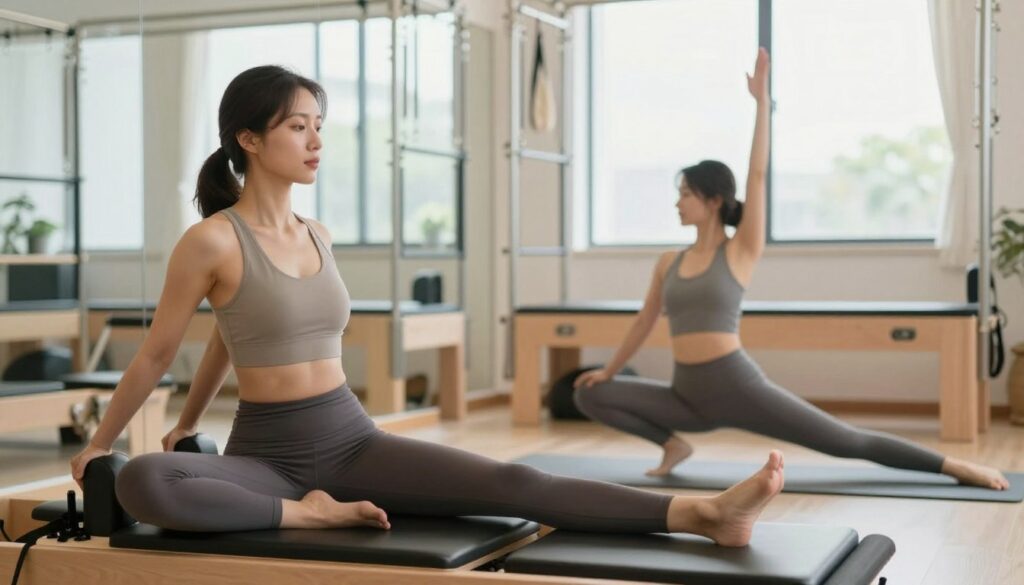
Key Philosophical Differences at a Glance
Both Pilates and yoga are great for women’s health, but they have different goals. Understanding their philosophies helps you choose the right one for you.
One fitness expert said:
“Pilates is about creating a strong vessel. Yoga is about calming the sea within it.”
To see these differences clearly, let’s break them down side-by-side.
| Philosophical Focus | Pilates Approach | Yoga Approach |
|---|---|---|
| Primary Objective | Physical mastery, core stability, and controlled movement. | Union of mind and body, spiritual awareness, and inner peace. |
| Relationship to the Body | Body as a machine to be strengthened and precisely aligned. | Body as a temple to be honored, explored, and harmonized. |
| Role of Breath | Breath is a tool to initiate and power movement (lateral breathing). | Breath is the anchor and guide for movement and meditation (ujjayi breath). |
| Mindset in Practice | Exertion, precision, and muscular engagement. | Surrender, acceptance, and finding ease within a pose. |
| End Result | A strong, balanced, and injury-resistant physical structure. | Enhanced flexibility, mental clarity, and energetic flow. |
Seeing them laid out this way, it’s clear: Pilates and yoga offer different gifts. Pilates builds strength, while yoga brings peace. Your goals will help you choose which one feels more like home, or if you need both.
Pilates vs Yoga for Weight Loss Women: The Core Mechanisms
Forget the guesswork; knowing the physiological triggers of Pilates and yoga will empower your fitness choices. It’s not about which one is simply “better.” It’s about understanding how each practice speaks to your body in a unique language to promote fat loss. When you grasp these core mechanisms, you can choose—or blend—your workouts with confidence and intention.
How Pilates Targets Weight Loss: Building Lean Muscle
Many people think weight loss is all about cardio. I learned it’s about building a furnace. Pilates is a masterclass in constructing lean, metabolically active muscle tissue, especially in your core, glutes, and thighs.
Why does this matter for weight loss? Muscle burns more calories at rest than fat does. By increasing your lean muscle mass through consistent Pilates practice, you subtly boost your resting metabolic rate. This means you’re burning more calories all day long, even while you’re sitting at your desk or sleeping.
The real magic happens when you move from simple toning to strength-building. Using resistance from springs on a Reformer or your own body weight on the mat challenges your muscles to adapt and grow. This process of micro-tearing and repair is what builds that sleek, strong physique.
The Afterburn Effect (EPOC) in Pilates
Take your Pilates intensity up a notch, and you unlock a powerful bonus: Excess Post-Exercise Oxygen Consumption, or EPOC. You might know it as the “afterburn.”
After a challenging workout, your body works hard to return to its resting state. It needs extra oxygen to repair muscles, replenish energy stores, and restore your hormonal balance. This process requires energy—meaning you continue to burn calories at an elevated rate for hours after your session ends.
“High-intensity interval-style Pilates, especially on the Reformer, can create a significant EPOC effect. It’s not just the 45 minutes in class that counts; it’s the metabolic ripple effect afterward.”
Styles like dynamic Reformer circuits or cardio-based Pilates fusions are fantastic for triggering this afterburn. It’s a efficient way to amplify the pilates vs yoga effectiveness for weight loss in women when your goal is maximizing calorie expenditure.
How Yoga Promotes Weight Loss: Stress Reduction and Metabolism
If Pilates builds the furnace, yoga tends the flame. The connection between chronic stress and weight gain, particularly stubborn belly fat, is well-documented. When we’re stressed, our bodies release cortisol.
Elevated cortisol can slow your metabolism, increase appetite, and encourage your body to store fat around your midsection. This is where yoga’s profound power lies. Through mindful movement, focused breathing, and meditation, yoga activates the parasympathetic nervous system—your body’s “rest and digest” mode.
This relaxation response directly counteracts stress. By lowering cortisol levels, yoga helps normalize your metabolism and reduces cravings driven by emotional eating. The physical practice, especially in vigorous styles like Vinyasa or Power Yoga, certainly burns calories. But the metabolic reset from de-stressing might be its most valuable weight loss tool.
The Role of Yoga in Hormonal Balance
Yoga’s influence goes even deeper, supporting the delicate systems that govern your weight. Certain poses are believed to stimulate and balance the endocrine glands, including the thyroid, which regulates metabolism.
Poses like Supported Shoulderstand (Sarvangasana) or Fish Pose (Matsyasana) gently compress and stimulate the thyroid region. Twisting poses are thought to aid digestion and detoxification, while restorative poses help regulate adrenal function. This holistic approach to hormonal health creates an internal environment more conducive to weight loss.
It’s not a quick fix, but a gentle, sustained recalibration. When your hormones are in harmony, your body finds its natural, healthy weight more easily. This is a crucial, often overlooked, aspect of determining which is better for weight loss for women dealing with hormonal fluctuations.
| Mechanism | Pilates Approach | Yoga Approach | Key Weight Loss Benefit |
|---|---|---|---|
| Metabolism Boost | Builds lean muscle to increase resting metabolic rate. | Reduces cortisol to normalize metabolic function. | Increases daily calorie burn at a baseline level. |
| Post-Workout Effect | Can create EPOC (“afterburn”) after intense sessions. | Promotes sustained relaxation, lowering stress hormones. | Extends calorie burn or reduces fat-storage signals. |
| Primary Focus | Physical strength, control, and muscular endurance. | Mind-body union, flexibility, and nervous system balance. | Targets body composition vs. systemic balance. |
| Best For Targeting | Core strength, posture, and sculpting long, lean muscles. | Stress management, flexibility, and holistic wellness. | Visible toning and stability vs. sustainable habit formation. |
Understanding these core mechanisms turns your workout from a chore into a strategic choice. You’re no longer just exercising; you’re sending a specific, powerful message to your body. That knowledge is the ultimate empowerment.
Calorie Burn Showdown: Mat, Reformer, Vinyasa, and Hatha
The debate on Pilates and yoga calorie burn isn’t simple. I used to focus on the numbers, thinking more was better. But, the real story is more complex. It’s about choosing the right practice for your slimming down for women goals.
Let’s look at the numbers, but remember, they’re just a starting point. The real magic is in the quality of the burn and its long-term benefits.
Calories Burned in a Typical Pilates Session
Pilates is known for building lean muscles, but its calorie burn is often underestimated. The burn varies between Mat and Reformer.
A 60-minute Mat Pilates class burns 180 to 250 calories for a 150-pound woman. It’s a deep, internal burn from core control.
The Reformer adds more resistance. A 150-pound woman can burn 250 to 350 calories in an hour. The movements are more challenging, requiring strength and stability.
Pilates builds a strong metabolic foundation by increasing muscle. More muscle means a higher resting metabolism. This is key for sustainable weight loss.
Calories Burned in a Typical Yoga Session
Yoga’s calorie burn varies widely. It depends on the style you choose.
A gentle Hatha or Yin yoga class burns 150 to 200 calories per hour. It’s great for recovery and stress relief.
A dynamic Vinyasa or Power Yoga flow can burn 300 to 400 calories. Hot yoga can burn even more due to cooling efforts.
While a vigorous yoga flow burns more calories, gentle forms offer mental balance for long-term success.
Factors That Influence Your Burn: Intensity, Style, and Duration
Calorie ranges are just guides. Your burn depends on several factors. Understanding these factors helps you control your fitness.
- Your Body Weight: More mass means more calories burned. The numbers are averages, but your starting point is unique.
- Your Effort Level (Intensity): Your focus and power affect your burn. A challenging class burns more than an easy one.
- The Specific Class Style: Different Pilates and yoga styles have different calorie burns. Always check the class description.
- Duration and Consistency: Longer classes burn more calories. But, regular practice over time is more important for slimming down for women.
Don’t just look at the calorie count. A 250-calorie Pilates session builds strength and posture. This is different from a 250-calorie walk. One builds muscle, the other just burns calories.
For lasting results, focus on the quality of the burn. Are you building a stronger, more aware body every day? That’s the real victory.
Building a Toned Body: Muscle Engagement Compared
Achieving a toned body is more than just burning calories. It’s about how you engage your muscles. Women often aim for definition, not bulk. Both Pilates and yoga are great for this, but they work muscles differently.
Pilates for Deep Core and Stabilizer Muscles
Pilates focuses on the inside of your body. It targets your deep core muscles, like the transverse abdominis and pelvic floor.
Practicing Pilates, I feel it working muscles I didn’t know I had. Exercises like the Hundred or Roll-Up require intense muscle control. This isn’t just for a flatter stomach.
You get a stronger, cinched waist and better posture. This strengthens your body’s foundation. Clothes fit differently because your core is more defined.
Yoga for Functional Strength and Long, Lean Lines
Yoga builds strength in a holistic way. It works your entire body through bodyweight exercises. Think Plank or Sun Salutations.
These exercises strengthen your shoulders, back, legs, and core. The strength gained is useful for daily life. Yoga also stretches your muscles, creating long, lean lines.
Which Creates More Visible Results Sooner for Women?
Every woman wants to know which is better. It really depends on what you mean by “results” and where you start.
If you want a more defined waist and better posture, Pilates might show results faster. The deep core work can give you a “snatched” midsection in weeks. You’ll notice changes in how you stand right away.
For overall toning and flexibility, yoga might take longer. But the strength you build is elegant and sustainable. Remember, consistency, nutrition, and genetics also matter.
Choosing the best pilates and yoga workout for women means finding one you enjoy. Stick with it, and you’ll see changes.
The Mind-Body Connection: Mental Benefits for Sustainable Loss
What if the most powerful weight loss tool wasn’t a reformer or a mat, but your own mindset? I’ve learned that lasting change isn’t just about the physics of movement. It’s about the psychology behind it. Sustainable weight loss is a mind-game. When you nurture the connection between your thoughts and your body, you build a foundation that makes healthy choices feel natural, not forced.
This is where choosing between Pilates and yoga for female weight loss gets deeply personal. Both practices offer incredible mental benefits. But they approach the mind-body link from different angles. Understanding this can help you pick the practice that best supports your mental landscape and your goals.
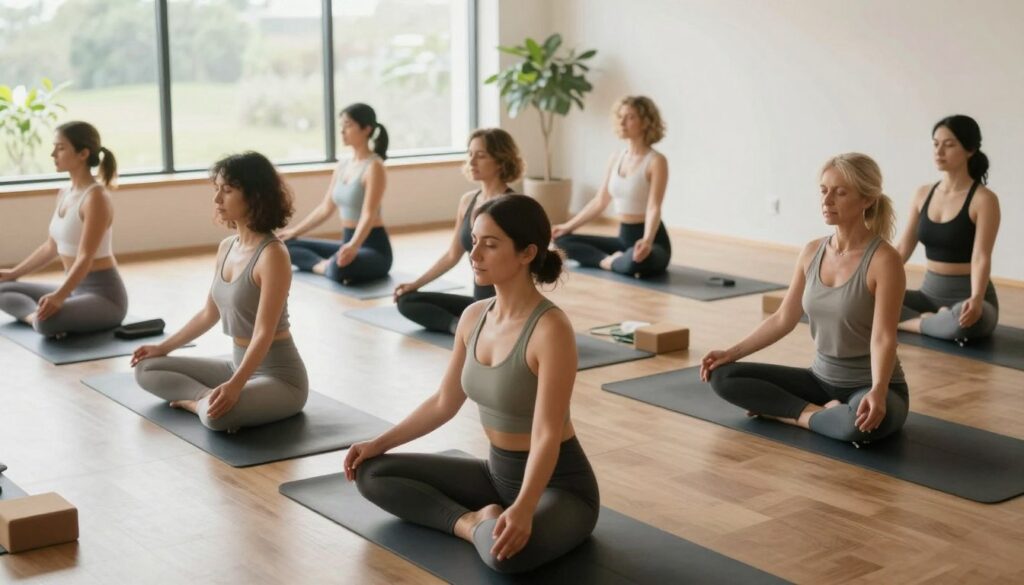
Yoga’s Edge in Mindfulness and Combating Stress Eating
Yoga taught me to sit with my discomfort, both on and off the mat. Its true superpower for weight loss lies in its ancient tools for mindfulness. Through focused breathwork and meditation, yoga trains you to observe your thoughts and emotions without immediately reacting to them.
This skill is a game-changer for breaking the cycle of emotional and stress eating. Instead of reaching for a snack when anxiety hits, you learn to pause and breathe. You create a space between the trigger and your action. This space is where real choice and control are born.
Styles like Hatha or Restorative Yoga emphasize this inward focus. They help lower cortisol, the stress hormone that can encourage belly fat storage. By managing stress, you directly support a healthier metabolism and reduce cravings driven by emotion, not hunger.
Pilates for Body Awareness, Posture, and Confidence
Pilates builds a different kind of mental strength. It’s about tangible mastery. Every precise, controlled movement requires intense focus on your body’s positioning. This practice cultivates a deep sense of body awareness that spills into your daily life.
You start to notice when you’re slouching at your desk and correct it. You engage your core while carrying groceries. This improved posture does more than make you look taller and leaner. It builds a quiet, radiating confidence. You feel stronger and more capable in your own skin.
That confidence is fuel. When you feel powerful and aligned in your body, you’re more likely to make choices that honor it. Pilates gives you a physical proof of your own strength, which reinforces a positive self-image critical for long-term success.
How Mental Health Directly Impacts Weight Loss Success
Think of your mental state as the soil in which your weight loss journey grows. If the soil is depleted—filled with stress, negative self-talk, or disconnection—even the best exercise seeds will struggle to take root. A positive, resilient mindset is the fertile ground for change.
Chronic stress can sabotage even the most dedicated fitness plan. It disrupts sleep, increases cravings, and can lead to hormonal imbalances. Both Pilates and yoga combat this, but in complementary ways. Yoga soothes the nervous system. Pilates empowers you through physical competence.
Your decision in choosing between Pilates and yoga for female weight loss might come down to what your mind needs most right now. Do you need to calm and observe? Or do you need to engage and conquer? Nurturing your mental health isn’t a side quest; it’s the main mission for creating a body and life you love, sustainably.
Practicality for Women: Time, Cost, and Accessibility
Let’s talk about the real-world logistics of starting a Pilates or yoga practice for weight loss. The best workout is the one you can actually do consistently. For women juggling careers, families, and personal time, practicality is just as important as physical results.
This section breaks down the nitty-gritty details of equipment, cost, and time. My goal is to remove any hidden barriers so you can make a choice that empowers your life, not complicates it.
Starting at Home: Equipment and Space Needs
One of the biggest advantages of both practices is that you can start in your living room. The barrier to entry is beautifully low.
For yoga, your essential investment is a good-quality sticky mat. That’s often it. You might add blocks or a strap later, but you can begin a powerful practice with just your body and a mat.
Pilates at home starts similarly with a mat. However, to truly access the method’s depth, you might want a few small props. A resistance band, a Pilates circle, or even a set of light hand weights can expand your repertoire significantly.
Space-wise, both need only enough room to lay your mat down fully. Clear a spot in front of the TV or in a bedroom corner. You don’t need a dedicated home gym.
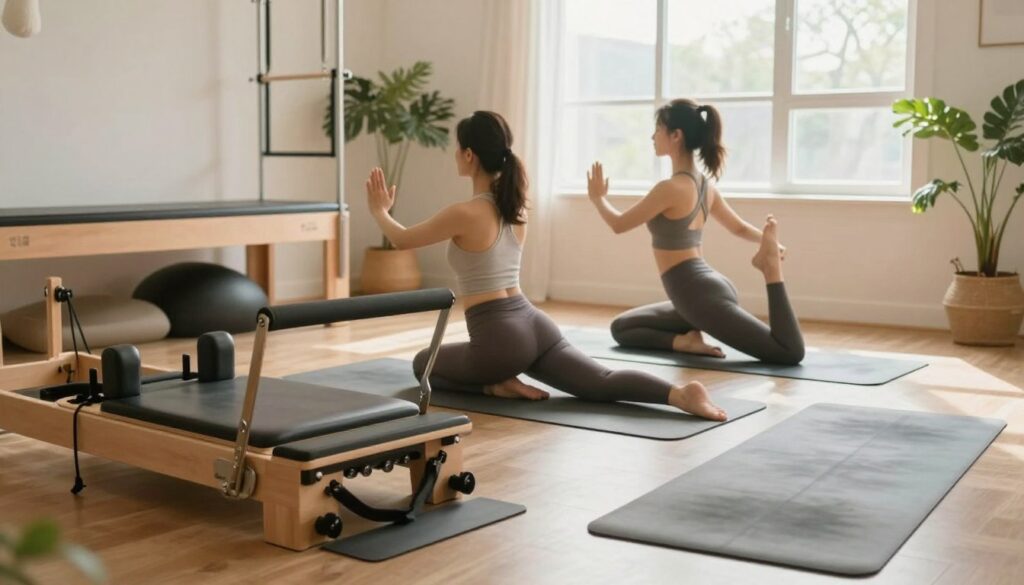
Class Costs and Membership Considerations
Your budget can range from zero to a significant monthly investment. Here’s the spectrum.
On the free end, platforms like YouTube host thousands of high-quality Pilates and yoga classes. This is a fantastic way to explore different styles and instructors.
Paid apps and online memberships offer structured programs and community support. These typically cost between $10 and $30 per month.
In-person classes are where costs rise. Drop-in rates at studios can range from $20 to $35 per class. Unlimited monthly memberships at boutique studios often run from $150 to $250. Larger gyms that include these classes in their membership offer better value if you’ll use other facilities.
Remember: A higher price tag doesn’t always mean better results. Consistency with a free online video beats an expensive class you rarely attend.
Which Is Easier to Fit into a Busy Woman’s Schedule?
This is the million-dollar question. Both can be adapted, but their nature offers different advantages for tight schedules.
Pilates sessions are often very time-efficient. A focused 20-30 minute mat workout can engage your entire core and major muscle groups. The controlled, repetitive movements deliver a strong strength stimulus quickly.
Yoga’s value sometimes unfolds with time. A 60-minute Vinyasa flow offers a complete mind-body experience. However, a shorter 15-minute morning sun salutation sequence is a perfect way to center yourself and move your body on a chaotic day.
For the woman who needs maximum impact in a minimal window, Pilates might feel more “bang for buck.” For the woman who needs to de-stress and stretch, even a brief yoga session can be a powerful reset.
The easiest practice to fit is the one you look forward to and can do without a huge time commitment. Start small. A 10-minute routine done daily builds unstoppable momentum.
| Practical Factor | Pilates | Yoga |
|---|---|---|
| Essential Starter Gear | Mat, optional bands/circle | Mat |
| Typical Online Class Cost | $10 – $30/month (apps) | $0 – $30/month (YouTube/apps) |
| Boutique Studio Membership | $150 – $250+/month | $150 – $250+/month |
| Ideal Short Session Length | 20-30 minutes | 15-60 minutes (varies by style) |
| Best For Tight Schedules | Focused strength in minimal time | Quick mental reset and mobility |
Matching Your Body and Goals: A Guide for Every Woman
Let’s look beyond general tips and focus on what’s right for you. The debate of pilates vs yoga for weight loss women isn’t simple. Everyone’s journey is unique.
This part is your guide. I’ll show you how to pick the best practice for your body and goals.
If Your Primary Goal is Rapid Weight Loss
Looking to lose weight fast? You need something with more cardio. Traditional Pilates and gentle yoga aren’t enough.
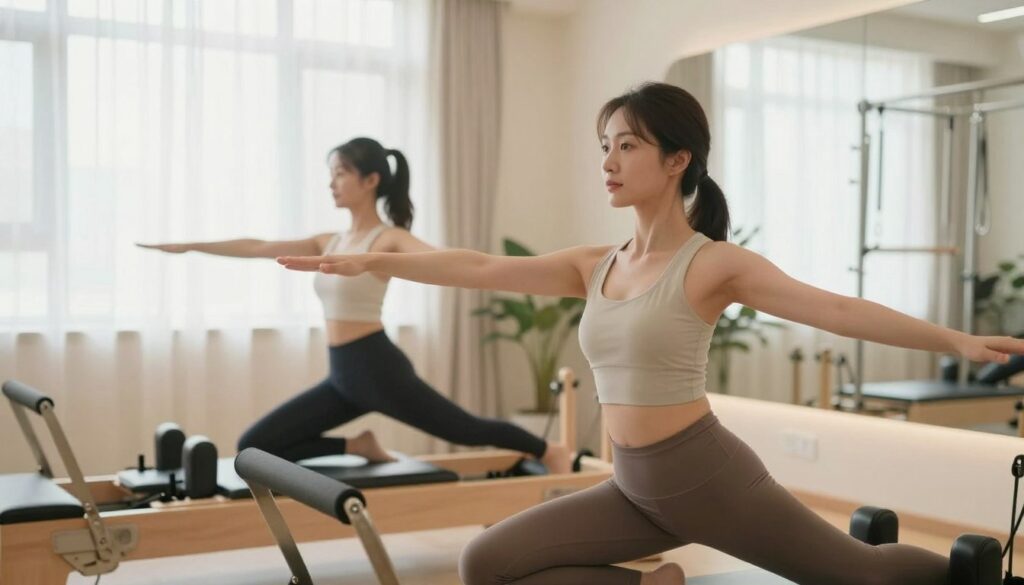
Try a mix of both. Power Pilates or Reformer classes with jumpboard raise your heart rate. For yoga, Vinyasa or Ashtanga flows will make you sweat.
For quick weight loss, mix 2-3 days of these intense workouts with cardio. Brisk walking, swimming, or cycling are good choices. This combo helps you lose weight fast. The choice between pilates vs yoga for weight loss women depends on what you enjoy more.
If You’re a Complete Beginner or Have Specific Injuries
Starting with an injury or from scratch needs patience and safety. Both Pilates and yoga can be adapted.
Beginners should try Hatha Yoga for a gentle start. It focuses on holding poses and proper alignment. For Pilates, start with a beginner Mat class to learn basic movements.
If you have joint issues, back pain, or injuries, tell your instructor. Pilates is great for rehabbing the core and spine. Restorative Yoga helps with gentle stretching and healing.
“Listen to the whispers of your body so you don’t have to hear the screams.”
Choose a studio or online program that focuses on proper form over intensity.
If You’re Postpartum or Focusing on Pelvic Floor Health
This time is special and sensitive. Your body has done something incredible. Your approach to pilates vs yoga for weight loss women needs care. Restoring your core is key.
Pilates is excellent here. It targets the deep transverse abdominis and pelvic floor muscles. Look for postpartum-specific Pilates programs that avoid coning or doming of the abdomen.
Yoga is great for stress relief and gentle stretching. But, be careful with intense core work or poses that put pressure on the abdominal wall early on. A postnatal yoga class will guide you safely.
For pelvic floor health, both can help when done correctly. Pilates directly engages these muscles. Yoga promotes awareness and release. Always get clearance from your doctor or a pelvic floor physiotherapist first.
If You Want to Complement Running, Cycling, or Other Cardio
As an active woman, balance is key. Your sport likely creates muscle imbalances and repetitive strain. Your cross-training should correct this.
Runners and cyclists often have tight hip flexors, hamstrings, and weak glutes. Yoga is great for opening these tight areas and improving mobility. It lengthens the muscles you constantly contract.
Pilates builds the stabilizing strength you might be missing. It strengthens the glutes, deep core, and muscles around the joints to prevent injury. This makes your running or cycling more powerful and efficient.
In the pilates vs yoga for weight loss women debate for athletes, ask yourself: Do I need more flexibility and release (yoga), or more stability and targeted strength (pilates)? Many find a mix of both creates the perfect, injury-free balance.
The Best of Both Worlds: How to Combine Pilates and Yoga
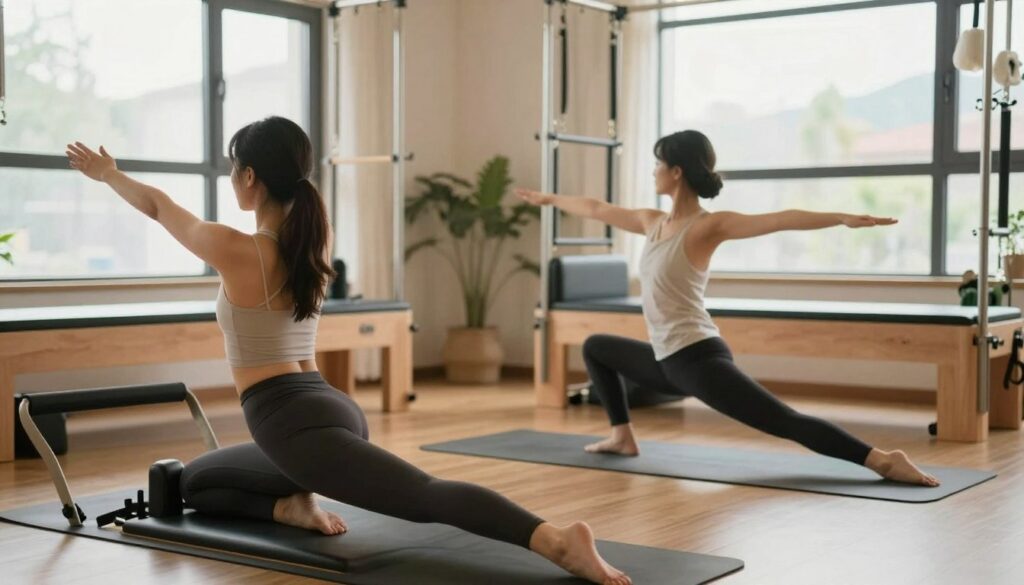
Why choose between Pilates and yoga when you can have both? They work together to help you lose weight, tone muscles, and clear your mind. This mix is the key to a well-rounded fitness journey.
Pilates is like building a strong foundation. Yoga adds the finishing touches, making it beautiful and peaceful. Together, they offer the best of both worlds for your body and mind.
A Sample Weekly Schedule for Optimal Weight Loss and Tone
Staying consistent is important, but mixing things up keeps you excited. This schedule helps you burn calories, build muscle, and stay flexible. It balances strength, stretch, and rest.
Feel free to change the schedule as you like. The goal is to make it a fun part of your life, not a chore.
| Day | Practice | Primary Focus | Duration |
|---|---|---|---|
| Monday | Reformer or Mat Pilates | Core strength & full-body engagement | 45-60 mins |
| Tuesday | Vinyasa or Power Yoga | Cardiovascular flow & functional strength | 50-60 mins |
| Wednesday | Active Recovery / Walk | Gentle movement & circulation | 30 mins |
| Thursday | Pilates (Focus on Legs & Glutes) | Building lean muscle for higher metabolism | 45 mins |
| Friday | Yin or Restorative Yoga | Deep stretch, stress relief, & recovery | 40 mins |
| Saturday | Combined Fusion Class or HIIT | High-energy workout for calorie burn | 50 mins |
| Sunday | Mindful Movement or Rest | Complete recovery & mental reset | 20-30 mins |
This schedule combines the best of Pilates and yoga. Pilates days build muscle. Yoga days improve flexibility and reduce stress. Active recovery makes you stronger.
Fitness is not about punishing your body into submission; it’s about partnering with it to reveal its strength and grace.
Listening to Your Body: When to Choose Pilates and When to Choose Yoga
Your body knows best. Learning to listen to it makes exercise a self-care practice. Here’s how I decide.
Choose Pilates when you need to feel strong and centered. It’s great for days when you’re mentally sharp but physically slow. Pilates focuses your mind and builds confidence.
Choose Yoga when you need to release and unwind. Yoga is perfect for stressful days or when you’re feeling tight. It helps you breathe through discomfort and reduces stress eating.
Ask yourself these simple questions in the moment:
- Do I feel wound up or scattered? (Try Yoga)
- Do I feel weak or disconnected from my core? (Try Pilates)
- Am I sore from a previous workout? (Try gentle, restorative Yoga)
- Do I need a boost of energy and postural confidence? (Try a dynamic Pilates routine)
This approach ensures you get what your body needs. Sometimes, that means switching to yoga on a Pilates day. It’s not failure; it’s smart self-awareness. This way, fitness becomes a dialogue that supports long-term health and happiness.
Conclusion
My exploration into pilates vs yoga for weight loss reveals a truth. There’s no clear winner. The best choice depends on your personal goals, body needs, and mental state.
Pilates targets deep muscles, boosting your metabolism. Yoga, on the other hand, promotes mindfulness, helping to curb stress eating. Both practices are effective for women looking to transform.
Don’t feel pressured to pick just one. Let this knowledge help you start. Try a yoga sun salutation or a pilates hundred. Begin your journey to strength, awareness, and harmony with your body. Your path is ready for you.