
Create Your Own Autumn Bliss Soap with Applesauce and Cinnamon Essential Oil
Autumn is a season of warmth, comfort, and coziness. What better way to capture that essence than by making your very own homemade soap infused with the delightful scents of applesauce and cinnamon? This DIY soap not only smells amazing, but it’s also made with natural ingredients that nourish your skin. In this article, we will guide you step by step through the process of creating your own handmade soap using saponified oils of olive, coconut, and sustainably harvested palm.
Why You Will Love This Recipe
This autumn-themed soap recipe is perfect for gifting to friends, teachers, or as a lovely treat for yourself. The combination of applesauce and cinnamon essential oil creates a warm, inviting fragrance that brings autumn right into your home. Plus, the natural ingredients offer skin-loving benefits, making this soap both functional and beautiful.
Ingredients
To create approximately 20 ounces of soap (about 6–8 bars, depending on how you cut them), you will need the following ingredients:
- Saponified Oils:
- 10 ounces of Olive Oil
- 5 ounces of Coconut Oil
- 5 ounces of Sustainably Harvested Palm Oil
- Other Ingredients:
- 3 ounces of Applesauce (preferably unsweetened)
- 1 teaspoon of Cinnamon Essential Oil
- Optional for topping:
- 1 small apple, thinly sliced
- 1 teaspoon ground cinnamon
- 1/2 cup rolled oats
- Optional Additives:
- Natural colorants (like beet powder or turmeric, for aesthetic appeal)
Equipment
You’ll need the following equipment for this soap-making project:
- Safety Gear:
- Safety goggles
- Gloves (preferably nitrile)
- Mixing Tools:
- A scale for precise measurements
- A large mixing bowl
- A stick blender
- A whisk
- Molds:
- Soap molds (silicone molds work great)
- Containers:
- Heat-safe containers for mixing oils
- Thermometer:
- A thermometer to check the temperatures of your oils and lye mixture (if applicable)
Step-by-Step Instructions
Preparation Time: 15 minutes
Making Time: 45 minutes
Total Yield: Approximately 6–8 bars of soap
Prepare Your Workspace:
- Begin by ensuring your workspace is clean and organized. It’s best to work on a non-porous surface.
- Wear your safety goggles and gloves to protect yourself during the soap-making process.
Measure the Oils:
- Using the scale, measure out 10 ounces of olive oil, 5 ounces of coconut oil, and 5 ounces of palm oil.
- Combine the oils in a large mixing bowl and gently heat them until all oils are melted and blended (approximately 120–130°F).
Saponification (If Cold Process):
- If you are using a cold process method that involves lye, calculate and measure the required amount of lye using a reliable soap calculator based on your specific oils.
- Slowly add the lye to water (never the other way around) in a well-ventilated area, stirring until dissolved. Allow it to cool to around 100°F.
Combine the Oils and Lye:
- When both the oils and lye solution are within the desired temperature range, slowly pour the lye solution into the bowl of oils.
- Using your stick blender, blend until you reach a light trace (this is when the mixture thickens, and you can see a trail on the surface).
Incorporate Applesauce and Essential Oil:
- Add 3 ounces of applesauce and 1 teaspoon of cinnamon essential oil to the mixture.
- Mix well until combined.
Pour into Molds:
- Pour the soap mixture into your molds. Use a spatula to help pour and smooth the top.
Add Toppings:
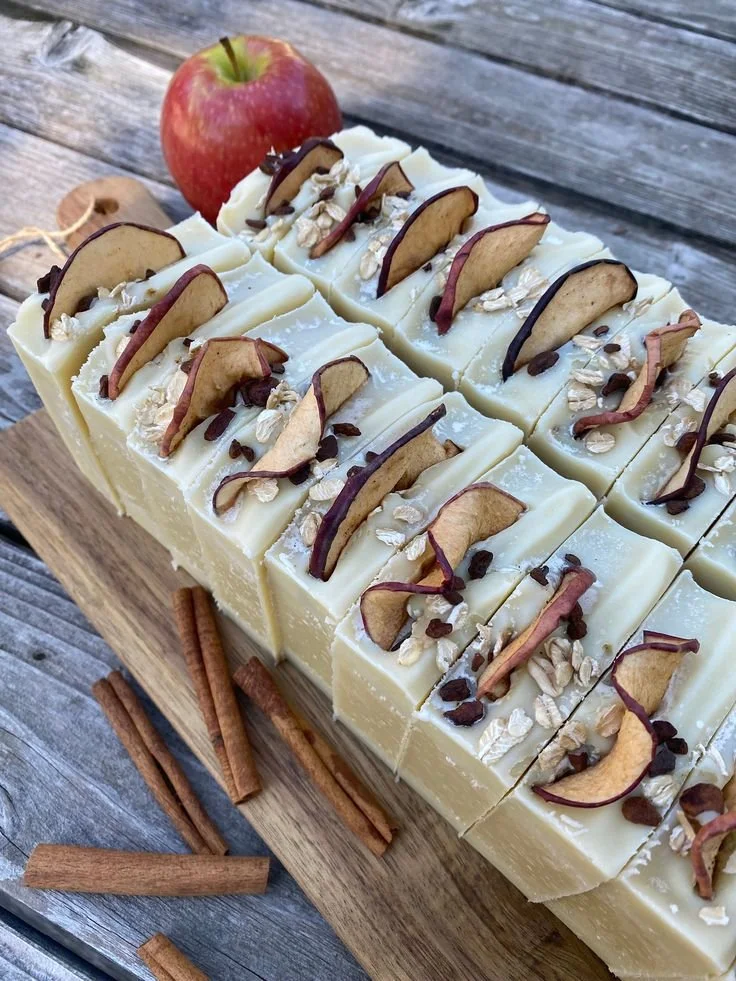
- Sprinkle oat flakes on top and arrange thin apple slices for a beautiful fall touch. You can also sprinkle ground cinnamon on top for added appeal.
Cure the Soap:
- Cover the molds with plastic wrap and a towel for insulation. After 24 hours, check to see if the soap is solidified enough to remove from the mold.
- Once removed, let the soap cure in a cool, dry place for 4–6 weeks before use.
Tips for Success
- Patience is Key: Allow your soap to cure for the full time to ensure it reaches its maximum quality.
- Temperature Control: Maintain accurate temperatures both for the oils and the lye mixture to avoid saponification issues.
- Environment: Work in a well-ventilated area, especially if using lye.
Common Mistakes to Avoid
- Incorrect Measurements: Always measure ingredients precisely to ensure proper saponification.
- Neglecting Safety: Always wear your protective gear and never use lye without proper precautions.
- Skipping Cure Time: Using the soap too early may result in skin irritations.
Variations and Customization Ideas
- Fragrance Options: Feel free to experiment with different essential oils like clove or nutmeg to enhance your autumn scent.
- Coloring Your Soap: Add natural colorants to create a more visually appealing bar.
- Exfoliating Additives: Mix in ground oats or poppy seeds for added exfoliation.
Storage and Shelf Life
Store your finished soap bars in a cool, dry place away from direct sunlight. They can last up to a year if stored correctly. You can package them in compostable bags or wrap them with compostable cotton ribbons for a lovely presentation.
Safety Tips
- Lye Handling: Sodium hydroxide (lye) is caustic and can cause burns. Always handle it carefully, use it in a well-ventilated space, and wear protective gear.
- Ventilation: Ensure your work area is well-ventilated and avoid breathing in fumes.
Frequently Asked Questions
Can I make this soap without using lye?
Yes, you can use a melt-and-pour soap base instead. Simply heat the base and mix in your applesauce and essential oils before pouring into molds.
How do I know if my soap is ready to use?
The soap should be completely hardened and have cured for at least a month. Test for any lye residue by rubbing a small piece on a wet finger; if it feels slick, it needs more time.
Can I use other types of oils?
Absolutely! You can substitute other oils, but you might need to recalculate the lye if using the cold process method.
What can I do with leftover soap scraps?
Consider using scraps to create a new batch of soap or grating them to use as laundry soap.
Conclusion
Making your own autumn-inspired soap is not only a fun and creative project but also a delightful way to celebrate the season. With the combined aroma of applesauce and cinnamon, your homemade soap will remind you and your loved ones of the comforting flavors of fall. So gather your ingredients and equipment, follow our step-by-step guide, and enjoy crafting something truly special. Happy soap making!